






















































By [Your Name/Journalistic Staff], based on reporting by Kate Sosin
For Juniper Simonis, the memory of 2012 remains as vivid as a cinematic frame. It was a humid summer evening in Ithaca, New York, the kind that feels heavy with the promise of change. As she sped through the city streets on her bicycle, the wind rushing past her helmet, she was listening to the haunting folk melodies of Mariee Siou. But the physical sensation of movement was eclipsed by the digital notification burning in her inbox: the Ithaca League of Women Rollers had officially voted to allow her to join their ranks.
"As somebody who played sports and was queer, those were two very separate parts of my life," Simonis recalls. "The promise and the opportunity to integrate those was very hopeful for me."
For Simonis, who is transgender, the acceptance was more than just a spot on a roster; it was a validation of her identity within a space she once considered unreachable. Years before the current national firestorm over transgender participation in athletics, the high-contact, punk-rock-infused world of roller derby was already wrestling with—and ultimately embracing—the complexities of inclusion. While the sport’s history is far from a utopia, and its practitioners remain the first to admit that discrimination persists, the trajectory of roller derby offers a unique, radical blueprint for how a community can prioritize human dignity over rigid institutional tradition.
A Legacy of Counter-Culture: The History of Derby
To understand why roller derby became a vanguard for gender inclusion, one must look back to its origins. The sport traces its lineage to the 1930s, when promoter Leo Seltzer pioneered roller-skating endurance races. According to the Smithsonian, even in its infancy, roller derby was a co-ed endeavor, though it was plagued by the era’s standard economic disparities between men and women.
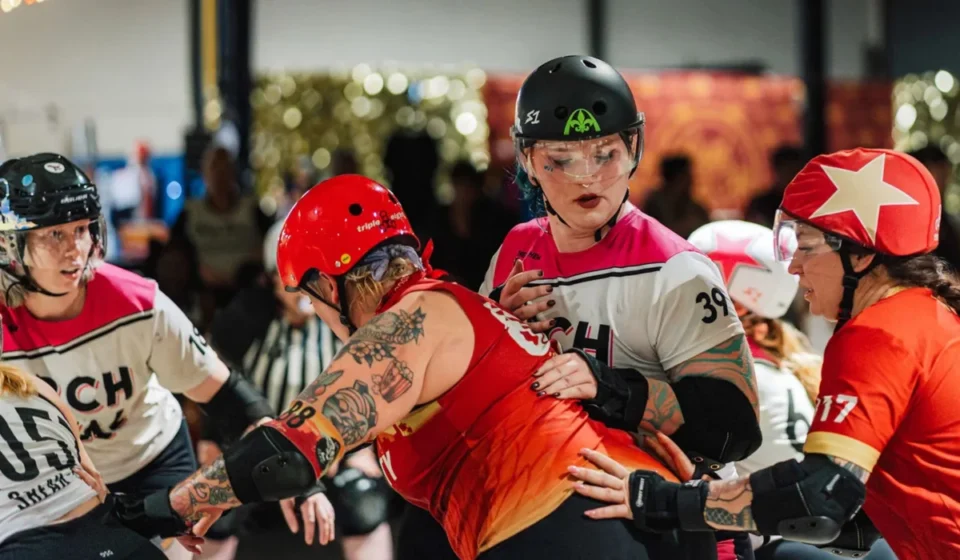
Over the decades, those endurance races morphed into the aggressive, strategic contact sport we recognize today. Rachel "Rotten" Johnston, a derby veteran and director of the Angel City League, notes that the sport’s evolution was organic. "Over the course of these races, people start to run into each other. They get tired, they try to sabotage each other," Johnston explains. "That’s the thing that people started to get really into."
By the early 2000s, the sport underwent a modern renaissance, driven by women in Austin, Texas, who sought to formalize the flat-track format. This era was defined by a "riot grrrl" ethos—a fierce, DIY aesthetic that served as a direct rebuttal to the hyper-feminine pop culture of the time. It was a space for "tough punk rock" personalities, where participants donned fishnets and war paint, choosing monikers like "Beyonslay" or "Iron Maven." In this landscape, the track was a sanctuary for those who did not fit neatly into societal boxes.
Chronology of Inclusion: From Ambiguity to Policy
As the Women’s Flat Track Derby Association (WFTDA) grew to encompass over 400 leagues across six continents, the question of gender policy became unavoidable. In the early 2000s, the sport was largely defined by a desire to carve out a space free from the influence of cisgender men.
"At the time, ‘cis’ wasn’t really even a term we were using," says Nicole Williams, known globally by her skating handle, Bonnie Thunders. Widely considered the greatest skater in the sport’s history, Williams has watched the culture shift from a place of tentative, case-by-case acceptance to a codified commitment to diversity.
In the early years, the WFTDA mirrored Olympic-style policies, requiring transgender women to undergo hormone replacement therapy (HRT) for a set period. However, athletes recall that this was applied with varying degrees of rigor. For many, the "policy" was less about bureaucracy and more about community consensus. Penelope "Fifi Nomenon" Nederlander remembers joining the LA Derby Dolls in 2010. After disclosing her trans identity to a mentor, she was asked only one question: Did her driver’s license reflect a female gender marker? When she confirmed it did, she was welcomed without hesitation.
"It was the first group of friends who I met who only knew me as Penny," she says. "That was huge."
The watershed moment arrived in 2015, when the WFTDA officially updated its policy to welcome anyone of a marginalized gender, regardless of transition status or outward appearance. This was not just a victory for trans women; it provided a vital space for nonbinary athletes and those assigned female at birth who were beginning their own medical transitions. Drew "OMG WTF" Flowers, a nonbinary skater who has been involved in the sport since 2008, notes that the transition toward inclusion was, for them, a survival mechanism. "I had reached a point in my life where I was like, ‘I have to do this.’"

Supporting Data and the Reality of the Track
Despite the progressive policies, the community is the first to acknowledge that institutional rules do not erase interpersonal prejudice. The sport’s inclusivity is a work in progress, not a finished product.
Donita "Blaxyl Rose" Green, an Angel City Derby skater, highlights the intersectional challenges faced by marginalized athletes. "I’ve seen firsthand how much worse some of these microaggressions and problems happen when you are a dark-skinned Black skater," Green says. "You add knowledge of trans identity, and it tends to be even worse."
Simonis, who found such joy in her initial acceptance, has also faced the darker side of the sport, reporting incidents of assault by other players specifically targeted at her transgender identity. These testimonies serve as a sobering reminder that policy change is only one layer of the battle; the culture within individual leagues remains susceptible to the broader societal prejudices that permeate all levels of sport.
Implications: The Question of "Fairness"
The most frequent argument leveled against transgender inclusion in sports is the preservation of "fairness" and "safety." In the current political climate, this has become a rallying cry for those advocating for restricted access. However, veteran skaters argue that this concern is often rooted in a fundamental misunderstanding of the sport’s nature.
"I think that people who are concerned about people getting hurt are missing the fact that we’re playing a full contact sport," says Johnston. "You’re going to get hurt no matter what. Life isn’t fair, and sports most certainly are not fair."
Derby’s refusal to seek Olympic recognition—a decision largely driven by the sport’s reluctance to subject its athletes to the intrusive gender-policing required by international governing bodies—demonstrates that the community values its internal integrity over institutional legitimacy.
Nederlander suggests that the path forward lies in radical honesty. She argues that instead of pretending that physiological differences don’t exist, the sports world should foster a conversation that acknowledges them without using them as a weapon of exclusion.
"I want to arrive at the same conclusion, but with honesty about it," Nederlander explains. "In roller derby, there doesn’t seem to be an important difference. We really don’t have any complaints about trans skaters. So that’s awesome. I think that’s just a more honest, accepting way, and it keeps the other side from using that stuff against us."
The Future of the Sport
As the national debate over gender in athletics continues to intensify, roller derby stands as a living experiment. It is a sport built by women that evolved to include the gender-expansive, a community that decided that the strength of its sisterhood—and its nonbinary and trans siblings—was more important than adhering to the rigid, exclusionary frameworks of traditional athletic organizations.
The sport of roller derby is not perfect. It faces ongoing struggles with racism, transphobia, and the inevitable friction of a high-contact, highly competitive environment. Yet, by choosing to prioritize human inclusion, it has created a space where, for many, the track is the one place in the world where they can show up as their authentic selves.
For athletes like Simonis, Flowers, and Nederlander, the sport is not just a hobby; it is a testament to the idea that rules can be rewritten to favor empathy. While the rest of the world debates the logistics of inclusion, those in the derby community are already doing the work—one lap, one hit, and one teammate at a time.