














































Bridging the Gap: How a New Minnesota Initiative is Transforming Rural Lung Cancer Screenings

This article was originally published by The Daily Yonder.
In the quiet corners of rural Minnesota, a silent health crisis is unfolding. While medical advancements have made lung cancer increasingly treatable when caught early, the stark reality is that rural residents are significantly less likely to receive the life-saving screenings necessary to detect the disease in its infancy. A pioneering research project spearheaded by the Masonic Cancer Center at the University of Minnesota is now seeking to bridge this divide, shifting the responsibility of screening from the patient to the entire primary care ecosystem.
Main Facts: The "Whole-of-Office" Approach
The research, led by Dr. Abbie Begnaud, a pulmonologist and associate professor at the University of Minnesota Medical School, is fundamentally changing how rural clinics identify and engage at-risk patients. Rather than relying on sporadic patient-initiated requests, the pilot program implements a "whole-of-office" strategy.
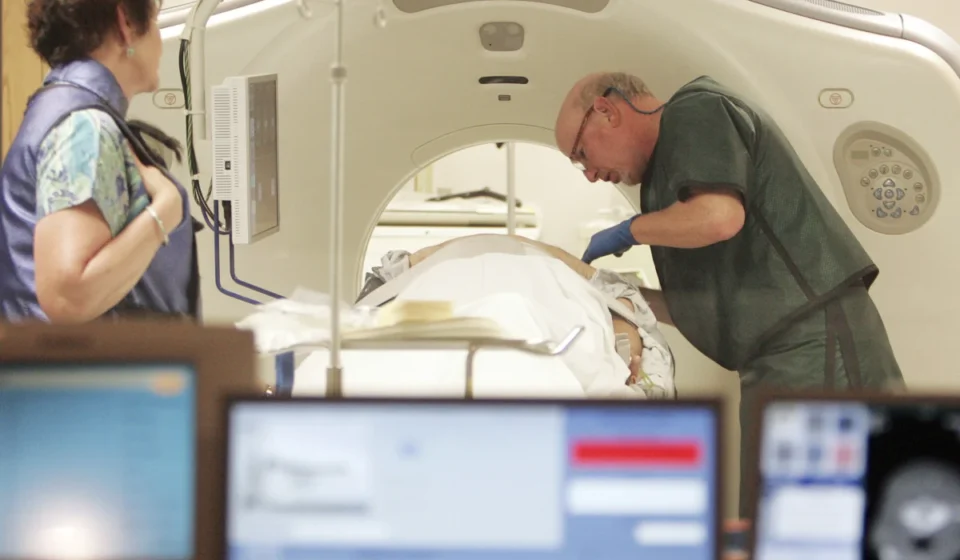
Under this model, every member of the clinic staff—from the front desk to the nursing team—is trained to identify patients who meet the clinical criteria for lung cancer screening. These criteria generally include adults over the age of 50 with a significant history of heavy smoking. Once identified, the staff proactively assists the patient in determining eligibility and, crucially, navigates the scheduling process for the scan before the patient leaves the clinic.
The results of the initial pilot program, conducted across six primary care clinics, were promising: a 30% increase in the number of screening orders for eligible patients. Dr. Begnaud believes this success proves that by removing the administrative and logistical hurdles that typically plague rural patients, the healthcare system can significantly improve early detection rates.
Chronology: A Multi-Decades Battle Against Stigma
To understand why this initiative is so vital, one must look at the historical trajectory of anti-smoking efforts in the United States.
The Evolution of Public Health Messaging
For decades, public health campaigns have relentlessly focused on the dangers of tobacco use. These campaigns were undeniably effective, contributing to a historic decline in smoking rates nationwide. However, as Dr. Begnaud notes, this success came at a hidden cost: the deepening of stigma and shame surrounding cigarette use.
"People who have smoked or continue to smoke are certainly aware that it’s bad for their health, and they know that everyone else is thinking about it," Begnaud explained. "They internalize these messages of blame. It’s really important to get people to be open to screening to try to decouple the kind of shame or blame that goes along with smoking."
The Rise of the Rural Disparity
As smoking rates dropped in urban centers, rural populations were left behind. According to data from the U.S. Surgeon General, the rural-urban divide has widened. While the national smoking rate stands at approximately 10.8% as of 2023, the disparity is stark when viewed through a geographic lens. In 2024, the Surgeon General reported that 15.4% of rural adults smoke, compared to just 10.1% of urban adults.
This chronology of divergence is marked by several key factors:
- 1990s–2010s: Rapid adoption of smoking cessation technology and policy in urban centers.
- 2015–2020: Growing recognition that rural residents not only smoke at higher rates but also smoke more intensely, often averaging 15 or more cigarettes per day.
- 2023–Present: The formalization of the "Rural Health Gap," as national health bodies begin to categorize rural geography as a primary social determinant of health that contributes to lower quit rates and higher mortality.
Supporting Data: The Geography of Risk
The data surrounding rural lung cancer outcomes is sobering. According to the U.S. Surgeon General’s 2024 report, the geographic location of a patient is a significant predictor of their health outcomes.
Regional Vulnerabilities
Adults in the Midwest and the Southeast—including states like Alabama, Arkansas, Indiana, Kentucky, and West Virginia—are 40% more likely to smoke than their counterparts in the Northeast and the West. This regional cluster of high tobacco prevalence directly correlates with higher rates of undiagnosed late-stage lung cancer.
The "Quit" Barrier
Beyond the prevalence of smoking, there is a documented disparity in "quit ratios"—the percentage of people who have ever smoked who have successfully quit. The Surgeon General’s report found that:
- Rural residents have significantly lower quit ratios than those in large central metropolitan areas.
- Rural residents who attempt to quit are less likely to succeed, facing worse cessation-related outcomes.
- The combination of higher daily intake and lower success in quitting means that rural residents are disproportionately prone to tobacco-related diseases.
"People who live in rural areas experience tobacco-related health disparities," the report stated. "Compared with people who smoke and live in urban areas, people in rural areas who smoke tend to have worse cessation-related outcomes when attempting to quit and are more likely to die from a tobacco-related disease."
Official Responses and Clinical Perspectives
Dr. Begnaud’s work is supported by the Minnesota Cancer Clinical Trials Network (MNCCTN), an organization dedicated to bringing cancer clinical trials to Minnesotans where they live. For Begnaud, the motivation is deeply personal and rooted in the clinical reality she faces every day.
"My clinical work as a lung specialist motivates me," she said. "Every time I see somebody who comes to me who should have been screened and wasn’t, and now they have a stage 3 or a stage 4 lung cancer, it motivates me to get up and work harder tomorrow."
The "whole-of-office" approach is an attempt to institutionalize this motivation. By training clinic teams to recognize the human behind the statistics, the program aims to shift the culture within primary care offices. In the pilot phase, clinic staff reported feeling empowered by the project, noting that they were eager to be part of a proactive solution to a problem they see in their own neighbors and patients every day.
Implications: A Path Forward
The implications of the Minnesota pilot project are far-reaching. As Dr. Begnaud prepares to scale the research into statewide trials, the medical community is watching closely.
Why This Could Change Everything
The current standard of care—whereby a doctor might briefly mention a screening during a visit and hand the patient a brochure to schedule it later—is failing rural populations. The psychological burden of smoking-related shame, combined with the logistical difficulty of finding and traveling to an imaging center, creates a high barrier to entry.
By embedding the screening process into the workflow of the clinic visit, the team is effectively removing the "barrier of effort." If a patient leaves the office with a scheduled appointment, the likelihood of completion increases exponentially.
Scaling for the Future
The next phase of the project will focus on expanding to more rural clinics to gather the robust data needed to confirm that this approach is not just feasible, but definitively effective at reducing lung cancer mortality. If successful, the model could serve as a template for rural healthcare providers across the country, particularly in the Southeast and Midwest, where the disparity is most pronounced.
Ultimately, the goal is to shift the narrative around lung cancer from one of inevitability and shame to one of early detection and survival. "Anybody with lungs can get lung cancer," Begnaud emphasized. "And, when found early, lung cancer survival rates can reach 80% to 90%."
As the project moves into its next phase, the focus remains clear: for rural Minnesotans, the difference between a late-stage diagnosis and a long life may soon come down to a simple, proactive conversation in a doctor’s office—a conversation that the clinic, not the patient, is now taking the lead to start.