






















































A Symphony of Light and Existential Dread: Minneapolis Arts Scene Witnesses a Weekend of Modernist Innovation

The cultural landscape of Minneapolis is currently defined by a striking juxtaposition of 20th-century masterpieces. As the Minnesota Orchestra launches its ambitious "Sound Unbound" series at Orchestra Hall, and the Guthrie Theater invites audiences into the bleak, circular purgatory of Samuel Beckett’s Waiting for Godot, the city finds itself at the intersection of high-tech visual spectacle and profound existential inquiry. Both productions serve as a reminder that the innovations of the last century—whether in music or theater—remain as urgent, disquieting, and essential as the day they were conceived.
Orchestrating the Visual: Tal Rosner’s "Firebird" Mapping
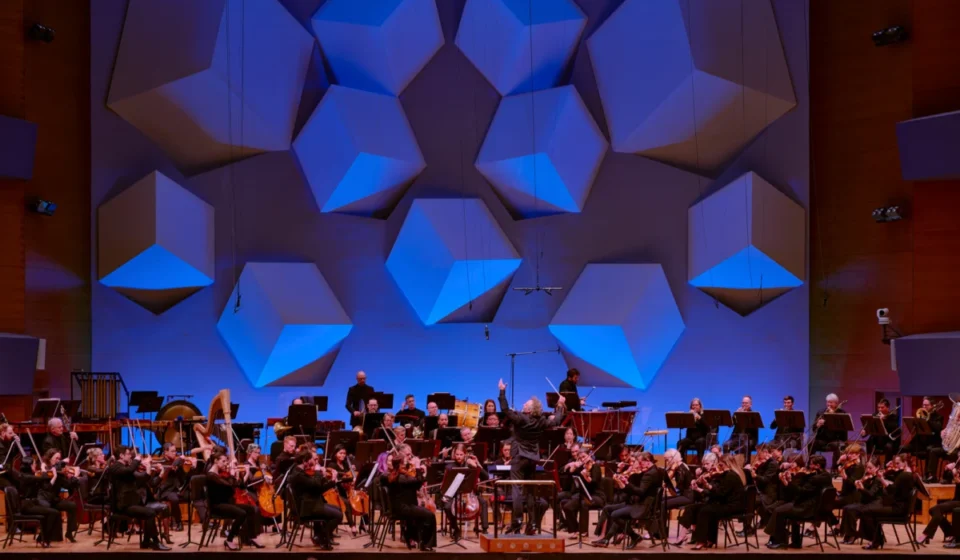
The iconic acoustic cubes adorning the back wall and ceiling of Orchestra Hall are undergoing a transformation. No longer just architectural features designed to diffuse sound, these wooden blocks have been repurposed as a dynamic canvas by BAFTA-winning visual artist Tal Rosner.
For the Minnesota Orchestra’s season opener, Rosner has developed a sophisticated video mapping installation to accompany Igor Stravinsky’s seminal 1910 work, The Firebird. The collaboration is the inaugural showcase of "Sound Unbound," a multi-year programming initiative that seeks to pair orchestral masterworks with contemporary visual art.
The Technical Choreography of Light
Video mapping is a complex technique that requires the artist to align digital projections with the physical geometry of an architectural space. For Rosner, the cubes were not an afterthought but the primary constraint that dictated his entire creative process.
"Almost every design decision I made is rooted in the fact that the cubes are the projection surface," Rosner explained. "All the design elements are in constant consideration of the layout of the cubes, so the mapping is very, very, very accurate."
Rather than literal depictions, Rosner’s visual landscape relies on metaphor and abstraction. The narrative arc of the folklore—Prince Ivan’s struggle against the sorcerer Koschei, the magical intervention of the Firebird, and the whimsical diversion of the golden apples—is translated into a visual language of rhythms and colors.
"I don’t show the princesses, but the princesses are represented by golden ribbons," Rosner noted. His goal is to achieve a symbiosis between the music and the visuals. By following the precise beats of the orchestral score, he ensures that the audience experiences a coherent, immersive narrative. For the viewer, the effect is a synesthetic experience where the sound of the brass and strings seems to emanate directly from the shifting, illuminated blocks.
Historical Context: From Ballets Russes to Modernism
To understand the weight of the Minnesota Orchestra’s choice to lead with The Firebird, one must look back to 1910. Commissioned by Sergei Diaghilev for his legendary Ballets Russes, The Firebird served as a gateway to the modernist movement.
Diaghilev’s company, composed largely of dancers from St. Petersburg’s Imperial Ballet, redefined European performance art. Stravinsky’s score for The Firebird acted as a bridge between the romanticism of the 19th century and the radical, discordant breakthroughs that would follow just three years later with The Rite of Spring. That later work famously ignited a riot in Paris, effectively shattering the conventions of Western music. By choosing to interpret The Firebird through contemporary digital media, the Minnesota Orchestra is engaging in a dialogue with that historical moment of rupture, demonstrating that the "scandalous" spirit of modernism can still be repurposed to startle contemporary ears and eyes.
The Holistic Approach: Collaboration and Maturity
Rosner’s path to the stage was unconventional. Raised in a musical household—his father managed a conservatory and his brother is a composer—Rosner originally sought a career in television graphics, famously dreaming of working for MTV. His eventual transition into theater and orchestral design has been fueled by a desire for a "blank slate."
"If you work with an orchestral piece, the scope of what you can do and the canvas to do it on is much bigger," he remarked.
Crucially, Rosner’s process has evolved toward a more collaborative philosophy. Working closely with the Minnesota Orchestra’s in-house lighting crew, he emphasizes that the spectacle is not a solo exhibition of ego. "As the years progressed, I’m much more aware of everyone else on the team," he said. "It’s not just like, ‘Look at me! Look at me!’ Now it’s a much more holistic approach."
The Guthrie’s Existential Mirror: "Waiting for Godot"
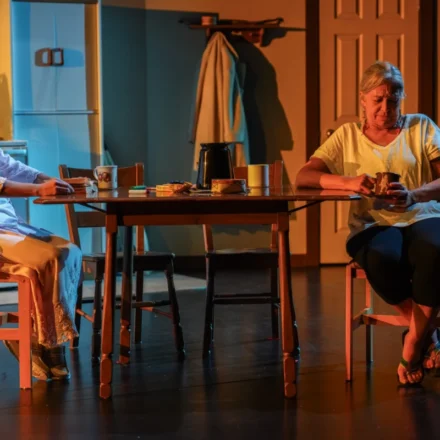
While the Orchestra Hall vibrates with color and kinetic light, the Guthrie Theater offers a starkly different experience with its staging of Samuel Beckett’s 1953 masterpiece, Waiting for Godot. Directed by the Guthrie’s artistic director, Joseph Haj, this production strips away the artifice to reveal the play’s raw, existential core.
Beckett famously wrote the play in the wake of his experiences in the French Resistance. It is a work that leaves little room for directorial improvisation; the silences, the pauses, and the stage directions are as sacred as the text itself. Yet, under Haj’s direction, the play feels remarkably contemporary, speaking to a modern audience grappling with what some critics have termed "end-times fascism."
The Alchemy of Performance
The production relies on the chemistry between David Strathairn (Vladimir) and Jimmy Kieffer (Estragon). Despite the inherent minimalism of the script, the actors imbue their characters with a palpable, aching humanity.
Even on opening night, when a minor line flub briefly disrupted the cadence of the dialogue, the actors recovered with a fluidity that highlighted the intense, almost musical rhythm of Beckett’s writing. Kieffer provides a necessary, grounded vulnerability, while Strathairn—a veteran of the screen—brings a gravitas that anchors the play’s second act, turning the men’s circular, futile wait into a profound reflection on the human condition.
The supporting cast, including William Sturdivant as the bombastic Pozzo and Jim Lichtscheidl as the tortured Lucky, completes an ensemble that handles the play’s shifts between dark comedy and profound despair with remarkable precision.
Implications: Why Modernism Still Matters
The coincidence of these two major events—the visual reimagining of Stravinsky and the minimalist interrogation of Beckett—suggests a city eager to confront its past. Both the Minnesota Orchestra and the Guthrie Theater are not merely presenting "classics"; they are testing the limits of these works.
For the Orchestra, the integration of video mapping into "Sound Unbound" acknowledges that in an era of hyper-stimulation, the traditional concert format must adapt to maintain its grip on the cultural imagination. For the Guthrie, returning to the existential dread of Godot serves as a mirror for a society navigating its own periods of political and social instability.
Both institutions argue, in their own way, that the art of the 20th century was not just a historical artifact. Whether it is the magical flight of the Firebird or the eternal, static wait for a savior who never arrives, these works provide a framework through which we can understand our own, increasingly complex world.
Event Details and Access
Minnesota Orchestra: "Firebird"
- Conductor: Thomas Søndergård
- Program: George Walker’s Icarus in Orbit, Sergei Prokofiev’s Concerto No. 2 in G minor (featuring Vadym Kholodenko), and Stravinsky’s The Firebird.
- Venue: Orchestra Hall, Minneapolis.
- Dates: Friday, Sept. 25 at 8 p.m.; Saturday, Sept. 26 at 7 p.m.
- Tickets: $64–$159.
Guthrie Theater: "Waiting for Godot"
- Director: Joseph Haj
- Cast: David Strathairn, Jimmy Kieffer, William Sturdivant, Jim Lichtscheidl.
- Venue: Guthrie Theater, Minneapolis.
- Dates: Runs through Oct. 11. Performance times vary throughout the week (matinees and evenings available).
- Tickets: $25–$91.
As Minneapolis moves through the autumn season, these two performances stand as a testament to the city’s robust commitment to high-level arts. By bridging the gap between historical innovation and contemporary presentation, the local arts community continues to prove that even the most well-trodden stories can be made new—and in doing so, can help us find our way through the dark.