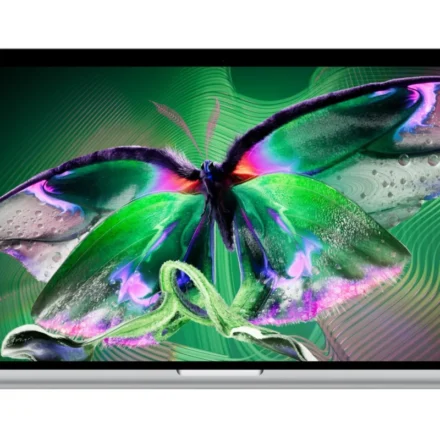



















































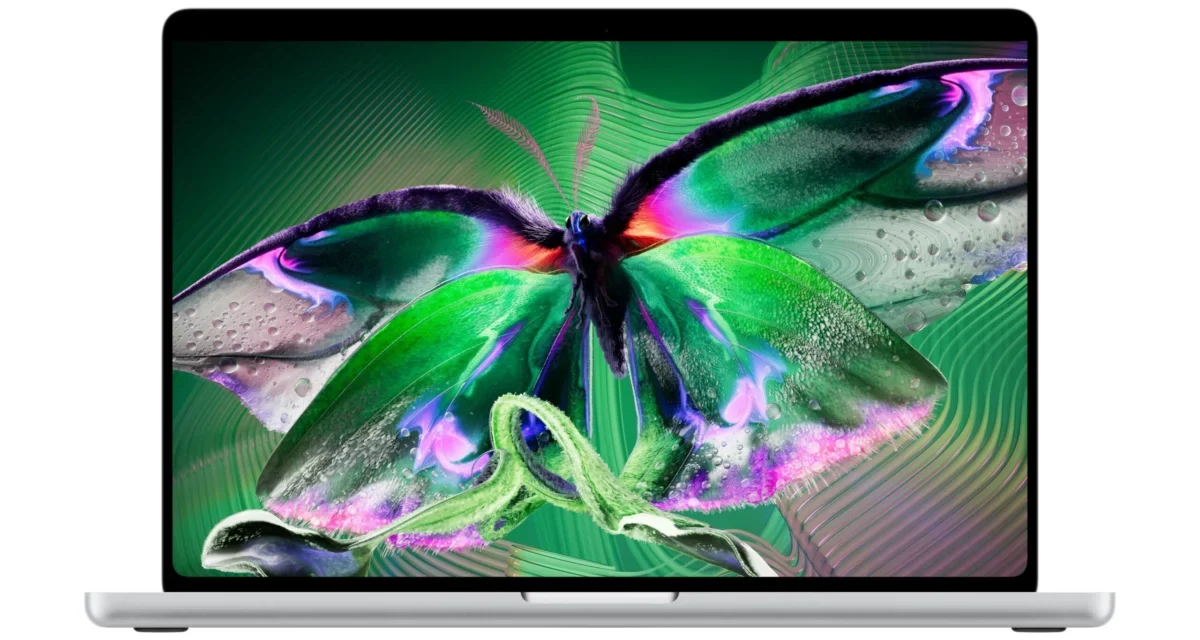





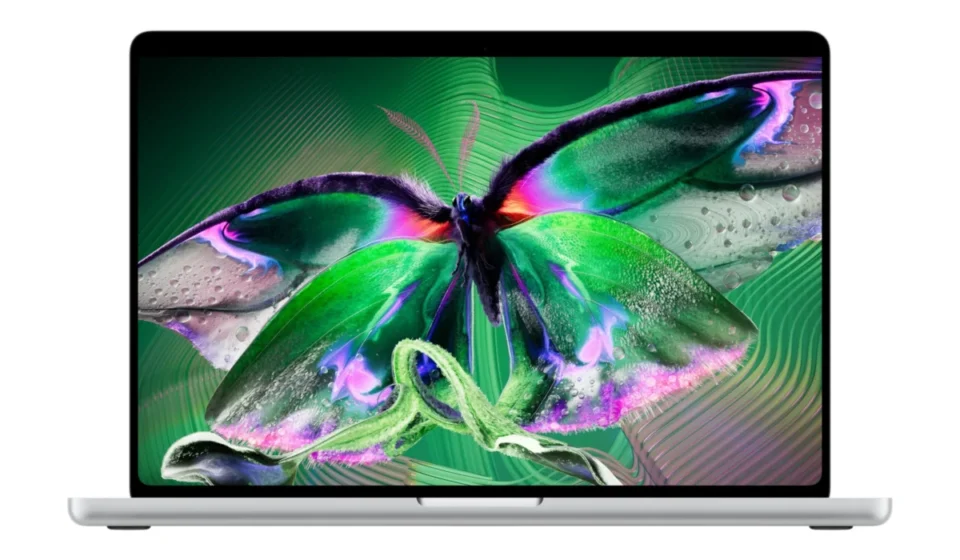

Apple has long been defined by its pursuit of the "perfect" display, and with the release of the new MacBook Pro featuring the PROLED XDR panel, the company has arguably moved the goalposts once again. By integrating a tandem OLED architecture with a high-precision touch interface, Apple is not merely iterating on laptop hardware; it is redefining the relationship between the professional creator and their digital workspace.
Main Facts: A Technical Marvel
The centerpiece of this year’s MacBook Pro update is the PROLED XDR display. Measuring less than one millimeter in total thickness, this panel is a feat of modern engineering, composed of 50 distinct layers. At its foundation lies a single sheet of glass housing over 100 million thin-film transistors (TFTs) arranged in 15 layers, each under 10 microns thick.
The "tandem" aspect of the OLED technology is the key to its performance. By stacking two OLED layers, Apple has achieved a level of brightness and color accuracy that was previously reserved for professional reference monitors costing upwards of $30,000. These panels support P3, Adobe RGB, and DICOM color spaces, delivering a staggering 10,000,000:1 contrast ratio and a peak brightness of 2,000 nits.
Unlike consumer-grade touchscreens, which often feel like an afterthought, Apple has embedded touch sensors directly into the display stack. This design choice eliminates latency, providing an immediate, tactile response that feels native to the macOS environment.
Chronology of Development and Release
The journey to this display began years ago with Apple’s internal push to optimize OLED technology while maintaining the thin, rigid form factor required for a professional-grade laptop.
- Design & Prototyping: Apple worked closely with display suppliers to simulate the evaporation of OLED molecules onto "mother glass" sheets—massive panes from which roughly eighty 14-inch panels are cut. Every layer’s thickness was tracked with micron-level precision during the fabrication process.
- Engineering Phase: To accommodate the addition of a touch layer, Apple engineers had to overhaul the hinge design of the MacBook Pro. The goal was to minimize "ring down"—the technical term for the vibration or oscillation a screen undergoes after being physically touched.
- Announcement: The MacBook Pro with PROLED XDR was officially unveiled in late October, marking a significant departure from Apple’s long-standing policy against touch-enabled Macs.
- Pre-order & Launch: Pre-orders opened globally on October 28, covering 30 countries and regions. The devices began arriving in the hands of customers on November 6, signaling the start of a new chapter in Apple’s hardware ecosystem.
Supporting Data: Performance and Precision
The performance of the PROLED XDR is managed by the proprietary display engine found within the M5 Pro and M5 Max chips. This engine is capable of real-time adjustments to pixel luminance and color, operating at sub-millisecond speeds to ensure frame-perfect accuracy. The refresh rate is adaptively managed, scaling between 10Hz and 120Hz depending on the content being displayed.
Crucially, the system includes proactive health monitoring for the OLED pixels. By tracking usage patterns, the M5 chip can distribute the load across the panel to significantly prolong its lifespan, mitigating the long-standing "burn-in" concerns associated with OLED technology.
For those requiring the ultimate in display precision, the optional nanotexture glass is available. Unlike a film applied to the surface, the texture is literally etched into the glass at a microscopic level, maintaining extreme clarity while diffusing ambient light. Both the standard and nanotexture variants benefit from a sophisticated, fingerprint-resistant oleophobic coating.
Official Responses and Design Philosophy
In discussions with Tom Boger, Apple’s Vice President of Mac and iPad Product Marketing, it became clear that the integration of touch was not a knee-jerk reaction to market trends, but a carefully considered expansion of the Mac’s capabilities.
Apple’s design philosophy regarding the MacBook Pro remains rooted in "pro" performance. The decision to include touch was balanced against the need for structural integrity. To prevent the "wobble" common in touch-enabled laptops, Apple developed a new hinge architecture that effectively dampens movement upon contact. Furthermore, for video conferencing scenarios, Apple integrated AI-driven video stabilization, ensuring that the camera feed remains steady even if the user is interacting with the screen during a call.
Perhaps most importantly, Apple has abstracted the touch experience within macOS. Developers do not need to rewrite their applications to support touch; the OS automatically interprets touch input as clicks and intelligently expands system menus to accommodate the larger surface area of a human finger, ensuring that touch remains an additive experience rather than a disruptive one.
Implications for the Creative Industry
The introduction of the MacBook Pro with PROLED XDR has profound implications for creative workflows. By bringing reference-grade display technology to a portable form factor, Apple is democratizing the ability to perform color-critical work in the field.
Enhanced Workflow Efficiency
For video editors, colorists, and digital artists, the combination of high-precision touch and the raw power of the M5 Max chip creates a seamless, agentic workflow. The M5 series chips are reported to handle local language model processing up to 12 times faster than their M1 counterparts, which, when paired with the immediate interactivity of the PROLED display, suggests a future where AI-assisted editing becomes significantly more fluid.
Accessibility and Human-Computer Interaction
The integration of touch does not abandon the trackpad or keyboard; rather, it provides a supplementary input method. Users can pinch-to-zoom, pan, or navigate through menus using gestures, while still retaining the tactile precision of the keyboard for text input. For accessibility, the system supports full-screen zoom and stylus input, making the device more inclusive for users with varying physical needs.
Market Positioning
With prices starting at $2,899 for the 14-inch model and peaking at $4,799 for the 16-inch M5 Max variant, these machines are explicitly aimed at the high-end professional market. Apple is gambling that the combination of the PROLED XDR’s visual fidelity and the newfound touch capability will justify the premium price point for creative studios and independent professionals alike.
Conclusion: A New Standard
The MacBook Pro with PROLED XDR represents a rare moment where hardware, software, and industrial design converge to solve a series of complex problems simultaneously. By overcoming the physical challenges of OLED manufacturing and the ergonomic challenges of touch on a clamshell device, Apple has delivered a product that feels like a natural evolution of the modern laptop.
Whether it is the "ring down" reduction in the hinge, the sub-millisecond pixel management of the M5 silicon, or the automated touch-to-click translation in macOS, every detail points to a product that respects the user’s need for both power and precision. As the industry watches to see how developers utilize the new gesture APIs, one thing is certain: the bar for what constitutes a "professional display" has been raised, and the MacBook Pro is leading the charge.