







































A Financial Pivot: Minnesota School Districts Leverage New State Aid to Ease Property Tax Burdens

In the landscape of Minnesota public education finance, timing is usually everything. Conventional wisdom among veteran school administrators suggests that even-numbered years—marked by the noise and polarization of midterm or presidential elections—are suboptimal windows for running voter referendums. Data consistently shows that voter approval rates for school levies drop by nearly 20% during these cycles compared to quieter, odd-numbered election years.
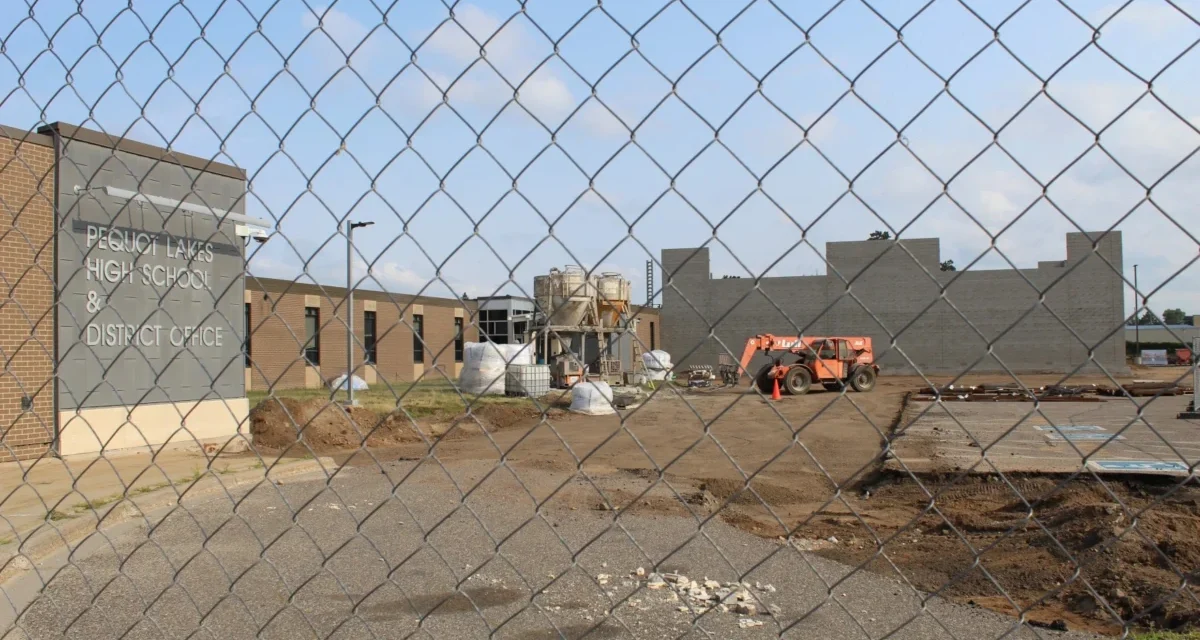
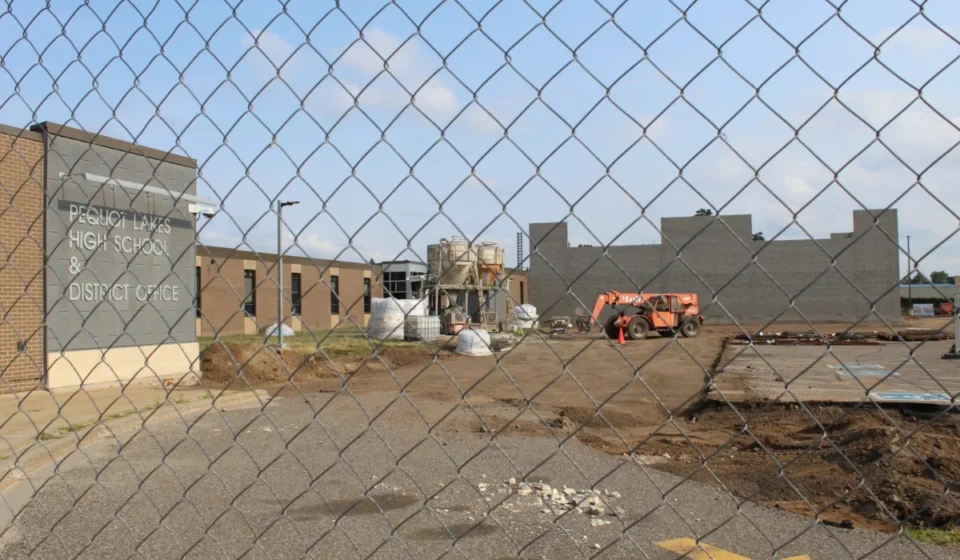
However, in the north-central region of the state, a group of school districts is defying this trend. Motivated by a transformative piece of legislation passed earlier this year, districts like Walker-Hackensack-Akeley (WHA) and Pequot Lakes are aggressively pursuing operating levies this November. For these administrators, waiting for a more favorable election cycle is not an option; the cost of delay, they argue, is millions of dollars left on the table.
The Genesis of the "Seasonal Recreational Tax Base Replacement Aid"
The driving force behind this surge in referendum activity is the newly created Seasonal Recreational Tax Base Replacement Aid. For decades, school districts in regions with high concentrations of cabin and vacation property have operated at a systemic disadvantage.
The mechanism is straightforward: The state aid covers up to 50% of a qualifying district’s operating levy, effectively shifting the financial burden away from local homeowners and toward the state treasury. To qualify for this infusion of support, a district must prove that at least 15% of its total property value is comprised of seasonal recreational property.
For districts like Pequot Lakes and WHA, which qualify for the maximum allowable aid, this legislation represents a long-overdue correction to an inequitable funding formula. "For years and years, decades and decades, to be honest with you, school districts like Pequot Lakes have been penalized, and more burden has been placed on local district residents and commercial properties than other school districts," says Pequot Lakes Superintendent Kurt Stumpf. "In general, school funding is inequitable, and I think this is a potential way to make it more fair."
A Chronology of Policy and Pressure
The path to this legislation was neither short nor easy. The historical roots of this issue trace back to 2001, when Minnesota lawmakers shifted the taxation of seasonal recreational properties away from local school district levies and toward a statewide education fund. The original intent was to distribute the tax revenue more equitably across the state. However, the subsequent transfer of those funds into the state’s general fund—under the administration of former Governor Tim Pawlenty—effectively hollowed out the revenue streams that many rural districts had relied upon for generations.
The effort to reverse this trend gained significant traction during the 2025 legislative session. State Senator Grant Hauschild (DFL-Hermantown) made the aid package his top priority during high-stakes tax committee negotiations. Despite a narrowly divided House of Representatives, Hauschild’s persistence resulted in the successful passage of the aid, which he framed as a matter of regional equity.
"The tax system has had a disproportionate impact on districts with large amounts of second homes and seasonal properties," Hauschild noted during a 2025 interview. "So, let’s provide an aid back to those school districts to make up for the fact that they’re not collecting those property taxes."
The Arithmetic of the "New" Levy
The mechanics of the new aid are designed to reduce the local tax burden without diminishing the total revenue available to the school district. Because the state is effectively subsidizing the levy, the districts can ask for a specific amount of money while the local property tax impact is significantly mitigated.
However, a unique communication challenge remains. By law, ballot language must still inform voters that they are voting for a property tax increase. To combat the inevitable "sticker shock," superintendents like WHA’s Kevin Wellen are focusing heavily on the math.
"I’ve heard from people, ‘It sounds too good to be true, how do you convince them?’ I just keep showing them the math," Wellen explained.
In a bold move to ensure transparency, school boards in Pequot Lakes and WHA have made public commitments to offset the new operating levies by reducing other discretionary property taxes they are authorized to collect. The goal is a "net-zero" tax increase for residents, where the influx of state aid covers the district’s operational needs without requiring more from the individual taxpayer.
Implications for Fiscal Sustainability
For the 75 districts across Minnesota that qualify for this new aid, the stakes are high. Nearly half of these districts currently lack an operating levy, which is a prerequisite for receiving the new funding. As financial pressures mount—driven by inflation, rising personnel costs, and the sunsetting of federal pandemic-era funding—the ability to pass a levy is no longer just about expansion; it is about survival.
Addressing the Deficit
The financial reality for these districts is stark. Walker-Hackensack-Akeley is currently managing a $573,000 deficit. Superintendent Wellen notes that the additional revenue generated by the levy, coupled with the state aid, will allow the district to plug that hole while maintaining current class sizes and extracurricular offerings like band and robotics.
Similarly, Pequot Lakes intends to use the funds to retain essential intervention staff, providing critical support to students struggling with core subjects like mathematics and reading.
The Trust Factor
The success of these referendums rests heavily on the credibility of local school boards. Because the commitment to "under-levy" or offset taxes is a board policy rather than a permanent statutory requirement, there is a degree of voter skepticism regarding the future.
"We don’t want to encumber future boards, but I think future boards living in our community and knowing what we promised our community is important as well," Stumpf stated, acknowledging the reality of local governance.
Wellen is more blunt: "My answer to the population, then, would be, ‘Then elect new board members that won’t do that.’"
Navigating the Political Climate
The upcoming election cycle presents a complex environment for these districts. Voters will be asked to weigh in on the school levies alongside a statewide constitutional amendment regarding the state’s school trust fund—a measure that promises more money for schools without any tax increase.
Todd Rapp, a consultant with Rapp Strategies, Inc., who is assisting both Pequot Lakes and WHA with their communications, suggests that the primary obstacle is the current environment of cynicism. "Part of the challenge for a school district is going to be to make sure they can get the attention of their voters so they can explain clearly and factually what it is that they’re trying to do," Rapp said.
However, the fact that these districts successfully passed building referendums just last year provides a foundation of trust. By engaging in open, transparent dialogues and focusing on the concrete benefits to the student population, these districts are banking on the idea that voters will look past the partisan noise of the general election and recognize the tangible fiscal advantage presented by the state aid.
Conclusion: A Model for Rural Equity?
The experiment in north-central Minnesota serves as a litmus test for a new model of rural school finance. If these districts succeed in passing their levies this November, it will likely provide a blueprint for other districts across the state to follow.
By leveraging state aid to fill local revenue gaps, these schools are attempting to solve a generational inequity in a single election cycle. While the political climate remains volatile, the administrators involved believe that the "crazy bargain" of receiving substantial state funding for a minimal local tax footprint is a message that, once understood, will resonate with the electorate.
As the November election approaches, the focus remains on the classroom. For the students in Walker-Hackensack-Akeley and Pequot Lakes, the outcome of these votes will determine whether they see their school programs continue, shrink, or potentially expand. For their leaders, it is a race against time and a test of whether, in an age of deep division, a clear, mathematically sound argument can still carry the day.