





















































Daylight Saving Time Debate Reaches Congressional Crossroad as Americans Prepare for November Clock Shift

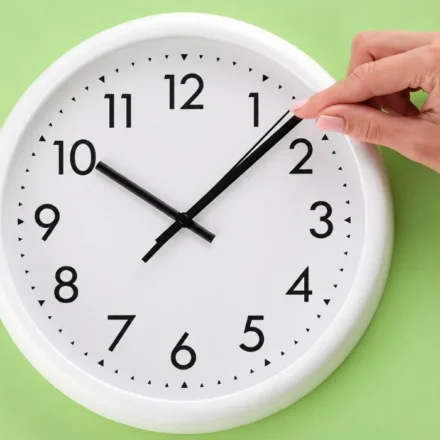
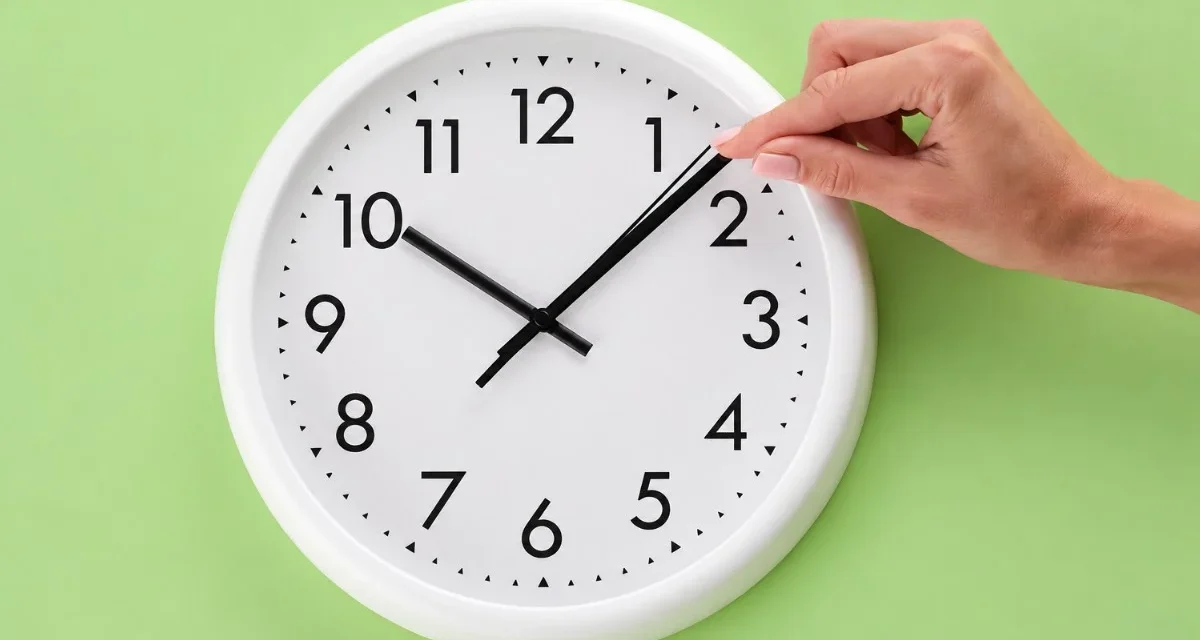
WASHINGTON — Millions of Americans will turn their clocks back one hour on Sunday, November 1, 2026, marking the end of Daylight Saving Time (DST) for the year. The transition occurs despite a landmark vote in the U.S. House of Representatives earlier this summer aimed at making daylight saving time permanent and eliminating the biannual ritual.
While the legislative branch took its most decisive step in years toward ending the practice, the failure of the U.S. Senate to act before the autumn recess means standard time will resume as scheduled. At 2:00 a.m. local time on November 1, clocks will fall back to 1:00 a.m., granting an extra hour of sleep overnight while shifting sunlight earlier in the morning and causing evenings to darken significantly earlier across the nation.
1. Main Facts: Legislative Progress Stalls Despite House Approval
The persistent national debate over federal timekeeping reached a major milestone in mid-2026, yet administrative realities mean the status quo remains legally enforced for the remainder of the year.
The House Vote on H.R. 139
On July 14, 2026, the U.S. House of Representatives passed H.R. 139, officially known as the Sunshine Protection Act, in a decisive 308-to-117 vote. The bipartisan measure sought to establish permanent daylight saving time across all participating states and territories, effectively ending the compulsory fall transition back to standard time.
Under H.R. 139, states that currently observe daylight saving time would remain advanced by one hour year-round, preserving late-afternoon sunlight through the winter months.
Senate Bottleneck and Current Legal Status
Despite the veto-proof majority achieved in the House, the bill ran into procedural inertia upon arrival in the upper chamber. Received by the Senate on July 15, 2026, H.R. 139 was formally referred to the Senate Committee on Commerce, Science, and Transportation.
With no vote scheduled prior to the standard time transition, the bill remains in committee. A parallel Senate bill, S. 29, introduced in January 2025 by Senator Rick Scott (R-FL), has similarly languished without a floor vote.
Under the U.S. Constitution, legislation must pass both congressional chambers in identical form and receive presidential signature to alter federal law. Consequently, the Uniform Time Act of 1966 remains the controlling statute, requiring the return to standard time on the first Sunday of November.
+-----------------------------------------------------------------------------------+
|                        SUNSHINE PROTECTION ACT: LEGISLATIVE PATH                  |
+-----------------------------------------------------------------------------------+
|  Jan 2025: S. 29 Introduced (Sen. Scott) -------> Trapped in Senate Committee    |
|  Jul 14, 2026: H.R. 139 Passed House (308-117) ---> Sent to Senate Commerce Comm.  |
|  Nov 1, 2026: Standard Time Resumes -------------> Federal Law Unchanged          |
|  Mar 14, 2027: Scheduled DST Return ---------------> Pending Senate Action         |
+-----------------------------------------------------------------------------------+
2. Chronology: The Decades-Long Effort to Reform U.S. Timekeeping
The effort to stabilize the nation’s clocks has been marked by historical policy reversals, regulatory shifts, and recurring congressional debates.
- 1966 — The Uniform Time Act: Congress passes baseline legislation establishing a standardized system for Daylight Saving Time across the United States. While states are permitted to opt out into year-round Standard Time, they are prohibited from unilaterally adopting year-round Daylight Saving Time.
- January 1974 — The Emergency DST Experiment: In response to the 1973 OPEC oil embargo, President Richard Nixon signs the Emergency Daylight Saving Time Energy Conservation Act, placing the country on year-round DST to conserve fuel.
- October 1974 — The 1974 Reversal: Public support for year-round DST plummets from 79% in December 1973 to 42% by February 1974, largely driven by intense public outcry over morning darkness and safety concerns for children walking to school. Congress abruptly restores standard winter time.
- 2005 — Energy Policy Act Extensions: Congress expands DST by four weeks, moving the start date to the second Sunday in March and the end date to the first Sunday in November, effective 2007.
- January 2025 — Introduction of S. 29: Senator Rick Scott reintroduces the Sunshine Protection Act in the 119th Congress with bipartisan co-sponsors.
- July 14, 2026 — House Passage of H.R. 139: The House passes H.R. 139 with a 308-117 vote, sending the bill to the Senate.
- July 15, 2026 — Senate Referral: H.R. 139 is assigned to the Senate Committee on Commerce, Science, and Transportation, where it currently sits.
- November 1, 2026 — Scheduled Return to Standard Time: Clocks fall back at 2:00 a.m. local time nationwide, except in non-participating jurisdictions.
- March 14, 2027 — Next Scheduled DST Transition: Unless intervening federal legislation is enacted, clocks will advance one hour.
3. Supporting Data: Astronomical Impacts, State Laws, and Public Health
The official shift from Daylight Saving Time back to Standard Time produces immediate physical, geographical, and physiological effects across the country.
Astronomical Shift and Regional Light Schedules
According to official parameters verified by the National Institute of Standards and Technology (NIST), the 2026 daylight saving window spanned 238 days—beginning March 8 and terminating November 1.
The autumn change drastically accelerates the early arrival of dusk, particularly in northern latitudes.
MINNEAPOLIS, MN: NOVEMBER 2026 SUNSET TRAJECTORY
======================================================
Oct 31 (DST):      6:02 PM Sunset
Nov 01 (Standard): 5:01 PM Sunset  [1-Hour Immediate Drop]
Nov 15 (Standard): 4:44 PM Sunset
Nov 30 (Standard): 4:33 PM Sunset
======================================================
While sunrise times shift an hour earlier on November 1—providing morning light for early commuters—the sudden loss of late-afternoon daylight causes dramatic routine adjustments for workers, students, and outdoor industries.
State Trigger Legislation and Federal Preemption
Current federal law creates an asymmetric legal framework. Under Department of Transportation guidelines:
- States may opt out of Daylight Saving Time completely, remaining on permanent Standard Time (e.g., Arizona, excluding the Navajo Nation, and Hawaii, alongside the territories of Puerto Rico, Guam, American Samoa, the U.S. Virgin Islands, and the Northern Mariana Islands).
- States cannot legally implement permanent Daylight Saving Time without federal statutory authorization.
Despite this federal barrier, 19 states have passed state-level trigger laws or resolutions designed to automatically enact permanent DST the moment federal legislation grants permission.
| State | Trigger Law Status | Year Enacted | Primary Legislative Objective |
|---|---|---|---|
| Florida | Enacted | 2018 | Permanent Daylight Saving Time |
| Washington | Enacted | 2019 | Permanent Daylight Saving Time |
| Oregon | Enacted | 2019 | Permanent Daylight Saving Time (Contingent on WA/CA) |
| Minnesota | Enacted | 2021 | Permanent Daylight Saving Time |
| Colorado | Enacted | 2022 | Permanent Daylight Saving Time |
For residents in these 19 states, local trigger provisions remain dormant until the Senate passes H.R. 139 or S. 29 and the bill is signed into law.
Health and Sleep Data
Public health metrics highlight systemic sleep disruption around time changes. Data published by the Centers for Disease Control and Prevention (CDC) in April 2026 revealed that 30.5% of American adults averaged fewer than seven hours of sleep per day in 2024, underscoring baseline widespread sleep deprivation.
CDC ADULT SLEEP DATA & TIME SHIFT EFFECTS
+---------------------------------------------------------------------------------+
| Chronic Sleep Deprivation Baseline (U.S. Adults): 30.5%                         |
+---------------------------------------------------------------------------------+
| Spring Adjustment (+1 hr lost)   --> Elevated risk: Traffic crashes, cardiac events |
| Fall Adjustment (+1 hr gained)  --> Circulation disruption: Early dusk, seasonal |
|                                      affective strain                           |
+---------------------------------------------------------------------------------+
4. Official Responses and Stakeholder Perspectives
The debate over federal time policy has divided lawmakers, health professionals, safety experts, and industry organizations, each favoring different models.
Congressional Proponents: Economic and Quality-of-Life Benefits
Lawmakers advocating for the Sunshine Protection Act emphasize consumer behavior, public safety, and mental health.
Supporters of year-round Daylight Saving Time argue that extended evening light encourages outdoor commercial activity, reduces evening traffic collisions by improving commute visibility, and combat seasonal mood disruptions associated with early winter darkness.
"Americans want more light at the end of their workday, not less," supporters argued during House floor debates prior to the July vote. "Twice-a-year clock shifts are an outdated relic that harms our economy, disrupts our schedules, and lowers quality of life."
Medical and Scientific Community: The Case for Permanent Standard Time
While medical experts broadly support eliminating biannual clock adjustments, major health organizations strongly oppose permanent Daylight Saving Time, advocating instead for permanent Standard Time.
The American Academy of Sleep Medicine (AASM), supported by sleep researchers nationwide, maintains that standard time aligns more naturally with human biological circadian rhythms. Standard time prioritizes morning sunlight, which triggers natural cortisol production and resets the body’s internal clock.
TIME POLICY PREFERENCES BY INTEREST GROUP
===================================================================================
STAKEHOLDER                 PREFERRED MODEL         PRIMARY RATIONALE
-----------------------------------------------------------------------------------
House Majority (H.R. 139)   Permanent DST           Evening daylight, retail/golf boost
Sleep Researchers (AASM)    Permanent Standard      Circadian alignment, morning light
Transportation Safety       Permanent Standard      Child safety at winter bus stops
Commercial Retail/Tourism   Permanent DST           Increased late-afternoon spending
===================================================================================
The CDC notes that forcing morning routines into darkness—a key consequence of winter DST—can cause chronic circadian misalignment, leading to cumulative sleep deficits, impaired workplace alertness, and cardiovascular stress.
5. Socioeconomic, Health, and Safety Implications
The decision to maintain or eliminate biannual time transitions carries broad national consequences across traffic safety, public health, energy usage, and transportation operations.
Traffic Safety and Infrastructure Impact
The biannual shift introduces immediate operational hazards. While the spring "forward" transition triggers documented spikes in traffic accidents due to acute sleep loss, the autumn "fall back" shift presents different safety challenges.
Earlier winter dusk shifts peak rush-hour traffic into total darkness. Transport departments nationwide—including state agencies managing freeway and highway safety in cold-weather states like Minnesota—report heightened risk for pedestrian and vehicle collisions during late afternoon commutes in the first weeks following the November transition.
FALL VS. SPRING TRANSITION IMPACTS
-----------------------------------------------------------------------------------
SPRING SHIFT (March):
  - Loss of 1 hour of sleep overnight.
  - Spike in morning fatigue-related traffic crashes.
  - Increased short-term risk of cardiovascular events.

FALL SHIFT (November):
  - Gain of 1 hour of sleep overnight.
  - Commute hours shift into late-afternoon darkness.
  - Increase in evening pedestrian and traffic collision risks.
-----------------------------------------------------------------------------------
Energy and Economic Effects
Historical efforts to extend daylight saving time were driven by energy conservation goals. However, modern research shows mixed results:
- Reduced evening lighting needs are often offset by increased morning heating requirements during winter months.
- Increased summer air conditioning usage reduces overall energy savings.
Economically, extended evening light benefits retail, golf, and outdoor recreation sectors by driving late-afternoon consumer traffic. Conversely, agricultural sectors and morning transport industries favor earlier sunlight for operations.
Future Outlook: The Road to March 2027
As Americans adjust their manual clocks and automatic devices reset on November 1, legislative attention turns back to Capitol Hill.
                       UPCOMING CRITICAL MILESTONES
                       ============================
                                [Nov 01, 2026]
                     Return to Standard Time (2:00 AM)
                                     |
                                     v
                               [Winter 2026]
                     Senate Commerce Committee Action?
                                     |
                                     v
                               [Mar 14, 2027]
                       Scheduled DST Return (2:00 AM)
Unless the Senate takes up H.R. 139 and sends it to the President’s desk before the current legislative session ends, the existing statutory schedule remains binding under federal law.
Under 15 U.S.C. § 260a, the nation is scheduled to advance clocks once again on Sunday, March 14, 2027. Until federal legislation unifies the state mandates, millions of households, businesses, and transit networks will continue navigating the twice-yearly change.