













































For Anthony Muñoz, a high school student at Vista Academy near Denver’s bustling international airport, the reality of climate change was not a theoretical debate—it was an immediate, sensory experience. Living under the constant roar of jet engines, Muñoz often found himself looking skyward, questioning the unseen toll that aviation fuel might be taking on the flora and fauna surrounding his campus.
Driven by a blend of scientific curiosity and environmental anxiety, Muñoz didn’t just wonder; he acted. Partnering with the National Center for Atmospheric Research (NCAR) in Boulder, he spearheaded a project to transform a patch of school land into an "ozone garden." By cultivating native plants sensitive to ground-level ozone, Muñoz and his peers could physically monitor air quality through the health of the leaves, while simultaneously supporting local biodiversity, such as the migratory patterns of monarch butterflies.
Muñoz’s project was more than just an extracurricular interest; it was a capstone requirement for Colorado’s "Seal of Climate Literacy." This burgeoning statewide initiative is part of a growing movement to formalize climate education, providing high schoolers with a recognized credential that bridges the gap between traditional textbook learning and tangible, community-based environmental advocacy.
The Mechanics of the Seal: Bridging Theory and Practice
The Seal of Climate Literacy functions as a formal endorsement on a student’s high school diploma and transcript, signaling to universities and future employers that the graduate possesses a specialized understanding of Earth’s climate systems. To earn this designation, students in participating districts must complete a rigorous two-pronged curriculum:
- Academic Foundations: Students must complete at least two advanced courses covering the principles of climate science, including its causes and potential mitigation strategies. One course is typically rooted in the hard sciences—such as biology, environmental science, or Earth science—while the second allows for interdisciplinary flexibility, often spanning civics, the humanities, or even fine arts.
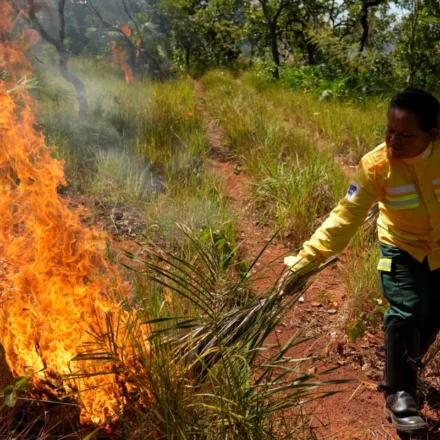
- Community Capstone: The cornerstone of the program is a student-led, community-focused project. Whether it involves forestry management, the installation of solar arrays, or the restoration of local wetlands, the capstone forces students to apply climate theory to real-world problems.
Since the policy’s inception in Colorado in 2024, 26 of the state’s 179 school districts have adopted the program. The model is now gaining momentum across the U.S. Maine has officially implemented a climate seal, and California recently signed legislation to establish a similar pathway for its graduates. Similar youth-led movements are currently pushing for legislative adoption in Hawaii and Minnesota.
A Chronology of the Climate Literacy Movement
The roots of this initiative trace back to the work of Lyra Colorado, a Denver-based nonprofit focused on community-centered education. According to Mary Seawell, the organization’s CEO, the impetus for the seal came directly from rural students and educators who felt that standard textbooks failed to capture the climate realities of their daily lives.
- 2023–2024: Lyra Colorado identifies a need for a more immersive climate curriculum. Legislative discussions begin in Colorado, highlighting the demand for students to engage with climate change not as a distant catastrophe, but as a local challenge.
- 2024: Colorado officially approves the Seal of Climate Literacy.
- 2025: Maine adopts its own seal, opting for administrative implementation rather than a lengthy legislative battle. The program sees immediate interest, with pilot schools reporting participation rates far exceeding initial projections.
- Late 2025–2026: California signs into law a bill establishing the seal. Student advocacy groups, such as the Minnesota Youth Council, continue to lobby state legislatures for similar recognition.
Supporting Data and the "Green Workforce" Pipeline
Proponents of the seal argue that the initiative is an essential economic and psychological tool. As the global economy shifts toward sustainability, there is an urgent need for a workforce capable of managing solar grids, climate-resilient agriculture, water resource management, and urban heat mitigation.
By tying the seal to career and technical education (CTE), advocates are attempting to create a direct pipeline from high school classrooms to green-sector employment. Lyra Colorado is currently collaborating with institutions like Colorado Mountain College to align the high school seal with college-level certifications in skilled trades.
"Students want to be involved in climate action, in environmental literacy, in green careers," says Teddy Lyman, the K-12 climate education specialist for Maine. "They are often doing the work already but don’t have the recognition. They didn’t see a sort of pathway to continue that work."
The psychological benefit is equally significant. In an era often defined by "climate anxiety," providing students with the agency to execute projects in their own backyards—rather than feeling overwhelmed by global, abstract disasters—has proven to be a powerful pedagogical strategy.
Official Responses and Political Hurdles
Despite the enthusiasm from students and educators, the program faces significant opposition. The political climate remains contentious, with some lawmakers and think tanks questioning the focus of these initiatives.
Lance Izumi, senior director of education studies at the Pacific Research Institute, argues that the seal is a distraction from foundational academic subjects. "Diverting focus away from foundational science learning could worsen California’s already abysmal performance levels," Izumi stated, noting that only a third of California students currently test as proficient in science. He advocates for a "back-to-basics" approach, expressing skepticism toward what he categorizes as "activist community projects."
Furthermore, the initiative faces severe financial constraints. With limited state funding—Colorado’s rollout received less than $20,000 in state support—the burden often falls on local school districts, many of which are already struggling with tightening budgets. Many students, including Muñoz, have had to rely on independent grants or out-of-pocket funding to bring their projects to life.
The political landscape is further complicated by federal rhetoric. With high-profile figures characterizing climate change as a "hoax," the philanthropic and public support that sustains these educational programs has faced a "chilling effect." Seawell notes that donors are becoming increasingly cautious about the political risks of funding climate-related educational nonprofits, and proposed cuts to federal scientific institutions, such as the National Center for Atmospheric Research, threaten the technical partnerships that make student research possible.
Implications for the Future of Education
The movement for climate literacy represents a broader shift in how American schools address the "big" issues of the 21st century. By treating climate education not as a single unit in a textbook, but as a longitudinal process culminating in a professional-grade credential, these states are changing the relationship between youth and the environment.
For students like Rylan Neumann, who transitioned from a Colorado high school to UC Berkeley, the seal was a launchpad for broader activism. "Getting more students involved in climate action and how they’ll be impacted in the future is essential," she said. "Students are the future. We’re the ones growing up in this world."
The success of the program in places like Freeport, Maine—where students are already navigating the challenges of a rapidly warming Gulf of Maine—demonstrates that local adaptation is the most effective form of climate education. When students at Freeport High School study invasive crab species or coastal erosion, they aren’t just learning science; they are learning the economics and logistics of their own communities’ survival.
As the program continues to scale, its long-term viability will depend on several factors: the ability to secure stable funding, the success of integrating these seals into college credit pathways, and the capacity to shield climate science education from the volatility of national politics.
Anthony Muñoz, now studying mechanical engineering, continues to look forward. Despite the uncertainty regarding future federal funding for the research centers that mentored him, he remains committed to the garden he planted. "Are you going to think beyond yourself and help not only those in need but the environment, or will you sit back and wait for someone else to change the world for you?" he asks. For the thousands of students now pursuing the seal, the answer is increasingly clear: they have chosen to act.