



















































DES MOINES, Iowa — For Paul Grinvalds, the marathon is more than a race; it is a discipline that has taken him across all 50 states to complete 114 marathons. Yet, even with decades of experience, the 68-year-old West Des Moines native finds himself increasingly at odds with the environment. Like many endurance athletes, Grinvalds finds his performance—and his safety—compromised whenever the mercury climbs above 60 degrees Fahrenheit (15.5 degrees Celsius).
"One thing about marathoners is typically we’re kind of stubborn," Grinvalds says, noting that he finds even temperatures in the 50s to be uncomfortably warm for peak performance. "If we have a goal and it’s hot, a lot of times we’re still going to try to do that goal, which is just stupid because you’re almost guaranteed to have a very painful experience."
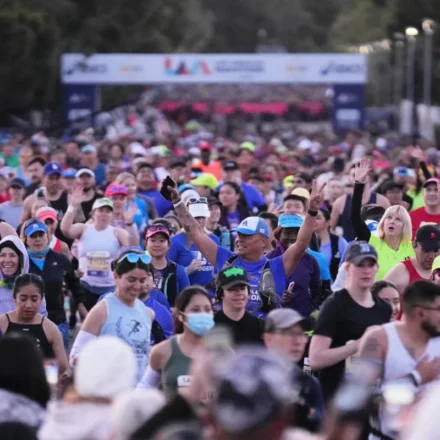
That "painful experience" is becoming a global phenomenon. As climate change, driven largely by the combustion of fossil fuels, continues to drive record-breaking heat, the world of endurance sports is facing an existential reckoning. From local 5Ks to historic marathons, organizers are scrambling to adapt to a reality where the weather is no longer a backdrop but a primary, often dangerous, variable.
The Shift: A Chronology of Climate Adaptation
The trend of altering long-standing race traditions is accelerating as heat-related cancellations and near-misses mount.
In 2023, the Twin Cities Marathon in Minneapolis-St. Paul was forced to cancel its race entirely due to record-breaking heat and dangerous humidity levels. For a race with a four-decade history of being held on the first Sunday of October, the cancellation was a watershed moment. Following that "devastating" event, organizers conducted a deep dive into weather patterns, leading to a permanent structural change: starting in 2027, the Twin Cities Marathon will move to later in October.

Race Director Ed Whetham acknowledges that the move carries its own risks, such as the potential for unseasonably cold, snowy conditions. However, he emphasizes that the trade-off is necessary. "We’ll take a 39-degree (4 C) start over a 70-degree (21 C) start," Whetham said.
This reactive shift is playing out across the United States:
- 2024: The Sioux Falls Marathon in South Dakota moved its annual race from August to September following a cancellation caused by extreme heat.
- Ongoing: Major events, including the Air Force Marathon in Ohio, the Little Rock Marathon in Arkansas, and the Long Beach Marathon in California, have shifted start times significantly earlier in the morning to capture the cooler dawn air.
- 2025: The Los Angeles Marathon made headlines by offering runners the option to end their race at the 18-mile mark while still receiving a finisher’s medal—an attempt to mitigate heat exhaustion as temperatures spiked.
The Physiology of Heat and Performance
The biological constraints of running in the heat are unforgiving. When a runner exerts themselves, their body requires a sophisticated internal cooling system. As temperatures creep into the upper 50s and 60s, a "physiological tug-of-war" begins, according to experts in sports science.
"As you get to warmer temperatures, you end up having a bigger competition between blood supplying your muscles to keep running and blood flow to your skin for thermal regulation," explains Dr. Christopher Minson, a professor of human physiology.
The thermodynamics of human movement are inefficient. Only about 25% of the energy produced during a run is used to move the body forward; the remaining 75% is converted into heat. When the ambient temperature is high, or humidity prevents sweat from evaporating, that internal heat has nowhere to go. This can lead to rapid onset of heat-related illnesses, ranging from heat exhaustion to life-threatening heatstroke.

While some elite athletes, like ultramarathoner John Seals, use aggressive training techniques—such as running in midday heat or utilizing saunas—to "acclimate" their bodies, such practices are not a panacea for the general public.
Data and Trends: A Warming Future
The urgency of these changes is backed by grim climatological data. The contiguous United States recently experienced its warmest July on record, and 2024 was globally the hottest year ever documented. According to the World Meteorological Organization, the global average temperature is expected to rise by more than 1.5 degrees Celsius (2.7 degrees Fahrenheit) above pre-industrial levels between 2025 and 2030.
Climate Central, a research group that analyzed 221 marathons, found that the warming trend is actively eroding the possibility of "optimal" racing conditions. By 2045, the study predicts that the low 40s (6-7 C)—the ideal range for recreational runners—will become a rarity for 46 of the 51 major U.S. marathons analyzed.
"The ability to go outside, to exercise, to take advantage of your human body and being healthy, that’s something that’s getting challenged by climate change," says Andy Pershing, who led the Climate Central research.
Official Responses and The "Stubborn" Runner Problem
The response from event organizers has been a mix of logistical maneuvering and public health advocacy. When the Los Angeles Marathon offered the "shortened finish" option in March 2025, the move sparked online derision from some in the running community who viewed it as a compromise of the "marathon spirit."

Meg Treat, a spokesperson for the Los Angeles Marathon, defended the decision, citing the safety of the 27,000 participants as the primary metric of success. "We welcome the feedback and it’s certainly something that caused a lot of discussion, but when we’re grading ourselves on it, it has to do with how safe our runners were on the day of the event," Treat said.
Douglas Casa, a leading expert on sports-related deaths at the Korey Stringer Institute, supports such precautionary measures. He points out that the greatest danger often lies not in the weather itself, but in the psychological rigidity of the runners.
"If someone was smart enough to say, ‘OK, it’s a little hotter today than usual, I’m going to run a 7-minute mile instead of a 6:30 mile,’ then they won’t get any hotter than normal," Casa said. "It’s just that runners are sometimes very locked into what they normally do and what their goals are."
Broadening Implications: Beyond the Finish Line
The implications of this shift extend far beyond the finish line of a 26.2-mile race. Jessica Murfree, who leads a laboratory at the University of North Carolina-Chapel Hill dedicated to studying climate change’s impact on sports, warns that the heat is fundamentally changing how humans engage with physical activity.
"If we can’t walk, if we can’t exercise or go for runs, it’s too hot, can we still stay physically active while remaining cool?" Murfree asks. Her research suggests that the future of exercise may increasingly move indoors or toward water-based activities like swimming as outdoor environments become hostile.

From collegiate football fields to neighborhood parks, the challenge is systemic. Organizers are now forced to factor in "wet-bulb" temperatures and heat-index warnings into their liability and logistics planning.
As for Paul Grinvalds, his commitment remains unshaken, though his approach has evolved. He is more mindful of the risks, more willing to slow his pace, and more attuned to the reality that the sport he loves is changing. The "stubborn" nature of the marathoner, once a badge of honor, is now becoming a liability in a world where the climate no longer grants the luxury of ignoring the heat.
The future of the marathon, it seems, will be defined not by who can run the fastest, but by which events and athletes can best adapt to a world that is fundamentally growing too hot to handle.