




















































In an age where the discourse surrounding the environment is increasingly fraught with political polarization and existential anxiety, a quiet revolution is taking root in American high schools. It is not occurring in the hallowed halls of federal policymaking, but rather in the gardens, science labs, and community centers of local school districts. The "Seal of Climate Literacy"—a formal endorsement on a high school diploma—is emerging as a powerful, albeit controversial, mechanism to bridge the gap between abstract climate science and actionable, local solutions.
As extreme weather events become the new normal, states like Colorado, Maine, and California are pioneering a model that empowers students to move beyond the "doom and gloom" of textbook climate anxiety. By pairing rigorous coursework with community-based capstone projects, these programs are attempting to transform passive learners into active stewards of their own environments.
The Genesis of a Grassroots Initiative
The initiative traces its origins to the collaborative efforts of education nonprofits, most notably the Denver-based organization Lyra Colorado. The impetus for the program was simple but profound: rural students and educators expressed a deep frustration with climate education that felt disconnected from their lived realities. They didn’t want to study climate change as a distant, abstract concept; they wanted to explore it as a tangible reality affecting their crops, their water supplies, and their local ecosystems.
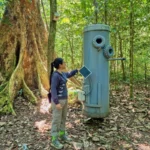
Anthony Muñoz, a former student at Vista Academy in Colorado, serves as the quintessential success story for this movement. Living near Denver’s primary airport, Muñoz grew concerned about the impact of jet fuel emissions on his local environment. An avid gardener, he transformed his interest into a rigorous scientific endeavor. Partnering with the National Center for Atmospheric Research (NCAR), Muñoz designed an "ozone garden"—a living laboratory filled with native plants specifically chosen for their sensitivity to ground-level ozone.
Under the guidance of climate scientists, Muñoz learned not just how to nurture a garden, but how to collect data, analyze the condition of leaves to assess air quality, and understand the intricate relationship between milkweed migration and monarch butterflies. "One garden is a very good data source," Muñoz reflects. "Colorado’s so beautiful, and I would hate to see it wilt away." His project became the cornerstone of his pursuit of the state’s Seal of Climate Literacy, a credential that now signifies his transition from high school student to climate-conscious leader.
A Chronology of the Movement
The trajectory of the Climate Literacy Seal has been swift. Following Colorado’s legislative approval of the seal in 2024, the movement gained rapid momentum across the country.
- 2024 (Colorado): The state legislature officially authorizes the Seal of Climate Literacy, setting a precedent for integrating climate education with community-service-based graduation requirements. To date, 26 of Colorado’s 179 school districts have adopted the program.
- Early 2025 (Maine): Recognizing the success of existing programs like the Seal of Biliteracy, Maine state officials bypass protracted legislative debates to adopt a climate seal directly, aiming to recognize the work students were already performing in their communities.
- Mid-2025 (California): California, the nation’s most populous state, signs legislation to establish a formal climate seal for its high school graduates, signaling a major victory for youth-led climate coalitions.
- Ongoing (National): Student-led advocacy groups in Hawaii and Minnesota continue to lobby state boards of education and legislatures, utilizing the "Colorado model" as a blueprint for policy implementation.
The Mechanics of Literacy: How the Seal Works
Earning the seal is a rigorous undertaking. It is not merely a badge of attendance; it is a transcript-level endorsement that requires students to prove their mettle. The program typically mandates the completion of two advanced courses. One must be a foundational science class—such as environmental studies, biology, or Earth science—while the second can be interdisciplinary, allowing students to integrate climate themes into civics, humanities, or fine arts.
The most critical component, however, is the capstone project. Students must identify a climate-related issue within their own community and implement a solution or a study. These projects have ranged from the restoration of beaver dams and forestry management to the development of sustainable composting systems and the study of invasive species.
The program remains voluntary for both districts and students. This, proponents argue, is a feature, not a bug. It allows districts to tailor their climate literacy initiatives to their local geography and economic priorities—be it the warming waters of the Gulf of Maine or the ozone concerns of urban Colorado.
Official Responses and the Ideological Divide
The rise of the climate seal has not been without its detractors. Critics, particularly those from conservative think tanks, argue that the seal represents a "politicization" of the classroom. Lance Izumi, senior director of education studies at the Pacific Research Institute, has been a vocal opponent. He contends that schools should focus exclusively on foundational science and mathematics, noting that standardized test scores in states like California remain concerningly low.
"Diverting focus away from foundational science learning could worsen performance levels," Izumi argued in a recent statement, characterizing the capstone projects as "activist community projects" rather than academic pursuits.
Proponents, however, view the seal as an essential evolution of the curriculum. Laura Schifter, a senior fellow at the Aspen Institute’s This is Planet Ed, characterizes the seal as a "really promising policy." She notes that climate change is rarely covered in depth in K-12 education, leaving a significant gap in student knowledge. By making it a part of the academic framework, the seal provides a sense of agency to a generation increasingly paralyzed by "climate anxiety."
Economic Implications: The Green Workforce Pipeline
Beyond the environmental benefits, there is a pragmatic, economic rationale for the seal. Supporters are working to align these high school endorsements with career and technical education (CTE) pathways.
Educational organizations are currently collaborating with community colleges to link the seal to certifications in high-demand green trades, such as heat pump installation, solar grid maintenance, and sustainable agriculture. The hope is that a student graduating with a climate seal will be better positioned for the emerging green economy, creating a direct pipeline from the classroom to a sustainable career.
"Students want to be involved in climate action, in environmental literacy, in green careers," says Teddy Lyman, Maine’s K-12 climate education specialist. "They’re often doing the work already but don’t have the recognition. They didn’t see a sort of pathway to continue that work."
Challenges and the "Chilling Effect"
Despite the successes, the movement faces significant headwinds. Financial constraints remain a primary obstacle. Most states have provided minimal funding for the rollout of these programs, forcing students and teachers to rely on grants or out-of-pocket expenses.
Furthermore, the national political climate has introduced a new layer of instability. With federal rhetoric questioning the consensus on climate science and threats to the funding of federal research institutions like NCAR, the environment for climate-focused nonprofits is becoming increasingly volatile. Mary Seawell, CEO of Lyra Colorado, notes that the Treasury Department’s recent scrutiny of the tax-exempt status of environmental nonprofits has created a "noticeable chilling effect" among potential donors.
Empowerment Through Action
For students like Anthony Muñoz and Rylan Neumann, the seal is about more than just a credential—it is about reclaiming their future. Neumann, now a student at UC Berkeley, used her experience with the Boulder Valley School District’s program to lobby for similar policies in California. "Students are the future," she says. "We’re the ones growing up in this world."
As Muñoz continues his studies in mechanical engineering, he remains committed to the garden he helped build. He is currently writing code to streamline data collection for younger students, ensuring the project survives even if political winds shift. For him, the question is simple: "Are you going to think beyond yourself and help not only those in need but the environment, or will you sit back and wait for someone else to change the world for you?"
The Seal of Climate Literacy represents a fundamental shift in how we educate the next generation. It acknowledges that while the global climate crisis is vast and daunting, the most effective responses are often rooted in the local community. By turning students into researchers, activists, and problem-solvers, the program offers a glimmer of hope—a way to replace the paralysis of climate despair with the power of evidence-based action.