













































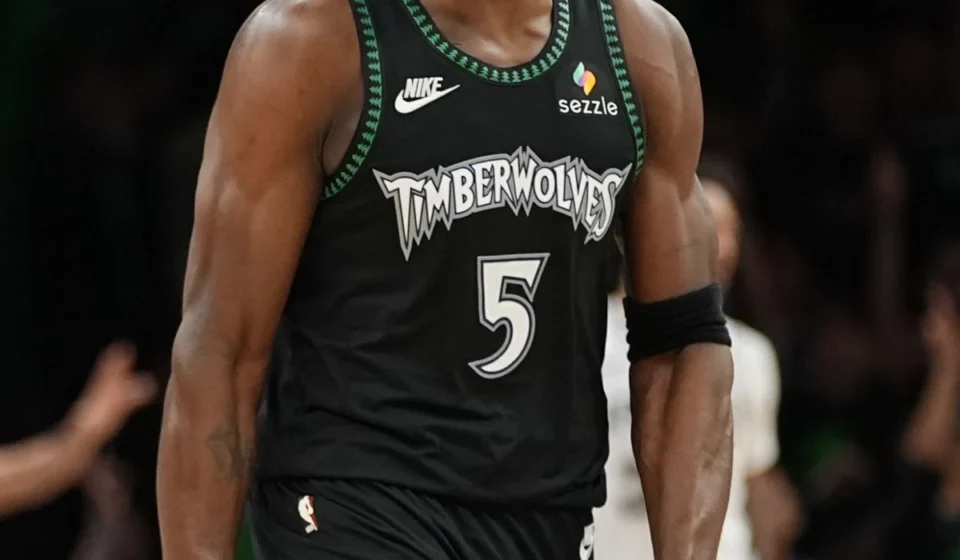

As the NBA preseason training camps open their doors across the league, the Minnesota Timberwolves find themselves at a pivotal crossroads. Following a season characterized by high expectations, internal frustration, and an eventual playoff run that only partially salvaged the year, Head Coach Chris Finch is looking toward a future defined by intentional reinvention.
In the final installment of an exclusive 80-minute interview with MinnPost, Finch pulled back the curtain on the team’s strategic shifts, the development of young center Joan Beringer, and the philosophical changes required to steer a team that often struggled to "get out of its own way" during the previous campaign.
The Beringer Factor: A Young Big’s Baptism by Fire
The most intriguing narrative surrounding the Timberwolves’ upcoming season is the integration of 19-year-old center Joan Beringer. Despite his youth and lack of professional seasoning, the organization’s leadership—led by President of Basketball Operations Tim Connelly—remains notably bullish on his potential.
Finch acknowledges that managing expectations for a player of Beringer’s age is a delicate balancing act. "You have to realize, as with all young players, there is going to be inconsistency," Finch noted. "The way I’m looking at it is: is it self-imposed inconsistency, or is it just young-player-growth inconsistency? With Joan, you are certainly going to have the latter."
Finch identifies Beringer’s physical profile as his greatest asset and his biggest liability. The teenager plays with an infectious, high-motor intensity, but that same aggression often leads to foul trouble and poor positioning. To mitigate this, the coaching staff is focusing heavily on core strength development. According to Finch, building a stronger core is the primary key to preventing the "falling down" habit common among young, developing big men, allowing them to better navigate contact and maintain balance while in the air.

The coach expects a "one-one-one" performance ratio—one game where he excels, one where he struggles, and one that is simply average. The team’s goal is to push that trajectory toward two productive games for every one that falls short. If the team finds itself getting "two out of three" sub-par performances from the backup center position, Finch admits the team will be dangerously exposed in a hyper-competitive Western Conference.
Coaching Staff Reshuffling: Filling the Void
The departure of lead assistant Micah Nori to Portland to pursue a head coaching opportunity has necessitated a structural reorganization of the Timberwolves’ bench. Finch describes this as an opportunity for the remaining staff to step into larger, more impactful roles.
Pablo Prigioni is set to ascend to the role of lead assistant. However, Finch clarifies that Prigioni’s duties will not be a carbon copy of Nori’s. While Prigioni will maintain his focus on offensive innovation, other responsibilities—specifically late-game management, clock logistics, and timeout strategy—will be redistributed.
Finch plans to reclaim some of the late-game decision-making duties himself, while also empowering other assistants like Nate Bubes and "Big Kev" Hansen to take on more specialized tasks. "It is hard to replace a player straight-up for who they are," Finch explained. "Coaching staff is no different, and it creates opportunities for some other people who are deserving of it."
The goal, according to Finch, is to create a more fluid, merit-based distribution of tasks that highlights the unique skill sets of his assistants, ensuring that the team’s tactical depth remains a cornerstone of its identity.

Reflection on a Disappointing "Continuity" Year
When asked about the frustrations of last season, Finch was remarkably candid. He noted that the team’s insistence on "continuity" often became a crutch, leading to a lack of urgency and, at times, a lack of joy on the floor.
"Last year, I mean, I’m not going to lie, it was a super-frustrating year," Finch admitted. "We underachieved throughout most of the year and then in the playoffs we finally kind of ended up where we should have ended up."
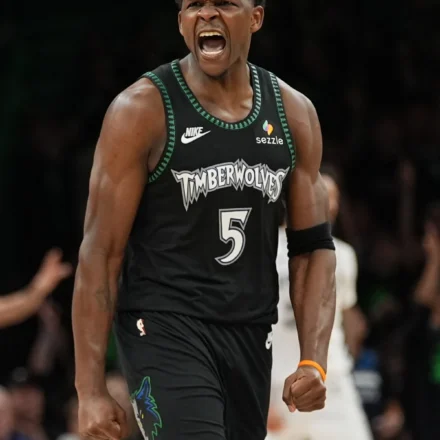
Finch took personal accountability for the team’s tactical struggles, specifically noting the mid-season starting lineup adjustments that shifted the burden onto players like Anthony Edwards and Julius Randle. He conceded that in attempting to optimize the rotation, he likely took his core players for granted, failing to create the "easy" scoring opportunities that had defined the team’s offensive success in previous years.
"We just couldn’t get out of our own way," he said. "We didn’t play with any kind of joy at times. We’d come in and out of moods. And we’ve got to find a way to fight that if that remains in our personality."
The Identity of the 2026-27 Timberwolves
As the new season looms, the question of identity is paramount. Finch is clear about his tactical desires: he wants the team to play faster, pass more effectively, and reclaim the defensive identity centered on ball pressure and physical aggression.

Crucially, Finch is shifting away from the rigid expectations of the past. He plans to utilize Anthony Edwards more strategically within two-man combinations, utilizing the team’s new point guard depth to create more favorable matchups.
When asked if the team’s ceiling is higher while its floor is lower, Finch offered a quiet but definitive confirmation. The volatility is a byproduct of integrating new talent and adapting to a West that continues to grow more formidable.
"There might be more volatility on our team," Finch acknowledged. "We don’t know how the new players are going to integrate, and measure up against expectation. Which is the biggest thing."
Embracing Volatility: A Global Perspective
Perhaps the most revealing aspect of the interview was Finch’s reflection on his own coaching philosophy, which was largely forged during his time coaching overseas. He views the constant reconfiguration of rosters—a hallmark of his and Tim Connelly’s tenure in Minnesota—not as a failure, but as a necessary adaptation to a modern, unpredictable league.
"It is a learned skill," Finch said. "Overseas, there are a lot of external factors that you can’t control—travel, playing in wild environments… The volatility of whether you are going to get paid or not or losing players. Here it is a lot more roster change and internal factors. But I have learned to embrace it."

Finch maintains that the most effective way to win is to identify the "four specific things" that give a team the best chance to succeed at any given moment, rather than clinging to a static, pre-ordained plan. He argues that the disappointment of last season served as a stark lesson in the dangers of assuming that "continuity" is a shortcut to success.
As the Timberwolves head into training camp, the message from the top is clear: the team will not be defined by who they were last year, but by how quickly they can identify their current strengths and build a structure that allows their talent to thrive. In the volatile landscape of the Western Conference, adaptability, rather than consistency, will be the ultimate measure of their success.