























































The Paraquat Papers: Inside the Decades-Long Corporate Campaign to Keep a Parkinson’s-Linked Pesticide on U.S. Fields

This investigative report is based on original documentation published by The New Lede.
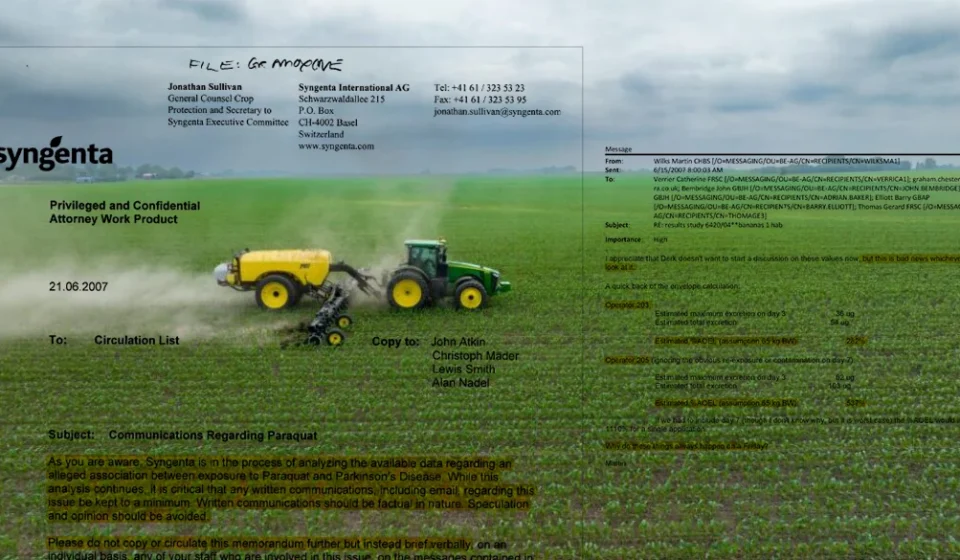
For over four decades, a global consensus has steadily crystallized around the dangers of paraquat, a potent and lethal herbicide. While Sweden took the lead in 1983 by banning the chemical due to mounting evidence of its toxicity to human health, the United States has remained a defiant outlier. Now, a massive cache of internal Syngenta records—unsealed through thousands of pages of litigation documents—reveals that the continued availability of paraquat in the U.S. was not merely a matter of regulatory debate, but the result of a deliberate, multi-layered corporate strategy to withhold data and manipulate scientific discourse.
The revelations, which underpin more than 10,000 lawsuits from individuals suffering from Parkinson’s disease, suggest that the U.S. Environmental Protection Agency (EPA) has been systematically deprived of critical safety information, undermining its ability to protect the American public.

The Global Retreat vs. The U.S. Expansion
The trajectory of paraquat usage presents a stark dichotomy. As international health authorities and sovereign nations grew increasingly alarmed by the chemical’s link to neurodegenerative disorders, global markets for the product collapsed. By the early 2010s, the European Union had implemented a total ban, and in 2016, even the Chinese government—which owns Syngenta—prohibited the use of the herbicide after its own independent research identified unacceptable health risks.
Yet, during the very period when the rest of the world was turning away from paraquat, its footprint in the United States grew. Between 2000 and 2018, U.S. usage of paraquat nearly tripled. While state-level regulators in California and Vermont have recently moved to curtail or ban the chemical, the federal government has historically provided the necessary "green light" for its continued use on millions of acres of farmland, from orchards and cotton fields to wheat pastures.
A Chronology of Concealment
The internal documents, spanning several decades, paint a picture of a company acutely aware of the "bad news" its own research was generating.

- 1970s: Syngenta (and its predecessors) identified that mixing paraquat with surfactants—a standard practice for farm workers—significantly increased the chemical’s toxicity and absorption rate. Internal correspondence from 1975 explicitly warned that registering a pre-mixed product would be "very undesirable due to increased toxicity."
- 2001: As independent researchers began publishing studies linking pesticides to Parkinson’s, a Syngenta strategy document stated, "Our efforts will be to steer the focus of serious research away from paraquat and on to other agents."
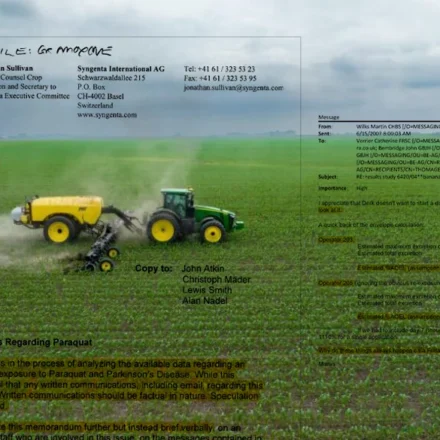
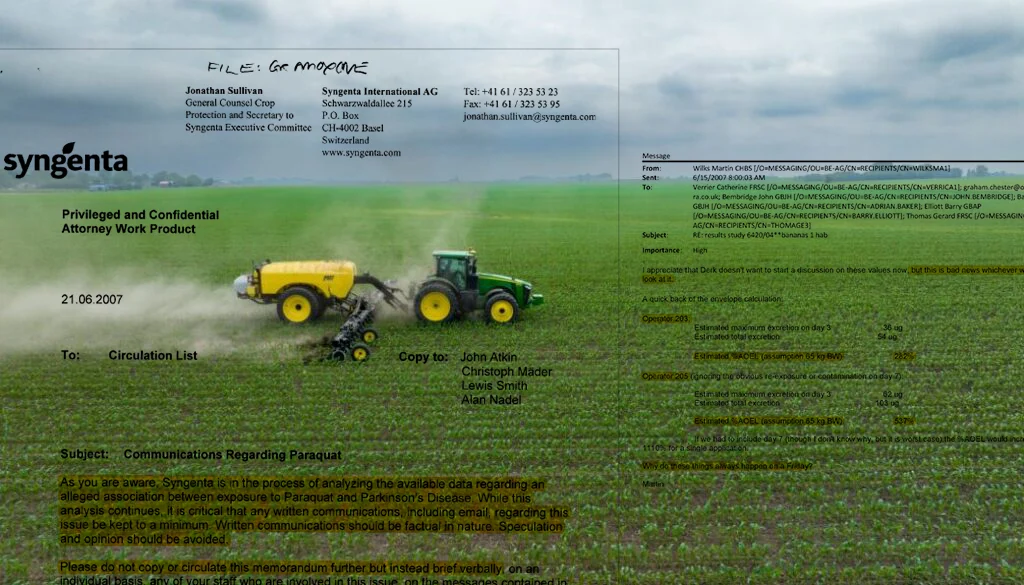
- 2007-2008: Internal emails show a concerted effort to minimize written communication regarding the potential Parkinson’s link. Executives explicitly chided staff for putting "the reduction of litigation risk" in writing, calling for a "halt to this correspondence."
- 2011-2016: The company engaged external consultants, such as those at the firm Exponent, to produce "independent" reviews that cast doubt on legitimate scientific findings. A 2016 paper, internally described as "invaluable in supporting our work," was pushed through publication to counter emerging consensus on pesticide-induced neurotoxicity.
- 2015: When China commissioned its own independent study on the dermal and inhalation toxicity of paraquat, Syngenta executives viewed the lack of corporate oversight as "alarming," fearing that the "stealth nature" of the study would prevent them from influencing the outcome before it reached regulators.
The Science of Strategic Doubt
A recurring theme in the "Paraquat Papers" is the company’s dual-track approach to science. While holding back adverse findings—such as data on how quickly the chemical permeates clothing or enters the human bloodstream—the company simultaneously invested millions into crafting "impeccable" research designed to be "dead solid airtight" for judges and jurors.
The company frequently employed outside scientists, such as Jack Mandel, to author papers that appeared to be independent academic inquiries. Emails reveal that Syngenta scientists provided "editorial changes" and "refined" these manuscripts, often insisting that communications with the authors be conducted verbally to avoid creating a paper trail that could be discovered in litigation. In one instance, a $160,000 contract was linked to a review that minimized the risks of pesticide exposure while highlighting lifestyle factors like coffee and alcohol consumption as potential confounders.
The Failure of the Regulatory Shield
The central tension in the paraquat story is the relationship between the manufacturer and the EPA. Under the Federal Insecticide, Fungicide and Rodenticide Act (FIFRA), manufacturers are legally obligated to submit "factual information regarding unreasonable adverse effects" to the EPA.

Syngenta has maintained in court filings that it has "never knowingly failed" to provide relevant information. However, internal documents from 2025 show that the company acknowledged having no record of providing the EPA with a significant list of reports and internal studies concerning potential health impacts.
Critics argue that the EPA’s reliance on company-provided data creates a systemic "hole" in public health protection. Wendy Wagner, a law professor at the University of Texas, notes that when companies choose which data to share, the entire regulatory framework is compromised. The EPA, for its part, states that it cannot "speculate on how this additional information would impact" its assessments, but emphasizes that failing to disclose such data is a direct violation of federal law.
Official Responses and Corporate Defense
Syngenta continues to reject the allegations of misconduct. In response to inquiries regarding the newly revealed documents, a company spokesperson asserted that the withheld information was either irrelevant to the U.S. market or had been superseded by other findings. The company insists that its move to stop global production of paraquat was driven by "market factors" rather than an admission of liability, noting that no court has yet cited them for failing to comply with disclosure obligations regarding paraquat.

Meanwhile, the EPA remains in a defensive position. The agency recently faced legal challenges from health advocacy groups that forced a re-examination of its 2021 decision, which claimed the human health database for paraquat was "complete." Currently, the agency has asked manufacturers for more data on volatilization—the process by which the chemical becomes airborne—a move that critics view as "too little, too late."
The Human and Institutional Cost
The implications of this saga extend far beyond the legal settlements paid to those currently battling Parkinson’s disease. Experts like Dr. Tracey Woodruff of Stanford University argue that the systemic failure to hold pesticide manufacturers accountable for full transparency has contributed directly to a public health crisis.
"When the pesticide companies know from their own studies that their pesticides are harmful and don’t tell the public or regulators, then they are knowingly contributing to people getting sick and dying," Woodruff stated.

The broader institutional takeaway is the fragility of the "precautionary principle" in American governance. While the European Union and dozens of other nations have adopted a proactive stance—erring on the side of caution when scientific uncertainty exists—the U.S. system has functioned as a reactive entity, often waiting for catastrophic public health outcomes before questioning the data provided by the corporations seeking to profit from the chemical’s use.
Conclusion: A Case Study in Regulatory Capture
The story of paraquat is not just about a single chemical or a single company; it is a case study in the limitations of the modern regulatory state. The "Paraquat Papers" demonstrate that when corporate interest is permitted to define the scope of scientific inquiry, the public interest is invariably subordinated. As legal proceedings continue across the country, the case serves as a grim reminder that the safety of our food supply and the health of our environment depend on more than just the existence of regulations—they depend on the integrity of the data that keeps those regulations meaningful.
For the thousands of families dealing with the devastating, life-altering diagnosis of Parkinson’s, the revelation that these risks were known, quantified, and suppressed decades ago is a chilling indictment of a system designed to protect commerce at the expense of human life. As the EPA faces mounting pressure to re-evaluate its stance, the legacy of paraquat will likely remain a focal point in the debate over how, and for whom, the government regulates the chemical industry.