





















































Supreme Court Upholds Mail-In Voting, Bringing Relief Amidst Lingering Election Uncertainty

WASHINGTON D.C. – September 26, 2026 – The nation’s highest court delivered a crucial ruling last Monday, ending months of intense legal and political wrangling over mail-in ballot procedures. The Supreme Court effectively blocked the Trump administration’s eleventh-hour attempts to impose new, restrictive rules on mail-in voting for the upcoming November 2026 midterm elections. This decision has been met with a collective sigh of relief from election officials across the country, who warned that implementing such changes so close to Election Day would have plunged the electoral process into unprecedented chaos.
The ruling clears the path for millions of Americans to cast their votes by mail, largely under the same established protocols that have governed absentee and mail-in voting in previous cycles. While the availability and specific mechanisms of mail-in voting vary significantly from state to state – ranging from universal vote-by-mail systems to no-excuse absentee options and those requiring a valid reason – the Supreme Court’s decision ensures that the existing frameworks will remain in place. However, the contentious battle leading up to this resolution has left a palpable mark, fueling voter anxiety and deepening skepticism about the reliability of the electoral system. Election administrators now face the dual challenge of preparing for the election and actively working to rebuild public confidence shaken by the protracted dispute.
The Court’s Intervention: Averting Election Chaos
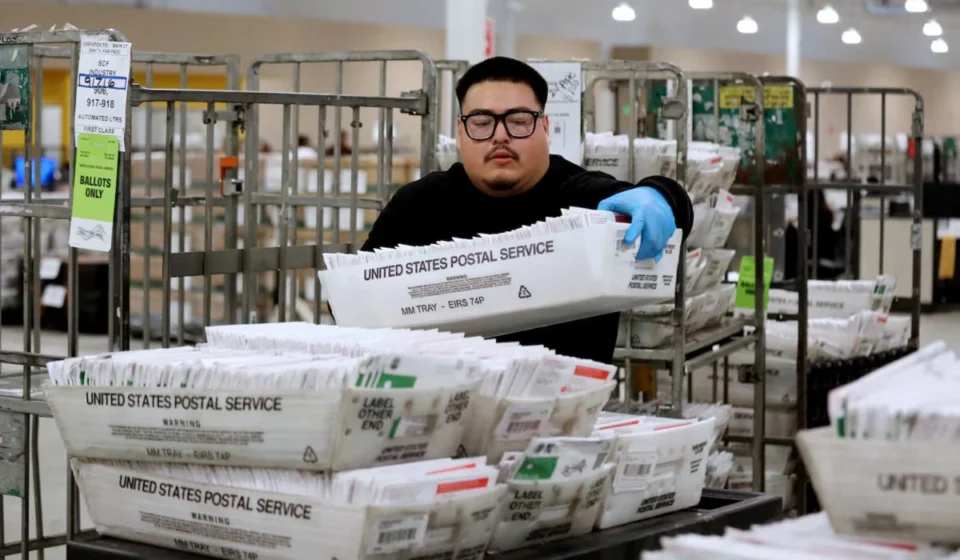
The Supreme Court’s decision was a direct response to a contentious push by the Trump administration to modify how mail ballots are handled, particularly through new directives aimed at the U.S. Postal Service. While the precise details of the proposed "Postal Service restrictions" were subject to ongoing legal interpretation and debate, they generally sought to tighten various aspects of mail ballot processing, potentially impacting deadlines, sorting priorities, and verification procedures. Election officials nationwide vehemently argued that these changes, introduced with less than 50 days until a major federal election, were logistically impossible to implement without jeopardizing the integrity and accessibility of the vote.
Marybeth Kuznik, the seasoned elections director for Pennsylvania’s Fayette County, encapsulated the sentiment of many of her peers, stating, “It’s a relief and it’s palpable. I honestly don’t know how we could have complied with [the Postal Service’s restrictions] at this point in the election cycle.” Her remarks underscore the immense practical challenges that would have arisen, from reprinting millions of ballots and updating voter instructions to retraining staff and overhauling long-established logistical chains, all within a compressed timeframe. The decision effectively averted a scenario where election offices, already stretched thin, would have been forced to navigate a completely new set of rules under immense pressure, with little room for error.
The ruling, though a victory for current election administration practices, does not erase the months of uncertainty and the "chaotic legal battle" that preceded it. For too long, voters have been left wondering if their preferred method of voting would be available or reliable, a concern amplified by a relentless barrage of rhetoric questioning the legitimacy of mail-in ballots. Now, the onus falls heavily on election officials to not only execute a smooth election but also to actively communicate to the electorate that the systems in place are secure and trustworthy, despite the lingering political discord.
Chronology of a Contentious Battle
The seeds of this legal showdown were sown months ago, as the Trump administration began to publicly express concerns about the security and integrity of mail-in voting. These concerns often translated into policy proposals and directives aimed at tightening access to and the processing of mail ballots. Critics viewed these efforts as a deliberate attempt to suppress votes, particularly in a climate where public health concerns made in-person voting less appealing for many. The administration, however, maintained that its actions were necessary to prevent potential fraud and ensure election security.
The proposed U.S. Postal Service rules, at the heart of the Supreme Court case, were seen by many as a significant escalation. While specific details of the proposed rules were often vague in public discourse, they hinted at changes that could have profoundly impacted the timeline for mailing and receiving ballots, potentially requiring earlier submission or imposing stricter delivery standards that the USPS might not have been able to meet under normal operating conditions, let alone during a high-turnout election. This created a dire predicament for election administrators, who operate on precise schedules for ballot design, printing, mailing, and processing. Any last-minute change to postal regulations would have disrupted these carefully choreographed operations, risking widespread disenfranchisement.
The opposition to these proposed rules quickly galvanized across the political spectrum. More than 80 election officials, including Kuznik, collaboratively signed onto an influential amicus brief, formally warning the Supreme Court of the insurmountable logistical hurdles and the practical impossibility of meeting new requirements before the November election. This bipartisan chorus of concern from the very individuals tasked with running elections lent significant weight to the legal arguments against the administration’s proposals.
Notably, several Republican secretaries of state from key swing states, including Kentucky, Georgia, and Kansas, also voiced their strong objections. They filed separate pleas, urging the Supreme Court to freeze the proposed plans, citing the inevitable chaos they would unleash on an election already less than 50 days away. Their arguments were not rooted in partisan opposition to the administration but in the practical realities of election administration, emphasizing the need for stability and predictability in electoral procedures.
These pleas proved decisive, particularly for Supreme Court Justice Brett Kavanaugh. In a concurring opinion, Justice Kavanaugh acknowledged that while he believed there was a "fair chance" the proposed rules could withstand legal scrutiny under different circumstances, applying them to the 2026 elections would be "arbitrary and capricious." His reasoning hinged on the critical factor of time: "state and local election officials do not have sufficient time to reasonably implement the rule." This pragmatic acknowledgment from a conservative justice highlighted the broad consensus among election professionals regarding the impracticality of such last-minute changes. The Court’s decision, therefore, was less a judgment on the merits of the proposed rules themselves and more a recognition of the immediate, disruptive impact they would have had on the integrity and smooth operation of the upcoming election.
Supporting Data: The Erosion of Trust
The protracted legal battles and the constant rhetoric surrounding mail-in voting have taken a significant toll on public confidence in the nation’s electoral system. This decline in trust is not merely anecdotal but is starkly reflected in recent polling data, painting a concerning picture of voter skepticism.
A new poll released concurrently with the Supreme Court ruling, conducted by the University of California, San Diego, revealed a precipitous drop in public confidence. The survey found that a mere 55% of respondents trusted that their vote would be counted fairly in the upcoming election. This represents a substantial decline from just two years prior, in 2024, when 71% of Americans expressed such trust. The 16-point drop in such a short period underscores the profound impact of ongoing debates and controversies surrounding election integrity.
Even more troubling, the UCSD poll also indicated that only 49% of Americans expect the upcoming election to be genuinely free and fair. This sentiment aligns with other prominent research, including a recent Pew Research Center survey. Pew’s findings showed that 55% of respondents believed the upcoming election would be free and fair – an historic low for a question they have consistently posed over the past six years. These figures suggest a deeply divided electorate, where a significant portion harbors doubts about the foundational processes of their democracy.
This erosion of trust poses a monumental challenge for election administrators. While the Supreme Court’s decision provides clarity on how ballots will be processed, it does not automatically mend the psychological impact of months of uncertainty and conflicting messages. Election officials are now grappling with the consequences of this widespread skepticism, manifested in various ways. For instance, some election officials and experts have noted a trend of fewer absentee ballot requests than anticipated in certain areas. This could be a direct result of voters, confused or wary, hesitating to utilize a voting method that has been so publicly scrutinized.
As Tammy Patrick, the chief program officer at the Election Center, a national nonprofit association for election administrators, explained, "It has already caused all sorts of voter confusion, and even though the rule is not in place for this election, that’s not to say that there won’t be some voters that think that it is." Patrick, who also filed an expert declaration in the Supreme Court cases challenging the Postal Service rules, emphasized the critical need for a consistent message. "So it’s going to be incumbent on all of us to make sure that we just keep up the mantra that nothing has changed as a result of the rule." Her advice to voters remains simple yet crucial: "The best thing voters can do is get their ballots in as early as possible." This proactive approach is aimed at mitigating any potential postal delays or unforeseen issues, offering voters a greater sense of control and certainty.

The challenge of restoring voter confidence is further compounded by the stark contrast between public perception and the established reality of mail-in voting. For decades, mail ballots have been a reliable and secure method of voting for millions of Americans, particularly in states with robust vote-by-mail systems. Federal data, for example, shows that roughly three-quarters of Arizona’s voters cast mail ballots in the 2024 election, highlighting the widespread and historically accepted use of this method. The current climate of distrust threatens to undermine these well-established practices, making the task of election officials far more complex than merely counting votes.
Official Responses: Reassurance and Resilience
In the wake of the Supreme Court’s ruling, election officials, though relieved, are now actively engaged in a critical phase of reassuring a skeptical electorate. Their primary mission is to dispel misinformation and affirm the security and reliability of the existing mail-in voting system. This effort is particularly challenging given the persistent and often inflammatory rhetoric emanating from high-profile figures.
President Donald Trump, for instance, despite having voted by mail himself last month in Florida, continued to vehemently denounce the process on social media. His posts characterized mail-in voting as a "disaster," a "Nation Destroying SCAM," and something that made America the "laughing stock all over the World." Such pronouncements from a former president, amplified across various platforms, create an uphill battle for election administrators striving to project an image of calm, competence, and trustworthiness.
Election officials, however, are undeterred. They are doubling down on efforts to educate voters about their local procedures and the robust security measures already in place. Dana Lewis, the recorder who oversees elections in Arizona’s Pinal County, embodies this resilient spirit. With a touch of humor, Lewis joked that she wears six-inch heels to pivot on a dime, a testament to the agility required to navigate this topsy-turvy election season. Her county, where a significant majority of voters historically cast mail ballots, has invested heavily in enhancing its drop box system. These secure ballot boxes feature 24/7 video monitoring and GPS-locked mechanisms, designed to provide voters with tangible proof of security. "Trust the system," Lewis urged, encapsulating the central message that officials are striving to convey.
This focus on transparency and verifiable security measures is a common theme among election administrators. Many states and localities offer online ballot tracking systems, allowing voters to monitor their ballot’s journey from issuance to receipt and counting. Public awareness campaigns are also being launched, reminding voters of key deadlines, proper ballot completion procedures, and the various options available for returning ballots, including secure drop boxes, mail, and in-person submission.
The bipartisan nature of the opposition to the Trump administration’s proposed restrictions further strengthens the message of official integrity. The participation of over 80 election officials, including Republicans and Democrats, in the amicus brief to the Supreme Court, along with Republican secretaries of state, underscores a shared commitment to functional and fair elections, irrespective of political affiliation. These officials recognize that the bedrock of democracy rests on public faith in the electoral process, and they are working tirelessly to uphold that faith. Their efforts go beyond merely following legal mandates; they involve proactive communication, robust security protocols, and a steadfast dedication to ensuring every eligible vote is counted accurately and securely.
Implications: A Fragile Path Forward
The Supreme Court’s decision to block new mail-in ballot restrictions offers immediate clarity for the November 2026 election, allowing states to proceed with their established voting procedures. This outcome averts a last-minute logistical nightmare that could have significantly complicated an already high-stakes election. However, the implications of this contentious battle extend far beyond the immediate electoral cycle, touching upon the long-term health of American democracy and the ongoing struggle over voting access.
In the short term, the ruling ensures that voters will not face sudden, disruptive changes to how they cast their mail ballots. This stability is crucial for election officials, who can now fully focus on the practicalities of administering the election without the added burden of overhauling their systems. It also provides a degree of certainty for voters, empowering them to utilize mail-in options if they choose, confident that their ballots will be handled according to established, court-affirmed procedures. For many, especially those with health concerns or busy schedules, the accessibility of mail-in voting remains a vital component of democratic participation.
However, the broader implications are more complex and highlight the fragility of election integrity in an increasingly polarized political landscape. The legal challenge, though ultimately unsuccessful, demonstrates a persistent willingness by some political actors to challenge and potentially alter fundamental aspects of election administration close to Election Day. This sets a precedent for future attempts to influence electoral processes through judicial or executive means, keeping election officials and voting rights advocates on high alert.
The ongoing battle over voting access is far from over. While this specific attempt to restrict mail-in voting was thwarted, debates around voter ID laws, registration processes, ballot harvesting, and polling place accessibility continue to simmer at state and local levels. The intensity of these debates reflects a deep ideological divide on how easy or difficult it should be for citizens to vote, with implications for electoral outcomes and the demographic composition of the electorate.
Furthermore, the significant decline in public confidence in the electoral system, as evidenced by recent polls, poses a profound challenge to democratic legitimacy. When nearly half of the population doubts the fairness of an election, it undermines the very foundation of representative government. Rebuilding this trust will require sustained, bipartisan efforts, clear and consistent communication from election authorities, and a collective commitment to fact-based discourse over partisan rhetoric. The task of combating misinformation, which has proven highly effective in sowing doubt, will remain paramount for election administrators and credible news organizations.
The Supreme Court’s role in election administration also comes into sharper focus. While the Court’s decision was based on pragmatic considerations of implementation time, it underscores the judiciary’s ultimate authority in interpreting election laws and safeguarding the electoral process. This makes judicial appointments and the composition of courts increasingly critical for the future of voting rights and election integrity.
In conclusion, while the Supreme Court’s decision provides a much-needed measure of relief and stability for the November 2026 elections, it also serves as a stark reminder of the ongoing vulnerabilities within the American electoral system. The immediate challenge for election officials is to navigate the upcoming election smoothly while actively working to restore public confidence. The long-term challenge for the nation is to address the underlying causes of declining trust and ensure that voting remains accessible, secure, and above reproach for all eligible citizens. The path forward is fragile, demanding vigilance, transparency, and a renewed commitment to the democratic process.
Dion Nissenbaum is Votebeat’s senior national reporter and is based in Houston. Contact Dion at [email protected].
Votebeat is a nonprofit news organization covering local election integrity and voting access. Sign up for their newsletters here.