

























































The Quiet Revolution: How Rising Labor Costs and Software Bottlenecks Are Shaping North American Warehouse Automation

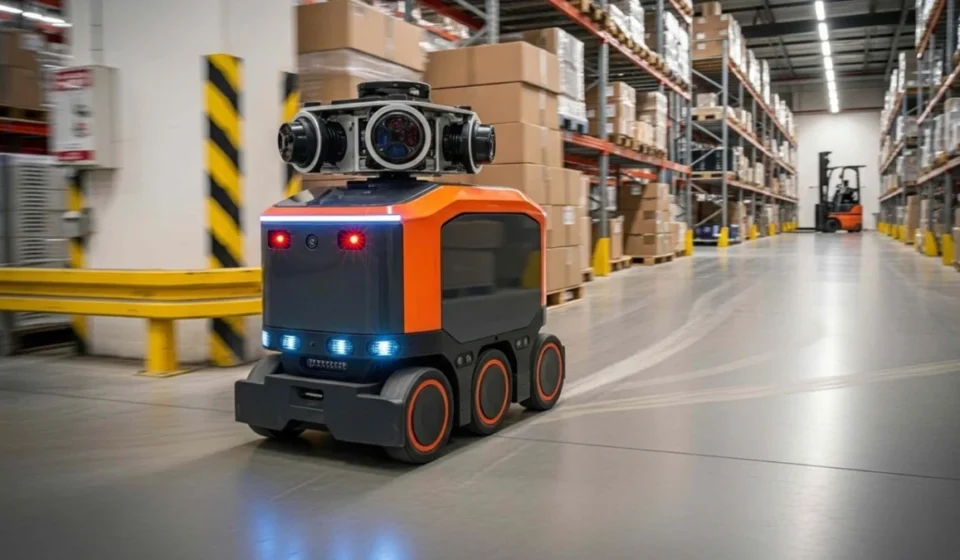
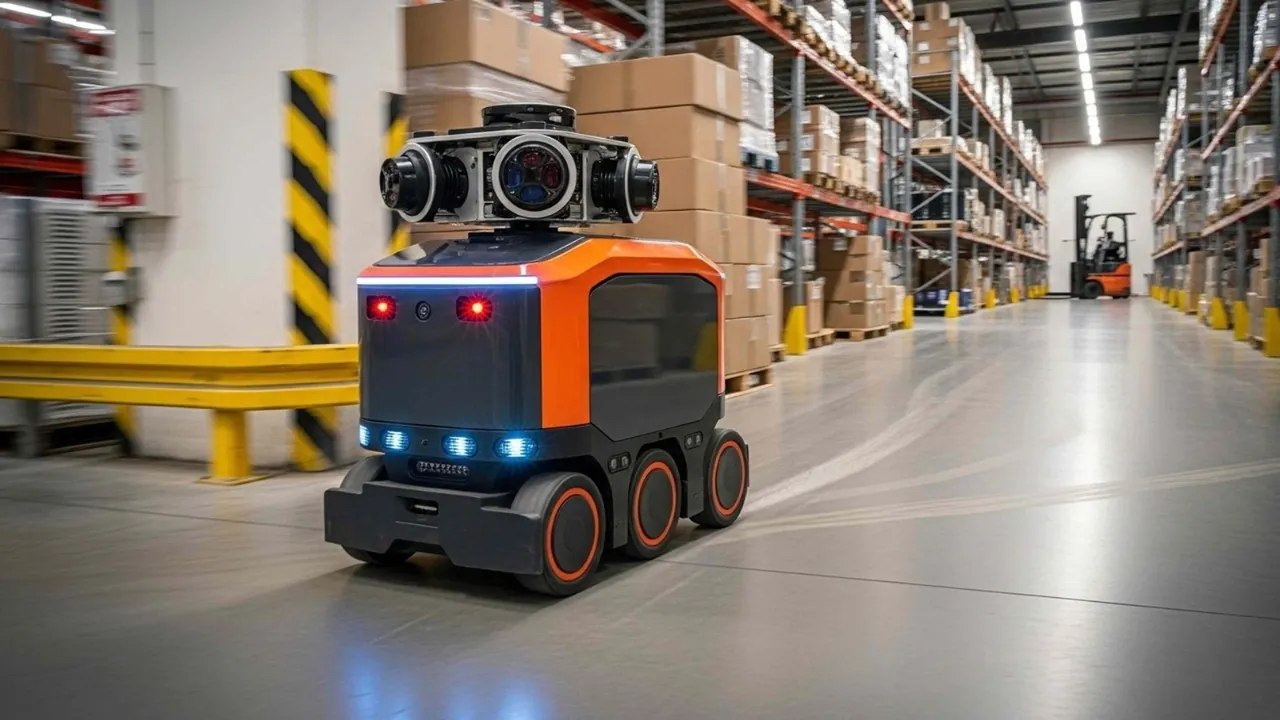
A warehouse robot rarely attracts much attention as it rolls past a storage rack carrying a tote or guides a heavy pallet toward a packing station. However, when thousands of these machines are deployed simultaneously across North American supply chains, a larger, more transformative pattern in global logistics emerges.
Rather than a sudden, disruptive upheaval, the adoption of industrial and warehouse robotics is progressing as a steady, calculated transition. Driven by structural labor shortages, rising wages, and the diversification of automation technology beyond traditional automotive assembly lines, companies are quietly integrating robots into their daily operations.
According to new mid-year data from the Association for Advancing Automation (A3), North American companies ordered 17,995 industrial robots valued at approximately $1.166 billion during the first half of 2026. This representing a 2% increase in unit orders and a 6.6% rise in order value compared to the same period in 2025.
Beneath these headline figures lies a complex story of shifting industry dynamics, critical software bottlenecks, and a fundamental evolution in how humans and machines collaborate on the warehouse floor.
1. Main Facts: The North American Robotics Market in H1 2026
The latest market intelligence from A3 highlights a defining trend for 2026: North American robot spending is rising faster than unit volume. This gap suggests a growing demand for more advanced, highly integrated, and capital-intensive robotic systems, rather than simple, standalone machines.
- Total Orders and Valuation: During the first six months of 2026, North American enterprises contracted for 17,995 industrial robots, representing a total capital investment of $1.166 billion.
- A Shift in Capital Allocation: While unit orders grew by a modest 2% year-over-year, the total financial value of those contracts jumped by 6.6%. This indicates that buyers are investing in higher-value systems, specialized end-of-arm tooling, advanced vision systems, and comprehensive integration packages.
- Broadening Industrial Footprint: For decades, the automotive sector—particularly original equipment manufacturers (OEMs)—dominated industrial robotics. In 2026, that dominance is shifting. While automotive OEM orders declined by 25% year-over-year, sectors like semiconductors, life sciences, and food production experienced double-digit growth.
-
The Rise of Collaborative Robots (Cobots): Cobots—designed to operate safely alongside human workers without physical safety cages—are securing a larger share of the market. In the first half of 2026, companies ordered 2,774 cobots valued at $114 million,
accounting for 15.4% of all robot units sold.
2. Chronology: Quarterly Acceleration and Market Momentum
To understand the trajectory of robotics investments, it is helpful to examine the quarterly progression from late 2025 through the second quarter of 2026.
   H1 2025: 17,635 units ordered ($1.094 Billion)
     │
     ▼
   Q1 2026: Steady, conservative start to the fiscal year
     │
     ▼
   Q2 2026: 8,940 units ordered ($622 Million) — Up 4.3% YoY in units, Up 21.3% YoY in value
     │
     ▼
   H1 2026 Total: 17,995 units ordered ($1.166 Billion)
During the first half of 2025, North American companies placed orders for 17,635 robot units, valued at $1.094 billion. This period was characterized by cautious capital expenditure as supply chains normalized following pandemic-era disruptions.
Entering 2026, the market experienced a slow but steady first quarter, followed by a surge in demand in the second quarter. In Q2 2026, A3 documented 8,940 robot orders valued at $622 million. This represented a 4.3% year-over-year increase in units compared to Q2 2025, and a 21.3% jump in quarterly revenue.
This quarterly acceleration highlights a growing urgency among logistics and manufacturing firms to secure automation systems ahead of seasonal peak demands and address ongoing staffing pressures.
3. Supporting Data: The Diversification of Robotics Demand
The redistribution of robot purchases across various industries reveals a major shift in the automation landscape. While heavy automotive manufacturing is scaling back its capital purchases, other sectors are rapidly filling the void.
Sector-by-Sector Growth Breakdown (H1 2026 vs. H1 2025)
The table below illustrates how robot orders have diversified beyond traditional automotive assembly plants:
| Industry Sector | Year-over-Year Order Growth (H1 2026 vs. H1 2025) |
|---|---|
| Semiconductors & Electronics | +35% |
| Life Sciences & Pharmaceuticals | +32% |
| Automotive Components & Suppliers | +24% |
| Food & Consumer Goods | +17% |
| Automotive OEMs (Car Manufacturers) | -25% |
First-Half Comparison: H1 2025 vs. H1 2026
The overall momentum of the market is clear when comparing the cumulative first-half figures:
| Period | Robot Units Ordered | Order Value | Average Unit Cost (Derived) |
|---|---|---|---|
| H1 2025 | 17,635 | $1.094 Billion | ~$62,035 |
| H1 2026 | 17,995 | $1.166 Billion | ~$64,795 |
| Change | +2.0% | +6.6% | +4.4% |
This increase in the average cost per unit reflects a shift toward more complex machinery, such as autonomous mobile robots (AMRs) equipped with advanced LiDAR, 3D vision-guided robotic arms, and highly flexible cobots.
4. Official Responses and Industry Drivers: Why Warehouses Are Automating
Industry leaders and macroeconomic data identify two primary drivers for this automation trend: persistent labor shortages and rising operational costs.
The Cost of Labor
According to the U.S. Bureau of Labor Statistics (BLS), average hourly earnings for frontline workers in warehousing and storage reached $26.85 in June 2026. For a distribution center operating multiple shifts, these rising wages significantly alter the return-on-investment (ROI) calculations for automation.
At the same time, the BLS Job Openings and Labor Turnover Survey (JOLTS) for June 2026 reported 392,000 open positions across transportation, warehousing, and utilities—a sharp increase of 97,000 openings from May.
Macroeconomic Labor Pressures (June 2026)
┌──────────────────────────────────────────────────────────┐
│  Average Warehousing Wage: $26.85 / hour                 │
├──────────────────────────────────────────────────────────┤
│  Sector Job Openings: 392,000 (Up 97,000 month-over-mth) │
└──────────────────────────────────────────────────────────┘
Industry Perspective
Logistics executives note that these labor pressures are particularly acute in traditional fulfillment workflows. In a manual warehouse, employees can spend up to 60% of their shifts walking between storage aisles, pushing carts, and transporting pallets.
Automating these repetitive tasks helps stabilize operational costs.
"The goal is no longer about replacing human labor entirely," says Marcus Thorne, a supply chain consultant specializing in fulfillment automation. "It’s about decoupling operational capacity from headcount. During seasonal surges, a warehouse can run its robot fleet longer and faster without needing to hire hundreds of temporary workers in a highly competitive labor market."
5. Technical Barriers: Software Integration and the Fleet Orchestration Bottleneck
While physical robots are the most visible element of warehouse automation, integrating them into existing facilities presents a complex engineering challenge.
Research published by Interact Analysis highlights this integration bottleneck. In a study of logistics and manufacturing firms, 45% of respondents cited integration difficulty as the single largest barrier to adopting material-transportation automation.
What is the primary barrier to adopting more material automation?
┌─────────────────────────────────────────────────────────┐
│ [████████████████████                     ] 45%         │
│ Integration Difficulty / Software Compatibility         │
└─────────────────────────────────────────────────────────┘
A modern distribution center often features a mix of technologies:
- Autonomous Mobile Robots (AMRs) from one vendor moving totes.
- Automated Storage and Retrieval Systems (AS/RS) from another vendor managing bulk inventory.
- Conveyor networks and automated sorters routing packages to outbound docks.
- Warehouse Management Systems (WMS) managing orders and inventory.
Without a unified software layer, these systems operate in silos. A fast AMR achieves little if it repeatedly queues at an overloaded packing station. Similarly, a high-speed sorter can quickly cause bottlenecks if downstream robotic palletizers cannot keep pace.
To address this, warehouse operators are shifting away from standalone robot deployments. Instead, they are prioritizing end-to-end solutions that coordinate robotics with AS/RS, vertical lift modules, and conveyors under unified Warehouse Execution Systems (WES). In this environment, software acts as an air-traffic controller, orchestrating material flow to prevent bottlenecks before they occur.
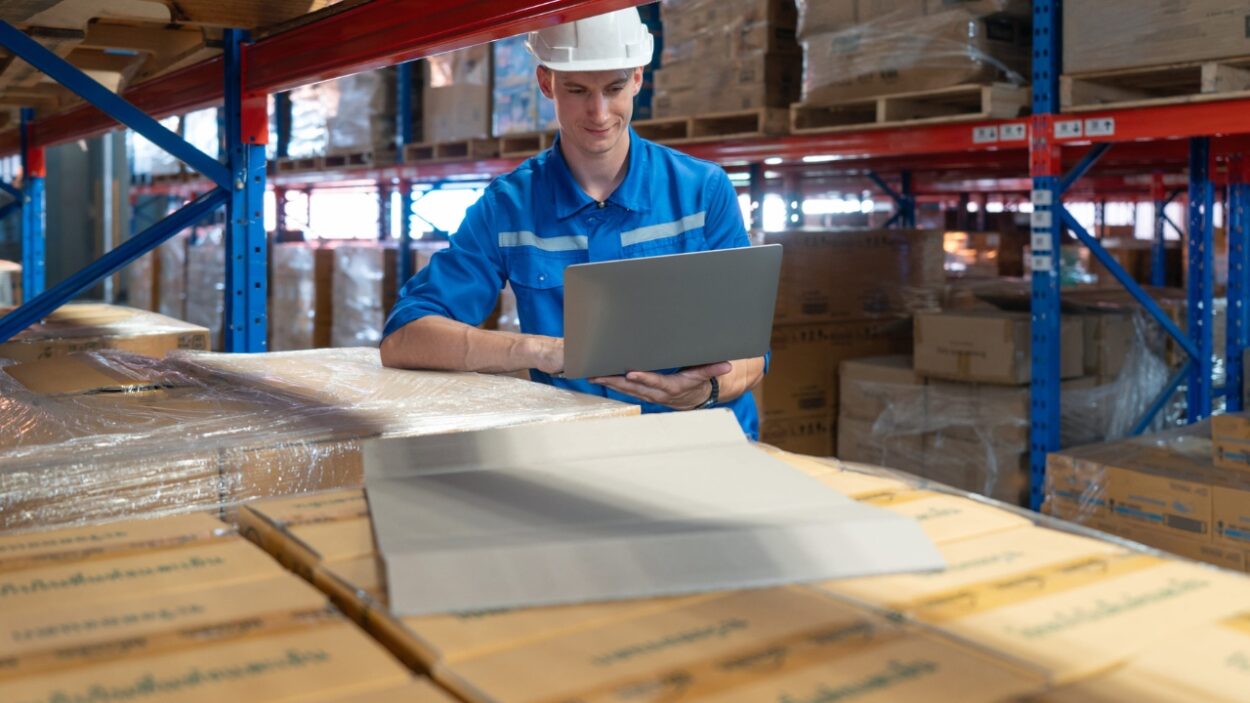
6. Case Study in Scale: Amazon’s DeepFleet and AI-Driven Coordination
Amazon offers a clear example of how logistics networks can scale robotic automation.
Since acquiring Kiva Systems in 2012, the e-commerce giant has continuously expanded its automation footprint. By June 2025, Amazon had deployed its one-millionth robot across a global network of more than 300 facilities.
Amazon’s Robotics Journey
  2012: Acquired Kiva Systems (Foundational Mobile Robotics)
   │
   ▼
  June 2025: Deployed 1,000,000th Robot across 300+ facilities
   │
   ▼
  Present (2026): Rollout of "DeepFleet" AI foundation model
   • 10% improvement in travel efficiency
   • Real-time route optimization
   • Dynamic congestion management
To manage this massive fleet, Amazon introduced DeepFleet, an AI foundation model designed to optimize robot routing and movement in real time. The company estimates that DeepFleet has improved fleet travel efficiency by 10%.
While a 10% efficiency gain might seem modest, scaled across thousands of robots making millions of daily movements, the impact is substantial. It reduces congestion in storage aisles, shortens order cycle times, and increases the throughput capacity of existing facilities without requiring physical expansions.
This shift highlights a key trend in modern warehousing: the value of robotics is increasingly defined by the intelligence of the software coordinating the fleet, rather than just the physical machines themselves.
7. Implications: The Evolving Role of the Warehouse Worker
The ongoing expansion of warehouse robotics is reshaping the logistics workforce. Rather than eliminating human jobs, automation is changing the nature of warehouse work.
  Manual Workflows                Automated Workflows
 ┌─────────────────┐             ┌───────────────────┐
 │ • Walking       │             │ • Fleet Oversight │
 │ • Heavy Lifting │    ───►     │ • Maintenance     │
 │ • Hand Sorting  │             │ • Exception Mgmt  │
 └─────────────────┘             └───────────────────┘
Robots excel at repetitive, physically demanding tasks, such as transporting heavy pallets, lifting boxes, and traveling long distances across concrete floors. Humans, conversely, excel at tasks requiring adaptability, fine motor skills, and complex decision-making—such as handling fragile or oddly shaped items, managing exceptions, and resolving system errors.
As facilities adopt more automation, the demand for specialized technical roles is rising. Warehouse operators increasingly need staff skilled in:
- Robot Fleet Supervision: Monitoring system dashboards to resolve routing conflicts and keep machines running.
- Preventative Maintenance: Servicing mechanical components, sensors, and charging stations.
- Systems Integration & Troubleshooting: Diagnosing communication issues between robots, PLCs, and warehouse software.
Consequently, training and upskilling have become critical components of modern automation strategies. Companies are learning that the long-term value of a robotics investment depends heavily on preparing their workforce to operate, maintain, and collaborate with these new technologies.
8. Conclusion: A Gradual Shift Toward Normalization
The nearly 18,000 industrial robot orders placed in the first half of 2026 point to a gradual, structural shift in North American industry. Rather than a sudden surge of speculative spending, the market is entering a phase of steady, calculated adoption.
Faced with high labor costs and persistent staffing challenges, warehouse operators are treating robotics as a standard infrastructure investment. The primary questions have shifted from whether the technology works to how effectively it can be integrated, coordinated, and scaled alongside existing systems.
As software integration improves and industrial demand continues to diversify, robots are becoming a standard feature of modern logistics—quietly and efficiently moving goods through supply chains where every second and every step carries a cost.