




















































The Culture of the Commute: How Cars, Bike Lanes, and "Petro-Masculinity" Became the New Political Battlefield

By [Your Name/Journalistic Desk]
"Freedom doesn’t ring, it revs!"
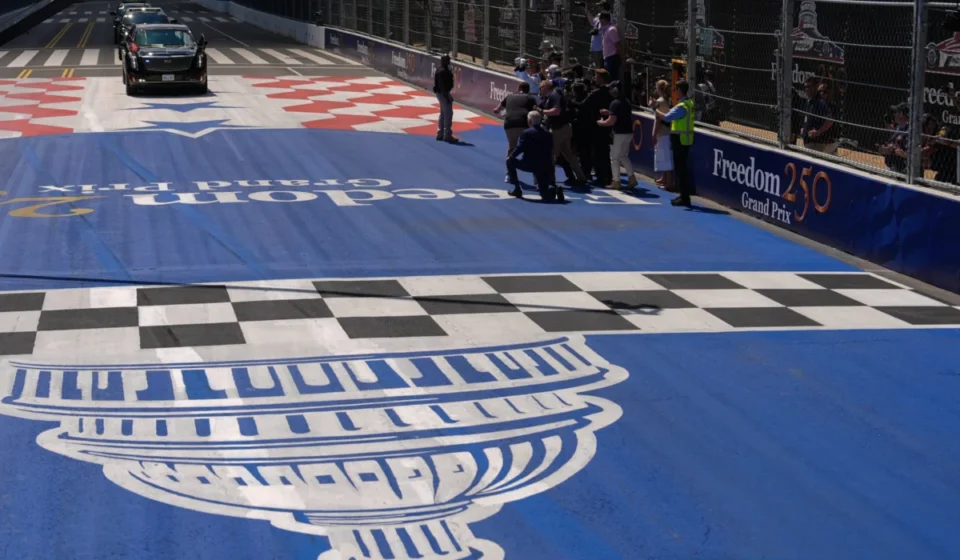
This punchy, high-octane tagline served as the rallying cry for the inaugural IndyCar street race held in Washington, D.C., this past weekend. The "Freedom 250 Grand Prix," which saw high-performance race cars tearing through the historic arteries of the nation’s capital, was more than a sporting event; it was a potent symbol of a shifting political aesthetic. In the current American climate, the machinery of transportation has become inextricably linked to a specific, assertive brand of masculinity that defines the current administration’s policy agenda.
From televised fitness challenges between Cabinet members to the promotion of "macho" car culture, the current administration has turned public infrastructure and lifestyle choices into theaters of political warfare. As Transportation Secretary Sean Duffy spearheads a drive to de-prioritize bike lanes and pedestrian-centric urban planning, the divide between the "car-first" conservative movement and the "multimodal" progressive coalition has widened, transforming how Americans move through their cities into a high-stakes cultural debate.
The Anatomy of "Petro-Masculinity"
To understand the current hostility toward bike lanes and the celebration of gas-powered speed, one must look at the concept of "petro-masculinity." Coined in 2018 by Virginia Tech scholar Cara Daggett, the term describes the intersection of traditional patriarchal ideals with the consumption of fossil fuels.
"This particular division of private and public—housewife and breadwinner—was built on a flow of cheap fossil fuels and car culture," Daggett explains. In this worldview, the automobile is not merely a tool for transit; it is a manifestation of individual power, domination over the environment, and a rejection of the perceived "weakness" associated with shared public spaces or sustainable transport.
Since the 1960s, automotive advertising has expertly tapped into this psychology, marketing trucks and fast cars as symbols of rugged individualism. Today, this legacy is championed by figures like Elon Musk, who has explicitly labeled his Cybertruck as "macho and manly," and by the "manosphere" icons who treat high-end vehicle collections as essential accoutrements of status.

Chronology of a Cultural Shift
The current tension is a sharp departure from the previous administration’s priorities. Under President Joe Biden, Transportation Secretary Pete Buttigieg sought to reframe transportation as a tool for equity and climate mitigation. Buttigieg’s habit of biking to work was more than a personal preference; it was a visual representation of his department’s focus on sustainable, urban-dense living.
However, the 2024 election cycle acted as a crucible for this "car-centric" backlash.
- January 2025: Shortly after his confirmation, Secretary Sean Duffy issued a directive prioritizing Department of Transportation (DOT) funding for communities with higher-than-average marriage and birth rates. Critics, including those at the Urban Institute, argued this effectively steered federal infrastructure dollars toward suburban, wealthier, and predominantly White demographics.
- Spring/Summer 2025: The DOT began a systematic review of grants primarily intended for bicycle and pedestrian infrastructure. Projects deemed "hostile to vehicles"—such as street narrowing or lane reductions—were systematically canceled.
- July 2026: Secretary Duffy solidified his stance on social media, explicitly branding bike lanes as "DEI (Diversity, Equity, and Inclusion) projects" and promising to cease their funding, shifting that capital toward traditional road and bridge repair.
- August 2026: The Freedom 250 Grand Prix in D.C. served as the crowning aesthetic achievement of this movement, with President Trump himself taking a lap in the presidential limousine, "The Beast," before the race began.
Data and Disparity: The Cost of the Car-First Policy
While the political rhetoric pits "cars" against "bikes," the data suggests that the push for massive, heavy vehicles has real-world consequences. Research indicates that the rising popularity of oversized SUVs and trucks is directly correlated with increased pedestrian and cyclist mortality.
According to investigations by The New York Times and various safety advocacy groups, the number of pedestrian and cyclist fatalities has climbed nearly 75% since 2009. The design of these vehicles—featuring higher hoods and larger blind spots—makes them significantly more lethal in urban environments where pedestrians, children, and elderly citizens share the road.
Despite the administration’s focus on car-centrism, public sentiment remains divided from policy. A YouGov survey from mid-2025 found that roughly 75% of American adults support the inclusion of bike lanes in their communities, with a significant portion of the population desiring more robust, protected infrastructure.
For urban planning experts, the argument that bike lanes cause traffic congestion is largely unsubstantiated. "The money in our budget that we spend on bike and pedestrian infrastructure is like fractions of pennies on the dollar," notes Tara Goddard, a researcher at California Polytechnic State University. "They are not truly in competition for road space."
Official Responses and Bureaucratic Maneuvers
The Department of Transportation’s position remains firm: the shift away from bike-centric grants is framed as a return to fiscal and practical sanity. A spokesperson for the DOT recently stated that the redirection of funds is intended to address "traffic congestion, impacts on small businesses, and accessibility issues" that they argue are exacerbated by improperly planned bike infrastructure.

However, the administration’s rhetoric has increasingly mirrored broader conservative cultural messaging. When Secretary Duffy posted a video of himself revving the engine of a new Ram pickup truck shortly after waving the starting flag at the Grand Prix, the message was clear: the department views the automobile as the primary vehicle of the American dream.
This messaging has drawn sharp rebukes from proponents of "The Feminist City," such as author Leslie Kern. Kern argues that by prioritizing suburban road infrastructure and devaluing urban walking and cycling, the government is effectively reinforcing a domestic structure that traps women in suburban isolation. "It’s like saying a woman’s primary role is to have children," Kern suggests. "The suburbs are the physical manifestation of that."
Implications for the Future of American Mobility
The ideological divide has forced local leaders into the role of resistance. In New York City, Mayor Zohran Mamdani has taken an opposite approach, championing bike boulevards and increased registration fees for oversized vehicles. His administration’s focus on pedestrian safety and public transit is a direct challenge to the federal government’s current trajectory.
This "transportation war" is unlikely to resolve in the near term, as it is tied to deeper questions about identity, class, and the role of government in shaping how we live. For the current administration, the car is a symbol of a nostalgic, powerful, and independent past that they are determined to reclaim. For the opposition, the bicycle and the pedestrian lane are symbols of a necessary, equitable, and sustainable future.
As the government continues to scrub safety data regarding cycling and walking from public databases—a move recently reported by NPR—the debate has moved beyond simple policy disagreements. It is now a battle over what constitutes a "good citizen" and what a "good life" looks like in 21st-century America.
Whether the future of the nation’s streets belongs to the high-revving engine or the quiet, protected bike lane remains the defining infrastructure question of the decade. For now, the road ahead is as congested and contentious as the traffic planners are trying to resolve.