








































In an era defined by rapid technological shifts, political polarization, and the lingering fatigue of a fractured world, audiences are increasingly turning toward the transformative power of storytelling. The recent, overwhelming success of Christopher Nolan’s The Odyssey suggests a profound cultural hunger for the mythic—a desire to be transported to faraway lands where archetypal struggles offer a mirror to our own complexities. Nestled within this trend is the Zephyr Theatre’s latest outdoor production: a vibrant, stripped-back, and refreshingly inclusive adaptation of J.R.R. Tolkien’s seminal fantasy classic, The Hobbit.
A New Artistic Vision: Why This Show, Why Now?
For Reed Sigmund, the newly appointed artistic director at Zephyr Theatre, the choice to stage The Hobbit was not merely a matter of selecting a beloved classic. It was a deliberate, philosophical inquiry. A familiar face to local audiences due to his prolific tenure at the Children’s Theatre Company, Sigmund approached the production with a central, guiding question: "Why this show, and why now?"
The answer, he discovered, lay in the protagonist. Bilbo Baggins is the quintessential comfort-loving homebody—a character who would prefer a well-stocked pantry and a quiet hearth over the perils of a quest. His internal struggle, centered on the decision to either remain safely on the sidelines or to engage with a conflict far larger than himself, serves as a poignant allegory for modern civic engagement.
Sigmund notes that Bilbo’s journey mirrors the neighborly spirit and community mobilization witnessed by many Minnesotans during the past winter’s "Operation Metro Surge." The play’s resonance is intentional, underscoring the production’s core message: "A wrong that is silently seen will not fix itself." By positioning the reluctant hero’s journey as a call to action, the Zephyr Theatre transforms a piece of fantasy literature into a resonant meditation on contemporary responsibility.
Chronology and Aesthetic: A Minimalist Approach
Directed with a playful, inventive hand by Sigmund, this adaptation by playwright Greg Banks eschews the heavy-handed, CGI-laden spectacles of the past. For those weary of the exhaustive, multi-part slog of Peter Jackson’s film franchise (2012–2014), Banks’ script offers a breath of fresh air. It is clipped, nimble, and focused, moving briskly through Tolkien’s narrative without lingering on unnecessary exposition.
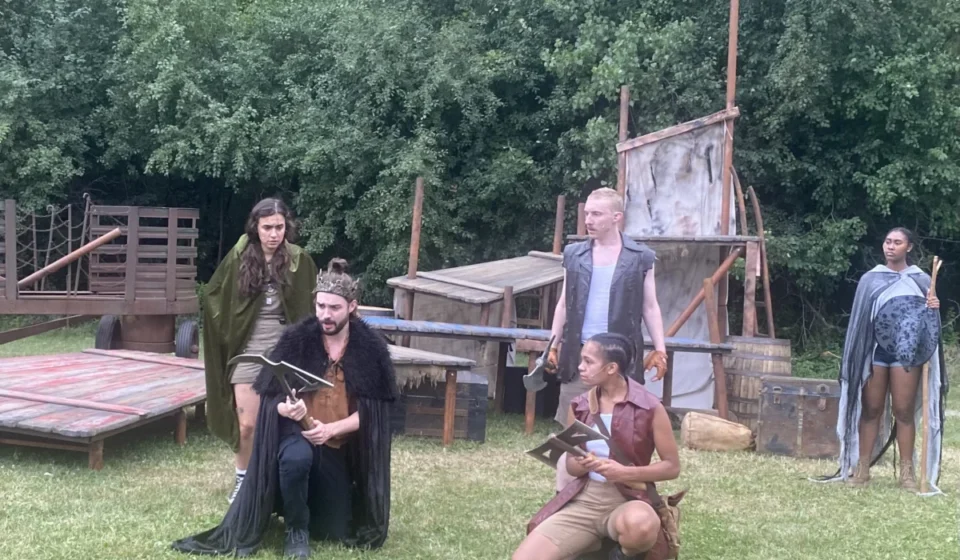
The production relies on a small cast of five performers, each juggling multiple roles. This structural decision forces a reliance on physical theater and creative artifice. There is no need for horses on stage when the cast can evoke the rhythmic thunder of a gallop through body movement and soundscapes. This "less-is-more" philosophy highlights the ingenuity of the ensemble, stripping away big-budget distractions to focus on the raw, beating heart of the story.
Challenging Tradition: The Power of Gender-Swapped Casting
Perhaps the most striking departure from the source material is the production’s approach to its central figures. In this version, Bilbo Baggins is portrayed by Grace Hillmyer, while the wizard Gandalf is played by Antonisia Collins. Additionally, the dwarf Balin is played by Anya Naylor.
These choices do more than simply open doors for women in a traditionally male-dominated fantasy canon; they fundamentally shift the tone of the narrative. Collins brings a savvy, grounded calm to Gandalf, while Hillmyer provides Bilbo with a layer of empathetic vulnerability that makes her transformation from a homebody to a hero feel deeply earned. During one standout moment, Hillmyer delivers a line that captures the spirit of the entire production: "I’m here because right now it’s the right time to do what’s right."
This pivot toward inclusive casting also provides a thematic alternative to other fantasy franchises currently embroiled in real-world controversy. With J.K. Rowling’s Harry Potter brand increasingly tied to anti-trans advocacy, many fans have felt alienated from a world they once cherished. Zephyr Theatre’s The Hobbit provides a welcoming, safe harbor for those seeking a mythic escape without the baggage of creator-led controversy.
Performance Highlights and Ensemble Dynamics
The ensemble spirit is the bedrock of this production. Antonisia Collins, for example, expertly juggles her role as the powerful wizard Gandalf with a comic turn as one of the dwarves—a character who, quite humorously, finds himself needing to use the restroom every time the plot demands Gandalf’s presence.

Costuming is equally economical, using emblematic, minimalist pieces to signify character changes. The goblin masks are marvels of simplicity, and the iconic sequence involving the escape from the wood-elves in wine barrels is brought to life using only a handful of plain cylinders. It is a masterclass in theatrical suggestion.
Jeffrey Nolan delivers a tour-de-force performance, handling the gruff, snarly dwarf Kili, the iconic Gollum, and the haughty dragon Smaug. His Gollum pays respectful homage to the legendary performance by Andy Serkis, while his Smaug is rendered with an impish, devilish silliness that proves dragon-fire can be just as intimidating when it’s delivered with a wink.
Critique: The Sonic Landscape
While the production excels in vision and acting, it hits a minor snag in its musical direction. The sound design, handled by Sophia Schott, features a selection of folk songs by artists such as Peter, Paul and Mary, Simon and Garfunkel, and John Denver. While the individual tracks are pleasant, they often feel disconnected from the Middle-earth aesthetic.
The inclusion of "Puff the Magic Dragon" or "Country Roads" feels slightly jarring against the high-fantasy stakes of the narrative. While Schott is an undoubtedly talented vocalist, the integration of these tracks suggests a lack of cohesion with the production’s otherwise tight vibe. Future iterations might benefit from a more tailored, original score that serves the story’s specific emotional beats rather than relying on recognizable folk anthems.
Setting the Stage: The Orchard Experience
The choice of venue, Aamodt’s Apple Farm, adds a layer of charm that indoor theaters simply cannot replicate. The site is a destination in its own right, inviting attendees to arrive early for apple picking or to explore local establishments like Saint Croix Vineyards and Thor’s Hard Cider.
The stage is set away from the hustle and bustle of the main orchard, nestled against a backdrop of woods. This provides a natural, immersive atmosphere that invites the audience into the world of the Shire. Whether you are enjoying a warm apple brat or a crisp treat from the bakery, the setting reinforces the production’s theme of community and grounded, local connection.
Supporting Data and Logistics
The production runs through the end of July and into early August at Aamodt’s Apple Farm & Saint Croix Vineyard (6428 Manning Ave N., Stillwater). Tickets are tiered, with $42 for a chair seat, $37 for those bringing their own chair, and a discounted $21 for children 10 and under. Given the popularity of the venue and the intimate nature of the performance, prospective attendees are encouraged to visit the official Zephyr Theatre website for updated schedule information and to secure tickets in advance.
Beyond the Shire: The Guthrie’s "Private Lives"
For those who find the union of dinner and theater to be the perfect evening, there is an additional option in the Twin Cities. The Guthrie Theater’s recent production of Noël Coward’s Private Lives offers a darker, more cynical, yet thoroughly entertaining contrast to the earnest adventure of The Hobbit.
Following the show, attendees can visit the recently opened restaurant Indígena by Owamni, led by chef Sean Sherman. The menu features indigenous-inspired fare, such as maple and sumac glazed venison skewers and smoked whitefish tostadas. It is a significant cultural development for the Minneapolis theater district to finally have a high-quality dining option that complements the late-night post-show experience. Private Lives runs through August 23, and while the play itself tackles the complex and sometimes problematic romanticization of domesticity, the production values—including exquisite costumes and sharp performances—make it a must-see for the summer season.
Conclusion: A Call for Connection
In a landscape where our stories are often filtered through screens and algorithms, there is something deeply restorative about gathering in an orchard to watch a group of actors transform cylinders into barrels and shadows into dragons. Zephyr Theatre’s The Hobbit is a reminder that the most compelling theater doesn’t need a massive budget; it needs a clear vision, a sense of community, and the courage to ask the right questions about the world we live in today. Whether you are looking for a whimsical escape or a reflection on the nature of bravery, the road to Stillwater this summer is one well worth taking.