






















































By [Your Name/Journalistic Staff]
David Doty, the U.S. District Judge whose Minneapolis courtroom served as the unlikely epicenter for the transformation of professional football into the global juggernaut it is today, has died at the age of 96. His passing, announced by officials in the District of Minnesota on Saturday, marks the end of a judicial career defined by a rare combination of steely legal precision and a disarming, down-to-earth humanity.
For nearly four decades, Judge Doty sat at the intersection of American jurisprudence and the multi-billion-dollar enterprise of the National Football League (NFL). While he presided over thousands of civil and criminal cases, his name remains inextricably linked to the landmark rulings that dismantled the league’s restrictive labor practices and paved the way for the era of modern free agency.
A Life Defined by Public Service
Born in 1929, David Doty’s life was a study in commitment to his country and his community. Before he ever donned the black robes of a federal judge, he served his country as a U.S. Marine. Following his military service, he pursued a legal education at the University of Minnesota, graduating in 1961. He spent the next 26 years in private practice, honing the temperament and legal acumen that would eventually catch the eye of President Ronald Reagan, who appointed him to the federal bench in 1987.
In 1998, Doty assumed senior status, a move that allowed him to continue his judicial work well into his later years. Remarkably, he remained active on the bench until just months before his death, demonstrating a work ethic and mental sharpness that commanded respect from colleagues and litigants alike.
Chief U.S. District Judge Patrick Schiltz, reflecting on Doty’s legacy, described him as a man of profound humility. "Judge Doty devoted his entire professional life to serving others—as a Marine, as a lawyer who served not only clients but his community in many ways, and as a U.S. District Judge for nearly four decades," Schiltz stated. "He treated everyone—from the guy who shined his shoes to Justices of the U.S. Supreme Court—the same way: with kindness and compassion and a sincere interest in their lives."
The Legal Crucible: Breaking the "Plan B" System
To understand the NFL as it exists today, one must understand the state of the league in the late 1980s. Following a contentious 1987 player strike, the relationship between the NFL and the National Football League Players Association (NFLPA) had reached an impasse. At the heart of the dispute was the league’s restrictive "Plan B" free agency system, which allowed teams to protect 37 players from the open market, effectively shackling them to their current rosters.
When the NFLPA filed suit, the case landed on Judge Doty’s docket. It was a high-stakes, high-pressure assignment that would test his resolve.
Initially, Doty displayed the measured caution typical of a federal judge. He urged both parties to reach a collective bargaining agreement through negotiation rather than litigation, and in the early stages, he resisted the union’s attempts to dissolve the existing structure. However, as the evidence mounted, his position shifted. In 1990, he granted players the right to pursue individual antitrust litigation against the league, signaling that the status quo was no longer legally tenable.
The turning point arrived in 1992. After a grueling three-month trial, a jury of eight women delivered a verdict that struck at the foundation of the NFL’s labor model. Doty, following the jury’s lead, ruled in favor of players seeking unrestricted free agency. This judicial hammer blow forced the league to the table, leading to the landmark 1993 settlement that would redefine the sport.
Chronology of a Legal Titan
The impact of Doty’s courtroom extended far beyond the 1992 ruling. His career serves as a timeline of the NFL’s evolution:
- 1987: Appointed to the U.S. District Court for the District of Minnesota by President Ronald Reagan.
- 1990: Rules that players can pursue antitrust claims against the NFL, effectively ending the absolute control owners held over roster management.
- 1992: Rules against the "Plan B" system, forcing the NFL into a new era of labor negotiations.
- 1993: The settlement led by Reggie White and other stars creates the modern CBA, introducing a salary cap and true free agency.
- 2008: Rules that Michael Vick is entitled to retain $16 million in bonuses, rejecting the Falcons’ attempt to recoup funds following his legal troubles.
- 2014: Recuses himself from a major collusion lawsuit; the case is subsequently handled by U.S. District Judge Michael Davis.
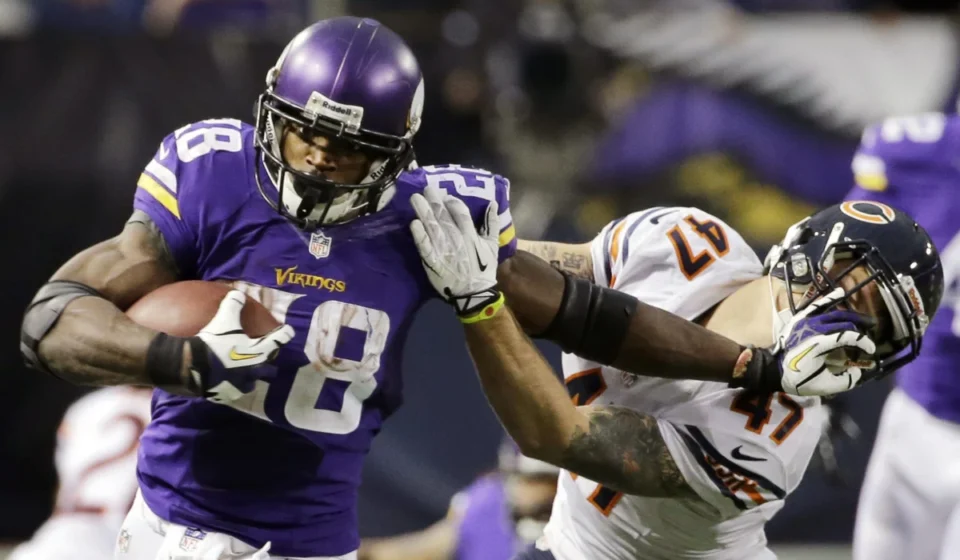
- 2015: Rules in favor of the NFLPA and Adrian Peterson, overturning the league’s initial suspension of the Vikings star following his child abuse case.
The Architect of Competitive Parity
The 1993 collective bargaining agreement—which Doty oversaw for decades—is widely regarded as the "Magna Carta" of modern professional football. By balancing the players’ desire for mobility with the owners’ need for financial stability via a salary cap, the settlement established the competitive parity that fuels the league’s immense popularity today.
Unlike the leagues of the past, where dynasties were built on the backs of uncompensated or restricted talent, the modern NFL is defined by the idea that "any given Sunday" any team can win. This parity, which has allowed franchises in smaller markets to thrive, is the direct result of the labor framework Doty helped police.
However, Doty’s influence was not always favorable to the players’ union. He was an impartial arbiter, not a partisan. In 2012, he denied a motion to reopen the White agreement in a high-profile collusion case, showing that he was just as capable of restricting the union as he was the league when the legal arguments demanded it.
Official Responses and Industry Impact
The NFL issued a formal statement following the news of his passing, acknowledging the outsized role he played in their history. "Judge Doty devoted his life to public service and the law, presiding over NFL-related litigation for many years during his distinguished career," the league said. "We express our sincere condolences to his family, friends and colleagues."
This sentiment was echoed across the legal and sports communities. Attorney Jeffrey Kessler, a longtime advocate for players in labor disputes, once noted that Doty was the rare judge who truly understood the complexities of the NFL’s business model. "He didn’t just look at the statutes," said one former clerk. "He looked at the game, the business, and the people, and he understood that his rulings weren’t just about money—they were about the future of the sport."
Implications for the Future
As the NFL continues to evolve, dealing with new issues ranging from concussion litigation to international expansion, the footprint of David Doty remains visible. He established the precedent that the league is not above the law and that its labor practices are subject to the same antitrust scrutiny as any other major industry.
His death brings to a close an era where one judge could effectively act as a steward for an entire professional sport. Whether he was ruling on the multi-million dollar bonuses of a controversial quarterback or the nuances of league discipline for a star running back, Doty’s courtroom was a place where the rules of the game were refined.
"I will particularly miss his sense of humor," Chief Judge Schiltz added. "He always had a smile on his face, even when the pressure was at its highest."
David Doty leaves behind a legacy that is etched into the bylaws of the NFL and the record books of American jurisprudence. He was a man who lived his life with a "smile on his face," yet he possessed the steel required to change the face of American sports forever. He is survived by his family, his friends, and the countless legal professionals who learned the value of fairness and humanity under his guidance.