




















































Across the United States, the ubiquitous blacktop parking lot—long considered a mundane necessity of modern infrastructure—is undergoing a radical transformation. As climate change accelerates, turning cities into "heat islands" and overwhelming aging drainage systems with extreme precipitation, urban planners and environmentalists are increasingly viewing these vast expanses of impervious pavement as liabilities. From Virginia to California, a quiet revolution is underway to replace traditional, heat-absorbing asphalt with innovative, sustainable, and climate-resilient surfaces.
The Problem with Blacktop
For decades, the standard for parking infrastructure has been conventional asphalt—a dense, petroleum-based material that excels at durability and cost-efficiency but fails miserably in the face of modern climate pressures. These dark, expansive surfaces act as thermal batteries, absorbing solar radiation throughout the day and radiating it back into the atmosphere at night. This phenomenon, known as the "urban heat island effect," can raise local temperatures by as much as 20 degrees Fahrenheit compared to surrounding green spaces.
Beyond heat, traditional asphalt is a primary driver of urban flooding and water pollution. Because it is non-porous, rainwater cannot infiltrate the ground. Instead, it flows across the surface, gathering oil, heavy metals, and debris, eventually flushing these pollutants directly into local waterways and storm sewers.
Case Study: A New Vision in Virginia
At the Hampton Roads Planning District Commission headquarters in Virginia, the staff recently faced a classic dilemma: their parking lot had reached the end of its lifespan. Rather than opting for a standard, low-cost asphalt overlay, the commission decided to pivot toward a more experimental model.
Completed last year, the new lot serves as a proof-of-concept for climate-resilient design. It incorporates porous concrete panels, strategic landscaping with native vegetation, and a base layer of recycled materials. The results have been both functional and immediate.
"You notice too, that it’s cooler," says Jill Sunderland, the commission’s senior water resources planner. "You really can tell a difference out there—not to mention it’s just more inviting." Beyond the aesthetics, the performance during heavy rains has been transformative. "The rain infiltrates faster than it can puddle and stop on the surface," she adds. The project also utilizes a unique, stamped, and grooved concrete border designed to trap sediment, ensuring the porous panels do not become clogged over time, thereby extending the life of the investment.

Chronology of the Movement: From Policy to Pavement
The shift away from traditional asphalt did not happen overnight; it is the result of a decade-long evolution in urban planning policy.
- 2016–2018: The Policy Pivot: Major cities began to recognize that the sheer volume of land dedicated to parking was unsustainable. Cities like Buffalo, New York, and Minneapolis, Minnesota, took the bold step of abolishing or significantly reducing "minimum parking requirements"—a regulation that had forced developers to build more parking spaces than necessary, creating vast, underutilized expanses of pavement.
- 2020: Regulatory Mandates: The City of New Orleans officially required its Department of Public Works to utilize permeable paving materials in public projects wherever practical, signaling a move from voluntary pilot programs to codified infrastructure standards.
- 2023–2024: The Rise of "Smart Surfaces": Municipalities began integrating advanced cooling technologies, such as reflective "cool pavement" coatings, into their climate action plans. Neighborhoods in Los Angeles became testing grounds for these high-albedo treatments, which function like specialized paint to prevent heat absorption.
- 2025–2026: Scaling Up: Private institutions, such as the Newfields art museum in Indianapolis, began showcasing large-scale transformations, replacing overflow parking with recycled plastic grid pavers and bioretention rain gardens.
Supporting Data and Technical Solutions
The argument for shifting away from traditional asphalt is bolstered by significant data regarding land use and environmental health. Research from urban planning experts like UCLA’s Adam Millard-Ball reveals that in many American downtowns, parking accounts for more than 25% of all land usage. Perhaps more alarming is the data suggesting that more than one-third of these spaces sit empty at any given time, particularly in areas near stadiums, malls, and office parks.
Cooling and Shading Technologies
To mitigate the heat island effect, cities are implementing a variety of strategies:
- Reflective Coatings: Applied like a sealant, these coatings increase the solar reflectance of the ground, significantly reducing the surface temperature.
- Vegetative Shading: Sacramento, California, now mandates that developers plant enough trees to shade at least 50% of a parking lot’s surface within 15 years of construction.
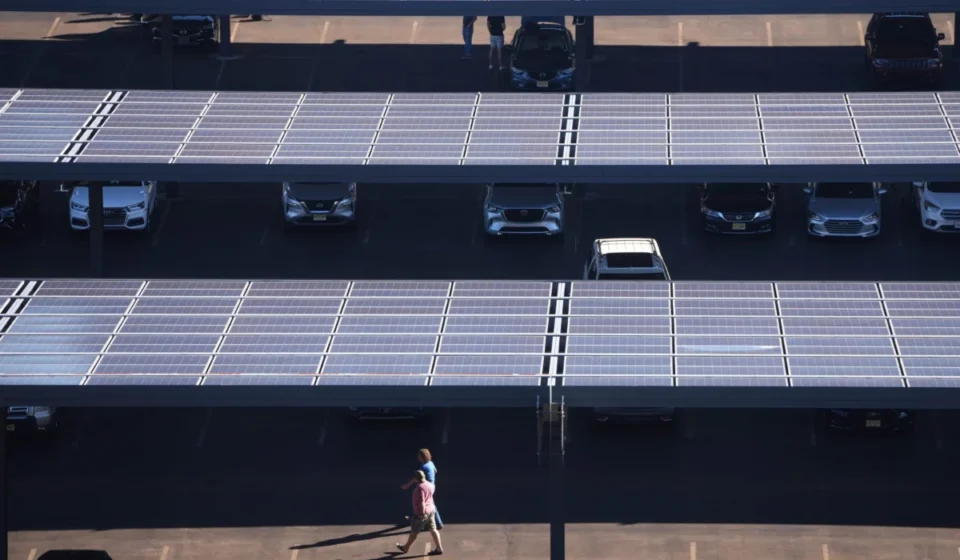
- Solar Canopies: Cities like Yorba Linda, California, have pioneered the use of elevated solar panel structures. These provide dual benefits: generating clean electricity while providing essential shade that keeps the pavement cool.
Stormwater Management
For water runoff, the goal is to mimic natural soil absorption.
- Lattice and Interlocking Pavers: These systems allow for vegetation to grow within the gaps or provide small, permeable channels for water to drain into a gravel reservoir below.
- Bioswales and Rain Gardens: By carving out recessed sections of a parking lot and filling them with specialized soil and native plants, engineers can filter pollutants from runoff before the water reaches the municipal sewer system.
Official Responses and Industry Perspectives
The transition to alternative materials is not without its critics. The asphalt industry, represented by groups like the Asphalt Pavement Alliance, cautions that while alternative materials are "sexy on the front end," they may not offer the long-term durability required for heavy-duty traffic.
"I just think we need to be really, really careful when we put alternative systems in to make sure that we have a good understanding of what the life cycle impact is going to be," says Buzz Powell, the Alliance’s technical director. He argues that traditional asphalt is highly versatile and that advancements in "porous asphalt"—which maintains the look and feel of traditional pavement but allows for drainage—might be a more practical path forward. "My focus is 100% to make asphalt better," Powell notes, emphasizing that improvements in material chemistry and structural design could solve many of the environmental issues without abandoning the industry’s primary product.

Conversely, environmental advocates argue that the initial cost analysis of these projects is often flawed. They suggest that when you factor in the long-term savings—such as reduced flood mitigation costs, lower air conditioning demand in surrounding buildings, and increased property values—the "premium" paid for sustainable surfaces often pays for itself.
Implications for the Future
The path forward is complicated by the sheer scale of the existing "blacktop footprint." As Vincent Cotrone, an urban forestry educator at Penn State University, notes, "We’ve got acres and acres of nothing but blacktop parking lots that sit there and age… and we just don’t have the dollars to go retrofit those."
Despite these budget constraints, the movement is gaining momentum. The implication is that future development will no longer view parking as an afterthought, but as a critical piece of green infrastructure. As Greg Kats, founder of the Smart Surfaces Coalition, puts it, "The reality is, one city changing their surfaces is just not by itself going to have a big impact. But once cities are able to understand in a rigorous way the scale of the benefits… it’s kind of intuitive."
As climate change continues to stress urban environments, the "parking lot of the future" will likely look less like a barren expanse of dark rock and more like a functional ecosystem—one that breathes, shades, and protects the city from the elements. Whether through the improvement of traditional materials or the adoption of entirely new paving technologies, the goal is clear: to stop the pavement from fighting against the environment and start making it part of the solution.