
























































NEW ULM, Minn. – Two decades ago, a political novice with a background in teaching embarked on an audacious campaign to unseat a seemingly entrenched Republican in Minnesota’s 1st Congressional District. That Democrat, then a history teacher and football coach named Tim Walz, defied expectations in 2006, wresting control of the largely rural, southern district from former Rep. Gil Gutknecht. Walz’s victory was a seismic event in a region long considered a GOP stronghold, paving his path to the governor’s mansion.
Now, history appears poised to rhyme. Another educator, Jake Johnson, a 42-year-old high school math teacher new to the political arena, is running as a Democrat to challenge Republican incumbent Rep. Brad Finstad. Johnson’s burgeoning campaign, marked by an impressive ability to connect with voters and raise significant funds, has already captured the attention—and endorsement—of the national Democratic Party, placing him on their coveted "Red to Blue" list. This designation signals a serious effort to flip a Republican-held seat, injecting critical resources and strategic guidance into Johnson’s underdog bid.
But while the echoes of Walz’s past triumph are undeniable, the political landscape of Minnesota’s 1st District, and indeed American politics, has undergone profound transformations. The district itself has shifted, becoming even more conservative, and the Republican Party has veered sharply rightward since Walz’s initial victory. The journey Johnson faces, though drawing inspiration from a successful predecessor, is fraught with unique challenges in an era defined by deep partisan divides and an increasingly polarized electorate.
The Walz Precedent: A Blueprint for an Underdog
Tim Walz’s 2006 victory over Gil Gutknecht was a masterclass in grassroots campaigning and centrist appeal. Walz, leveraging his years as a beloved teacher and coach in Mankato, cultivated a moderate image that resonated with the district’s independent-minded voters. He presented himself as a pragmatic Democrat, focused on local issues and common-sense solutions, successfully bridging the rural-urban divide that often characterizes southern Minnesota politics. His deep roots in the community, fostered through his interactions with students, parents, and colleagues, provided a ready-made network of support that proved invaluable against a seasoned incumbent.
Fast forward to 2026, and Jake Johnson is consciously invoking elements of that playbook. Like Walz, Johnson is a career educator, a high school math teacher whose daily interactions involve explaining complex concepts and fostering critical thinking. This background, Johnson believes, equips him with the communication skills and empathetic understanding essential for effective representation. Both men also recognize the political power of teachers’ unions, who historically offer organizational muscle and financial backing to sympathetic candidates.
However, the similarities, while compelling, are not an exact replication. Walz, while running as a moderate, is now perceived by some 1st District voters as having become more liberal during his tenure as governor. Johnson, acutely aware of the district’s conservative lean, is strategically positioning himself as a fiscal conservative, a stance designed to appeal to independent voters and disaffected Republicans. He has publicly pledged to vote against any legislation that would increase the national debt until Congress achieves a balanced budget, a direct appeal to voters concerned about the nation’s nearly $40 trillion debt. “Members of both parties are not taking this seriously,” Johnson stated, highlighting his non-partisan approach to a critical economic issue. Yet, he simultaneously aligns with mainstream Democrats on the importance of strengthening the federal social safety net, a position rooted deeply in his personal history.

Personal Narratives and Policy Priorities
Both Walz and Johnson share compelling personal stories of growing up in families that relied on social welfare programs, experiences that profoundly shape their political philosophies and policy priorities. Governor Walz’s youth was marked by hardship; after his father’s passing, his mother and younger brother depended on Social Security survivor benefits for support. This firsthand experience likely informs his current focus on expanding social welfare initiatives, such as providing universal school breakfasts and lunches and implementing a generous paid family leave program in Minnesota.
Jake Johnson’s narrative echoes this theme. Growing up in Stewartville with ten siblings, he recalls his father working as a garbage collector and his mother reading meters door-to-door. The family often needed assistance from their church, neighbors, and government programs. “I was a SNAP (food stamp) kid,” Johnson revealed, emphasizing, “We were a Medicaid family.” These formative experiences underscore his commitment to shoring up federal social safety nets, framing it not as a hand-out, but as a crucial support system for working families facing economic precarity. This blend of fiscal conservatism with a commitment to social welfare forms the core of Johnson’s centrist platform, aiming to carve out a unique space in the district’s political discourse.
Campaign Dynamics in Finstad’s Territory
The political battleground of Minnesota’s 1st District presents a formidable challenge for any Democratic contender. The district demonstrably favored Donald Trump with 55% of the vote in 2024, and incumbent Rep. Brad Finstad has successfully fended off Democratic challengers since winning a special election in 2022. Finstad, a 50-year-old New Ulm resident, enjoys the significant advantages of incumbency, including heightened name recognition and a typically superior fundraising capacity.
Despite these odds, Johnson’s campaign has demonstrated impressive vitality. The Democratic Congressional Campaign Committee’s (DCCC) decision to include Johnson on its "Red to Blue" list is a testament to his perceived viability. This designation provides critical access to national fundraising networks, strategic guidance, and campaign training, acknowledging Johnson’s potential to be a "flip" candidate. His fundraising prowess is notable: as of June 30, Johnson had amassed nearly $1.9 million in campaign funds, closely trailing Finstad’s almost $2 million. This near parity in fundraising signals a competitive race, allowing Johnson to build out a robust campaign infrastructure.
Johnson’s campaigning skills, particularly his commitment to holding town halls in all 21 counties of the district, illustrate his dedication to direct constituent engagement. This approach stands in stark contrast to Finstad’s perceived reluctance to engage in unscripted public forums. Pat Booker, a military veteran and retired probation officer from New Ulm, is a local voter closely following the race. She praised Johnson’s willingness to answer questions and meet with constituents, drawing a direct parallel to Walz’s accessible style. Booker recounted her own frustrating attempts to get a meeting with Finstad over eight months, driven by concerns about potential cuts to SNAP and Medicaid. “I got one pat letter saying thank you for your concerns,” she lamented, highlighting a potential vulnerability for the incumbent.
Political science professor Kevin Parsneau of Minnesota State University in Mankato suggests that Finstad’s approach—focusing on official business events and avoiding direct debates with his challenger—indicates a belief in a comfortable lead. “He’s certainly acting like internal (campaign) polls are telling him he has a wide lead,” Parsneau observed. Finstad, however, maintains that he actively engages with constituents. “I travel all over southern Minnesota,” Finstad told MinnPost, adding, “I’m always listening and communicating with constituents who agree and don’t agree with me. I’m more than willing to have a conversation and answer questions.” He emphasized his dedication to service, stating, “It’s an honor of a lifetime to serve the 1st District’s 750,000 residents, but my goal is heaven, not Congress. When November comes, the voters of southern Minnesota will decide, but no one is going to outwork me.”

The Evolving Landscape of the 1st District
New Ulm, Finstad’s hometown and the county seat of Brown County, perfectly encapsulates the district’s deep-rooted conservative identity. The city proudly preserves its German heritage, with a towering statue of the ancient Germanic hero Hermann, a daily chiming glockenspiel, and popular Oktoberfest and Bock Fest celebrations at August Schell’s brewery. The German language permeates local businesses, and groups like the Junior Pioneers of New Ulm and Vicinity celebrate the direct descendants of the area’s original settlers. In such a historically rich and close-knit community, newcomers can often feel like "auslanders" (outsiders), though residents like Pat Booker note a gradual increase in openness over the decades. Despite this, New Ulm remains a solidly Republican city, with Brown County strongly backing Donald Trump in 2024.
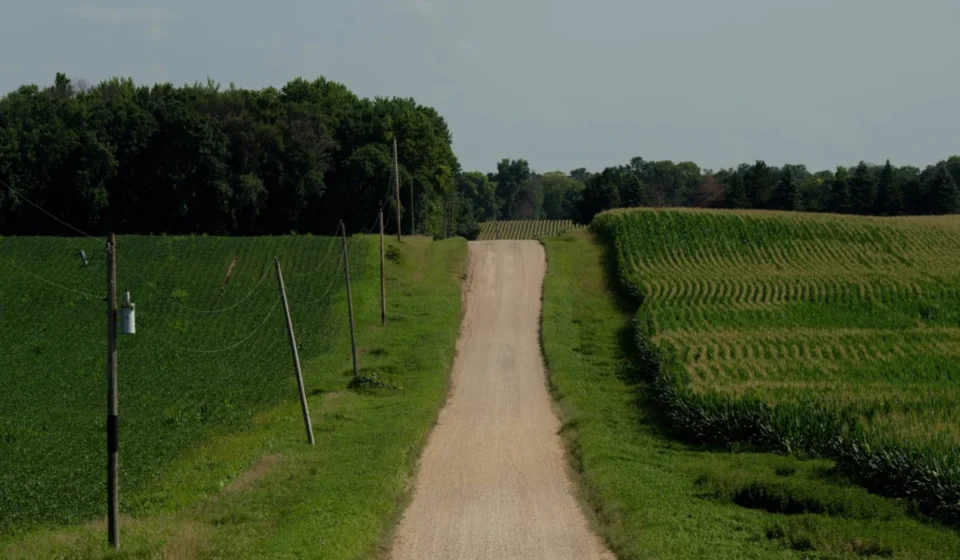
The district’s conservative shift is not merely cultural; it’s a demographic and political reality. Redistricting following the Census further solidified its rural, Republican lean, adding new territory along the Mississippi River in the southern part of the state. More broadly, the 1st District mirrors a national trend where rural areas are increasingly aligning with the Republican Party. Political scientists point to a growing concern among rural residents that their core cultural values—faith, family, and freedom from government overreach—are under threat from a rapidly changing nation. Many also perceive the Democratic Party as being composed of urban elites who dismiss rural lifestyles and prioritize city or immigrant populations over the struggles of the rural working class. As Kate Knutson, a political science professor at Gustavus Adolphus College, put it, the “farmer” part of Minnesota’s historic Democratic-Farmer-Labor Party has effectively “peeled off.”
This shift makes Johnson’s task considerably harder than Walz’s. Walz flipped a seat held by Gil Gutknecht, a moderate Republican. Finstad, by contrast, has closely aligned himself with Donald Trump, reflecting the GOP’s sharp turn to the right. This alignment, combined with Trump’s enduring influence on local elections, means Johnson faces a more ideologically entrenched opponent in a more conservative district.
Agricultural Headwinds and Political Fallout
Despite the district’s strong Republican lean, Johnson sees an opportunity to chip away at GOP enthusiasm among farmers, a critical demographic in the 1st District. He plans to continue criticizing Finstad for embracing Trump-era policies that, Knutson argues, have negatively impacted the agricultural sector. Farmers in southern Minnesota have expressed frustration over tariffs that disrupted trade, as well as immigration enforcement sweeps that have hurt the meatpacking industry, a vital component of the local economy.
Recent global events have further exacerbated these challenges. Iran’s shutdown of the Strait of Hormuz, a critical waterway, has stalled significant deliveries of oil and fertilizer, leading to a sharp increase in farm input costs. These economic pressures create an opening for Johnson to argue that Finstad’s unwavering support for Trump’s policies has directly harmed his constituents.
Finstad, however, has largely dismissed criticisms of Trump’s agricultural policies, instead attributing the current distress to the Biden administration. “We’re heading in the right direction,” Finstad told MinnPost after a veterans’ issues roundtable in Mankato. “We have come out of some tough times where the inputs have been really crippling for the last six years, and then on top of that we’ve had that stale market because of that lack of trade.” His narrative aims to deflect blame and reassure his base that the GOP offers the best path forward for rural economies.

Implications and the Road Ahead
Johnson’s inclusion on the DCCC’s "Red to Blue" list signals that national Democrats view this race as a legitimate pickup opportunity, despite the district’s "likely Republican" rating from the Cook Political Report. They are banking on several factors: Trump’s potentially low approval ratings, an energized Democratic base, and the historical advantage that the party out of power in the White House often holds in midterm elections. To regain control of the U.S. House, Democrats need to win in swing districts and ideally flip some Republican-held seats in challenging territories like the 1st District.
Johnson’s campaign strategy of broad outreach, centrist messaging, and highlighting his personal connection to social safety nets aims to disrupt the traditional Republican dominance. His visible presence in communities like New Ulm, including participating in the Bavarian Blast festival parade and planning a town hall, demonstrates a direct challenge to Finstad on his home turf.
The race in Minnesota’s 1st Congressional District is more than just a local contest; it is a microcosm of the national political struggle. It tests whether a compelling personal narrative, a disciplined centrist message, and significant national party support can overcome deep-seated partisan allegiances and the powerful forces of political polarization in a district that has grown increasingly conservative. As the 2026 election draws closer, all eyes will be on Jake Johnson’s attempt to once again prove that in the heart of Minnesota, a teacher can indeed change the course of political history.