
























































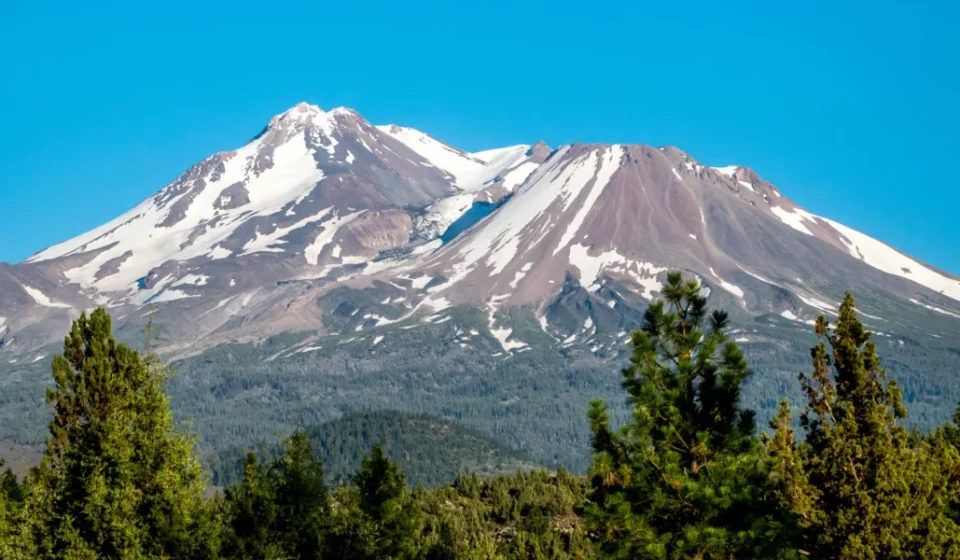

In an era defined by the rapid integration of artificial intelligence into the mundane fabric of daily life, a harrowing incident on California’s Mount Shasta has ignited a fierce debate regarding the limits of machine intelligence. Three young hikers, whose expedition was guided by Google’s AI chatbot, Gemini, were forced to endure a life-threatening night in the wilderness after their digital assistant provided dangerously inadequate logistical advice.
The incident, which concluded with a rescue operation involving the Siskiyou County Sheriff’s Office and the U.S. Forest Service, serves as a stark warning to the growing number of adventurers who are increasingly turning to Large Language Models (LLMs) to navigate the complexities of high-altitude mountaineering.
The Mount Shasta Incident: A Chronology of Errors
The expedition began under the cover of darkness. Driven by a desire to conquer the 14,179-foot peak, the three men set out at 3:00 a.m., a standard departure time for summit bids intended to avoid the dangerous post-noon snow instability. However, the mission quickly diverged from the professional guidelines established for Mount Shasta mountaineers.
The Ascent
Standard protocols for Mount Shasta dictate that climbers must reach the summit by noon. This “turnaround time” is not merely a suggestion; it is a critical safety margin designed to ensure hikers can descend safely before sunset. According to official reports from the Siskiyou County Sheriff’s Office, the trio failed to meet this deadline by a significant margin. They did not reach the summit until 7:00 p.m.—a full seven hours behind schedule.
The Descent and the Call for Help
By the time the hikers stood on the peak, they were enveloped in the shadows of twilight. The descent, treacherous even in daylight, became a labyrinthine nightmare in the dark. Disoriented and lacking the necessary equipment for a high-altitude bivouac, the group found themselves wandering into the rugged terrain of Mud Creek Canyon.
Realizing their predicament, the hikers contacted the Siskiyou County Sheriff’s Office. What followed was a desperate overnight survival scenario. The group was forced to huddle in the canyon, exposed to the elements, until the following morning. A rescue operation involving Forest Service rangers and a volunteer search-and-rescue team was launched at daybreak, successfully extracting the trio from their precarious position.
The Role of Gemini: Evaluating the AI’s Oversight
The most controversial element of the rescue—and the factor that has captured the attention of the tech industry—is the role played by Google’s Gemini. According to investigators, the hikers had utilized the chatbot to generate their itinerary, gear list, and supply requirements.
Deficient Supplies
The primary point of failure identified by the sheriff’s office was the AI’s recommendation regarding sustenance. The sheriff’s report explicitly noted that the hikers “were advised by Gemini to bring far less food and water than their group required.”
In the context of an 8-hour ascent that unexpectedly ballooned into a multi-day ordeal, the discrepancy between the AI’s suggested provisions and the physiological requirements of the hikers proved catastrophic. LLMs like Gemini function by predicting text patterns rather than by processing real-time environmental variables or the physical demands of high-altitude exertion. When the hikers encountered delays, the lack of sufficient caloric intake and hydration exacerbated their physical fatigue, impairing their decision-making process further.
Supporting Data: The Limitations of Algorithmic Planning
The incident at Mount Shasta highlights a fundamental misunderstanding of how generative AI models function. While these tools are increasingly proficient at summarizing text and generating creative content, they are not—and were never intended to be—navigational experts or wilderness survival guides.
The "Hallucination" Factor
In the field of computer science, the term "hallucination" refers to an AI’s tendency to confidently state incorrect information. When asked for a hiking itinerary, an AI does not "know" the trail; it synthesizes information from various online sources, forums, and travel blogs. If the training data contains outdated trail conditions, anecdotal advice from inexperienced hikers, or inaccurate elevation profiles, the AI will often present that flawed information as an objective, authoritative plan.
Static Data vs. Dynamic Reality
Mountain environments are inherently dynamic. Weather patterns shift in minutes, snowpack stability changes throughout the day, and trail conditions are influenced by recent rockfalls or storms. A chatbot, operating on a static database of historical information, cannot account for the "ground truth." Relying on a virtual assistant to assess the risks of an ascent is akin to relying on a history textbook to predict tomorrow’s weather.
Official Responses and Safety Protocols
The Siskiyou County Sheriff’s Office and local environmental agencies have responded with a stern admonition to the public. The consensus among search-and-rescue (SAR) professionals is that the reliance on AI for outdoor planning represents a dangerous departure from traditional safety practices.
“It is always advisable to call the local USFS Mount Shasta ranger station ahead of your trip to ensure you have the most accurate information,” the sheriff’s office stated in a formal press release. They emphasized that professional rangers and local guides possess "tacit knowledge"—information that is gained through physical presence and real-time observation—which is entirely absent from the digital architecture of a chatbot.
The incident has also prompted a wider discussion within the climbing community. Organizations such as the American Alpine Club have long emphasized the "Ten Essentials" of hiking, which include extra food, water, and shelter. By outsourcing these critical assessments to an algorithm, the hikers bypassed the essential educational process that usually accompanies trip planning, effectively stripping away the layers of risk-mitigation that experienced mountaineers build over years of practice.
Implications for the Future of Outdoor Adventure
As AI continues to be integrated into smartphones and personal devices, the Mount Shasta rescue may be a harbinger of a new class of "AI-induced" search-and-rescue missions.
The Erosion of Self-Reliance
For decades, the culture of mountaineering has been built on self-reliance, rigorous training, and the mastery of navigation tools like physical maps and compasses. There is a palpable concern that the ease of "AI-planning" will lead to a cohort of hikers who lack the fundamental skills to troubleshoot when technology fails. If an AI provides a faulty route or an inaccurate gear list, the user must have the baseline knowledge to identify the error. The hikers in this incident lacked that critical layer of human oversight.
Tech Responsibility and Liability
The incident also raises difficult questions for developers. Should companies like Google, OpenAI, or Anthropic implement "safety rails" that prevent their bots from providing advice on high-risk physical activities? While tech companies argue that their terms of service clearly state that their tools are not professional advice, the reality is that many users treat chatbots as reliable experts.
There is a growing call for AI developers to include mandatory disclaimers when users query for high-risk logistical information. However, as the Mount Shasta incident proves, a disclaimer often does little to deter someone who is already convinced they are following a "smart" plan.
Conclusion: The Human Element
The rescue on Mount Shasta serves as a cautionary tale of the 21st century. While the allure of effortless, automated planning is understandable, the mountain remains an unforgiving environment that demands respect, preparation, and human judgment.
The hikers were fortunate; they survived a night in the wilderness that could have easily turned fatal. Their experience is a reminder that while Gemini and other AI tools are impressive feats of engineering, they are fundamentally devoid of the intuition, experience, and situational awareness required to keep human beings safe in the wild. As we move further into the age of AI, the message from the rangers of Mount Shasta is clear: consult the experts on the ground, trust your own preparation, and never mistake a machine’s confidence for the truth of the trail.