



































In an era where university theater programs are facing systemic contraction—with many departments being absorbed into larger administrative structures or shuttered entirely due to budget deficits—the viability of an arts-centric career path has become a subject of intense academic and public debate. Yet, for Signe Harriday, a seasoned artist and veteran of the Twin Cities’ cultural scene, the skills honed in the rehearsal room have proven to be the ultimate preparation for the boardroom.
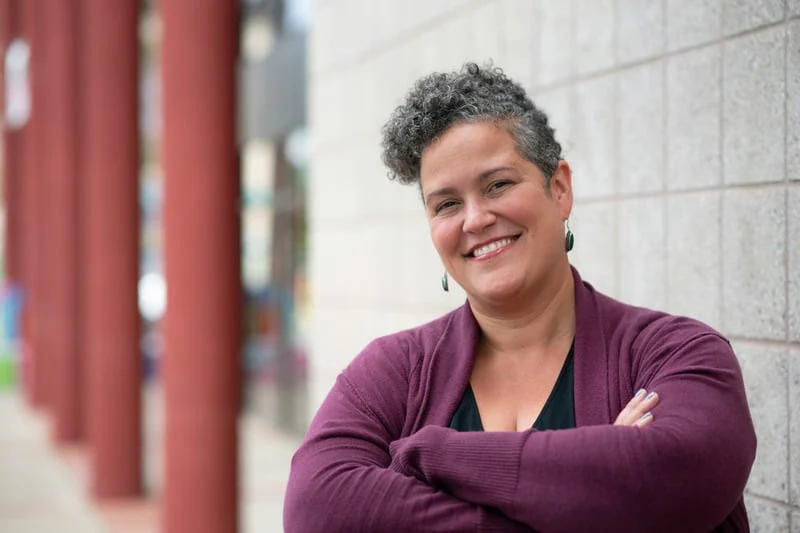
On June 23, 2026, Pillsbury United Communities (PUC), one of the oldest and most influential nonprofits in the Twin Cities, announced that Harriday would serve as its new president and CEO. Her appointment marks a significant transition for the organization, signaling a pivot toward a leadership model rooted in creativity, collaborative storytelling, and community-based advocacy.
A Legacy of Community Impact
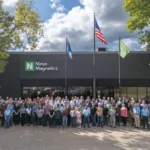
Pillsbury United Communities is a sprawling, multifaceted institution. It does not merely operate as a traditional charity; it functions as a critical infrastructure for social equity in Minneapolis. From overseeing community centers and charter schools to managing social enterprises like KRSM Radio, the Full Cycle Bike Shop, and the news outlet North News, PUC serves as a backbone for underserved populations.
Harriday’s rise to the top was not a sudden ascent but a culmination of a 25-year tenure with the organization. Her history with PUC is deeply intertwined with its artistic wing, the Pillsbury House + Theatre. Having spent years as an actor, director, and educator, she ascended to the role of artistic producing director in 2021. For the past year, she has performed a dual-executive function, balancing the artistic output of the theater with the operational oversight of PUC’s diverse social business portfolio.
Chronology: From the Stage to the CEO Suite
To understand Harriday’s leadership, one must look at the trajectory that prepared her for this moment:
- Academic Foundations: Harriday graduated from St. Olaf College before pursuing an MFA in acting at the A.R.T. Institute for Advanced Theater Training—a prestigious joint venture between the American Repertory Theater, the Moscow Art Theatre, and Harvard University.
- Early Career: Following her graduate studies, she cut her teeth at the Mixed Blood Theatre, where she mastered the nuances of audience development and public relations while continuing to perform.
- The PUC Era: Over the last quarter-century, Harriday became a fixture at Pillsbury House + Theatre. Her work evolved from performance to production and, eventually, executive management.
- Expansionary Leadership: Her tenure as artistic producing director saw the expansion of the Pillsbury House + Theatre campus on Chicago Avenue, resulting in the $5.7 million Pillsbury Creative Commons—a hub for technical workforce development and digital media production.
- June 2026: Harriday is appointed President and CEO of Pillsbury United Communities, tasked with steering the organization through a period of immense social and economic change.
The Director’s Approach to Management
Harriday’s philosophy of leadership is explicitly theatrical. When asked about her transition from the stage to the CEO office, she clarifies that the skills are not disparate but complementary.
"As a director and a producer, it is actually not my job to build the set, to design the set, to build the costumes, to even perform the show," Harriday explains. "It’s actually my job to inspire the greatest performance or the best idea in the room, and then help the team find a way to make that real."
This mindset reflects a shift away from traditional, top-down corporate management toward a collaborative model that treats stakeholders as cast members in a shared project. It is a philosophy that has also informed her work as a co-founder of the Subversive Sirens, a synchronized swimming team centered on Black liberation, queer visibility, and body positivity, and as a collective member of Rootsprings, a sanctuary for BIPOC artists and activists.
Data and Institutional Resilience
The sustainability of the arts sector remains a concern, particularly in the post-pandemic landscape. Many organizations have struggled with donor fatigue, rising costs, and changing audience behaviors. However, PUC’s model of integrating arts into social services has provided a buffer against these volatility factors.
"Our ability to radically pivot when we’ve needed to—both during COVID and during the global uprising—that kind of longevity has allowed us to have nimbleness and agility," Harriday notes.
Board Chair Kaori Yamada emphasizes that this agility is exactly why Harriday was chosen for the role. Yamada highlights the successful completion of the Pillsbury Creative Commons as a testament to Harriday’s ability to cast a vision and bring disparate stakeholders—from donors to local residents—to the table. While some initiatives, such as the North Market community grocery store in North Minneapolis, remain in a holding pattern due to complex strategic planning requirements, Yamada expresses full confidence in Harriday’s ability to "listen to the needs of the moment."
The "Fire Truck" Philosophy: Overcoming Limitations
Harriday often jokes about a childhood aspiration: she wanted to be a fire truck. "I think it is actually kind of like a little bit true about me throughout my entire life," she reflects. "Don’t tell me what I can do. I’m going to show you what we can do."
This defiance of conventional limitations defines her stance on the current state of the nonprofit sector. She views her appointment not just as a personal victory, but as a mandate for the broader inclusion of artists in executive leadership. "We’ve been saying for so long: We need artists as leaders in the right places, and we need people who are connected to the work to lead the work."
Her pragmatism is also evident in her relationship with the financial realities of her education. Recalling her time at the A.R.T. Institute, she notes with a dry wit, "I just finished paying off my graduate student loans. People tell me, ‘Oh, you have such a great voice.’ I’m like, ‘I paid for this.’"
Implications for the Future of Nonprofits
Harriday’s appointment arrives at a time of deep uncertainty for the arts and nonprofit sectors. She acknowledges that the ecosystem will inevitably change, noting, "I think that the arts ecosystem and the nonprofit sector will look different, and so will Pillsbury in the future."
She argues that it would be "naive" to expect these organizations to emerge from the current pressures—economic instability, loss of traditional funding, and shifting social expectations—without fundamental structural changes. By embracing this evolution rather than fighting it, she hopes to position PUC as a laboratory for the next iteration of community-led development.
For current students and theater professionals concerned about the dissolution of their programs, Harriday’s career stands as a compelling case study. It suggests that the value of an arts education is not confined to the stage; rather, the ability to synthesize narratives, manage group dynamics, and maintain an agile, creative response to crisis is exactly the kind of leadership that 21st-century organizations demand.
Looking Ahead: A Call for Dialogue
As the community navigates these changes, the conversation surrounding the future of arts funding and leadership continues. Pillsbury House + Theatre will be at the forefront of this discourse, participating in an upcoming roundtable discussion on July 8 at the Mixed Blood Theatre. The event, modeled after the "Frankly Speaking" series, aims to address the pressing issues of venue loss, press coverage, and the sustainability of independent arts organizations in the Twin Cities.
For Signe Harriday, the task ahead is clear: she must translate the creative impulse into sustainable social policy. If her past 25 years are any indication, she is prepared to lead not by dictating the script, but by empowering her community to write the next act together.