


























































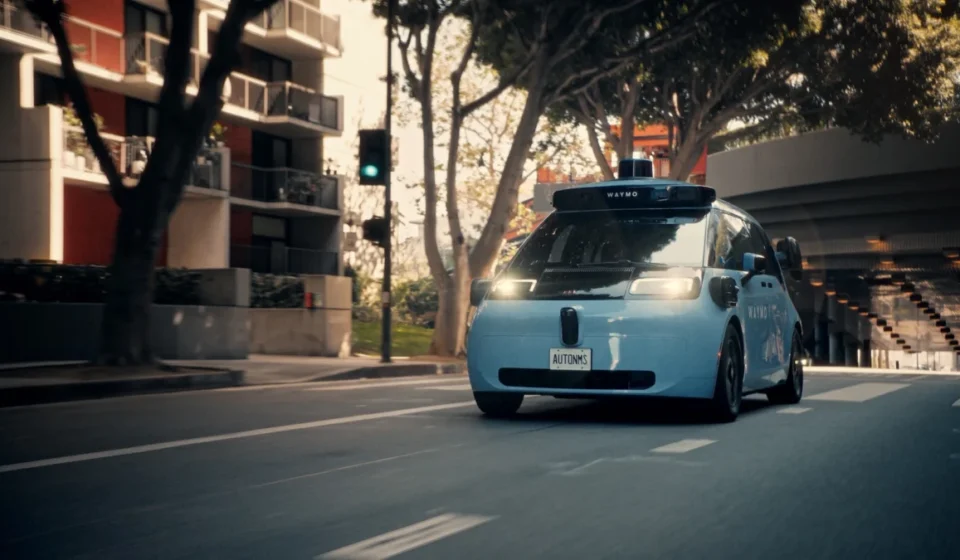

Alphabet-owned Waymo has officially entered a new phase of its evolution, marking a definitive shift from high-end experimentation to mass-market commercial scaling. The company has begun deploying its next-generation robotaxi, the "Ojai," to the general public across its three flagship markets: Los Angeles, Phoenix, and San Francisco. This move signals a pivotal milestone for the autonomous vehicle (AV) industry, as Waymo pivots away from retrofitted luxury SUVs toward purpose-built, cost-efficient hardware designed specifically for the rigors of ride-hailing.
Main Facts: The Arrival of the Ojai
For years, the Waymo experience was defined by the Jaguar I-Pace—a sophisticated, sensor-laden hatchback that served as the backbone of the company’s early commercial success. However, while the I-Pace proved the technology, it was never intended to be the endgame for a company chasing global scalability and profitability.
The Ojai, by contrast, is a radical departure. Developed in partnership with Zeekr—the electric vehicle subsidiary of China’s Geely Holding Group—the Ojai is a minivan built on the Sustainable Experience Architecture (SEA-M). It is purpose-engineered to be modular, durable, and, crucially, less expensive to build and maintain than its predecessors.
Currently, Waymo’s fleet features approximately 300 Ojai units. While users in Los Angeles, Phoenix, and San Francisco may find themselves matched with an Ojai when requesting a ride, the rollout is still in its infancy. Waymo intends to allow riders to eventually choose their preferred vehicle type once the Ojai fleet reaches critical mass. Furthermore, the company has announced aggressive expansion plans, with Denver, Las Vegas, and San Diego slated to receive the new vehicles by the end of this year.
A Chronology of Progress
The journey to the Ojai has been a multi-year effort defined by strategic international collaboration and rigorous safety testing.
- December 2021: Waymo and Zeekr announced their strategic partnership, signaling Waymo’s intent to move toward custom-built hardware rather than just modifying existing consumer vehicles.
- 2022–2023: Waymo spent this period testing early prototypes. These years were critical for refining the hardware, ensuring that the Geely-built platform could integrate seamlessly with Waymo’s proprietary software stacks.
- 2024: Waymo began transitioning from prototype to "production-intent" vehicles. The company established a specialized facility in Arizona where the imported base vehicles—stripped of Chinese connected-car technology—are outfitted with the sixth-generation Waymo Driver system.
- Late 2025 – Early 2026: The Ojai received final regulatory clearances and began its entry into the commercial fleet.
- Present Day: The Ojai is now live for public ridership in major U.S. metropolitan hubs, with rapid expansion into additional cities currently underway.
Supporting Data: Scaling at Velocity
The transition to the Ojai is not merely a cosmetic update; it is a calculated effort to flood the market with units that make economic sense. According to data tracked by the New York-based research firm MoffettNathanson, Waymo is executing a massive import operation. By monitoring shipping receipts and import manifests, the firm estimates that Waymo is on track to bring 5,000 Ojai vehicles into the United States by the end of 2026.
To put this in perspective, that volume would more than double the size of Waymo’s current total fleet of Jaguar I-Pace vehicles. The pace of this deployment is accelerating; in July alone, 725 Ojai units were logged entering the country. This data point underscores the urgency with which Alphabet is moving to establish a dominant market share before competitors like Tesla, Cruise, or Zoox can achieve similar economies of scale.
The Technological Leap: Sixth-Generation Integration
The Ojai is powered by Waymo’s sixth-generation self-driving system. Unlike previous iterations, this generation was designed with modularity as a core tenet. The company recognized that for a robotaxi business to be sustainable, the software cannot be tethered to a single vehicle model.
The system features enhanced sensor suites—including improved LiDAR, radar, and cameras—that provide a broader field of view and higher resolution in adverse weather conditions. Perhaps most notably for the user, the cabin experience has been overhauled. The Ojai features a redesigned user interface and integrates Google’s Gemini AI. This serves as an in-car intelligent assistant, providing riders with real-time navigation updates, trip information, and conversational utility, effectively turning the vehicle into a productive workspace or a mobile lounge.
Implications: Navigating Tariffs and Geopolitics
The Ojai’s path to American streets is not without friction. Because the vehicles are manufactured by a Chinese-owned company (Geely), they are subject to stringent U.S. import tariffs. These duties increase the landed cost of each vehicle, representing a significant capital expenditure for Alphabet.
To mitigate both security concerns and trade complications, Waymo utilizes a "clean-slate" approach. The vehicles arrive in the U.S. as "gliders"—essentially shells without onboard Chinese connected-car software. Once they reach Waymo’s Arizona facility, the company installs its own secure, proprietary U.S.-developed software and hardware. This "Americanization" process ensures compliance with domestic data security regulations while allowing Waymo to leverage the manufacturing efficiency of the Zeekr platform.
The economic implication is clear: Waymo is betting that the efficiency gains from the Ojai’s design—specifically its ease of maintenance, its durability for 24/7 operation, and its passenger-friendly cabin—will outweigh the high initial cost of tariffs. If successful, the Ojai will provide the unit economics required to finally transition the company from a high-burn research project into a high-margin, self-sustaining revenue engine.
Future Outlook: The Path to Profitability
The rollout of the Ojai is the most significant indicator yet that the autonomous ride-hailing industry is moving out of its "pilot phase" and into a "deployment phase."
For consumers, the benefits are clear: a more spacious, purpose-built vehicle designed for ingress and egress, equipped with cutting-edge AI assistants. For the industry, the Ojai serves as a test case for whether the "robotaxi-as-a-service" model can be profitable. By standardizing the fleet on a platform designed for the wear and tear of a taxi, Waymo is attempting to solve the biggest hurdle facing autonomous fleets: the cost per mile.
As the Ojai rolls out into Denver, Las Vegas, and San Diego, industry analysts will be watching closely to see if the maintenance costs remain as low as projected. If the Ojai performs as well in the field as it has in simulation and test tracks, Waymo’s decision to outsource the physical chassis while keeping the "brain" firmly in-house will likely become the blueprint for every other player in the autonomous space.
The era of the "adapted luxury car" is ending. The era of the "purpose-built robotaxi" has officially begun. With 5,000 units expected within the next 18 months, Waymo isn’t just testing the waters—it is attempting to become the standard-bearer for urban mobility in the 21st century.