

























































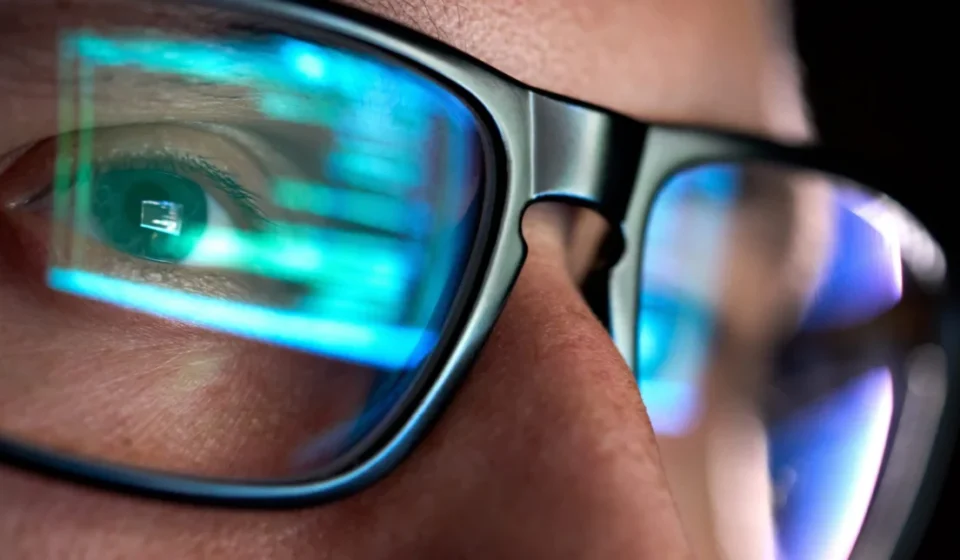

As industry giants like Samsung, Apple, Google, and Meta accelerate their foray into the smart eyewear market, corporate security leaders find themselves in a familiar but increasingly complex bind. The arrival of high-performance, AI-integrated glasses—devices that are virtually indistinguishable from standard prescription frames—has triggered a frantic reassessment of Bring Your Own Device (BYOD) policies. For Chief Information Security Officers (CISOs) and IT administrators, the challenge is not just about managing hardware; it is about mitigating a sophisticated, invisible threat to intellectual property (IP), regulatory compliance, and corporate culture.
The Evolution of the Threat: From Smartphones to Smart Eyewear
To understand the current panic, one must look at the trajectory of mobile technology. For two decades, the smartphone has been the primary vehicle for data leakage. An employee could, with relative ease, record a whiteboard session, snap a photo of a sensitive screen, or capture a confidential conversation.
However, industry experts argue that we are witnessing a "frictionless" escalation of this risk. Jitesh Ubrani, an IDC director focusing on worldwide device trackers, notes that while the fundamental capability to record is not new, the form factor is. "The instinct to ban AI smart glasses outright is understandable, but it misses that the underlying risk isn’t new," Ubrani explains. "What’s changed is the friction. Glasses make covert capture nearly effortless and far harder to notice because there’s no phone being visibly raised or pointed."
This shift in "capture stealth" represents a significant hurdle for security teams. When a device is a seamless piece of apparel, the social and physical cues that once signaled "I am recording" vanish.
Chronology: The Rise of the Wearable Frontier
The history of smart glasses is long, but their impact on the enterprise is recent.
- The Early Years: Products like Google Glass (2013) were highly visible and, due to their clunky aesthetic, easily identified as cameras. They were largely rejected by the public and subsequently banned in many offices, not due to sophisticated policy, but due to their obvious, alien appearance.
- The Proliferation Era: The emergence of Ray-Ban Meta glasses and similar products marked a turning point. By prioritizing fashion and comfort, manufacturers created devices that look, feel, and function like standard eyeglasses.
- The AI Integration Surge: With the 2024–2025 push for generative AI integration, smart glasses have moved from simple cameras to context-aware, voice-responsive, and real-time recording devices.
- The Current Conflict: Samsung’s entry into the space has solidified the trend, forcing IT departments that previously ignored "niche" wearables to confront them as a mainstream enterprise security vulnerability.
The Myth of Enforcement
If IT leaders decide to restrict these devices, they face the harsh reality that physical enforcement is nearly impossible. Carmi Levy, an independent technology analyst, suggests that the "gatekeeper" model of corporate security is failing.
"The sad reality for corporate technological gatekeepers is there is no way to completely keep any device out of the workplace," Levy notes. "There is nothing stopping employees from wearing eyewear of any type, smart or not."
The Legal and Logistical Minefield
Beyond the technical difficulty, there are profound legal risks. Attempting to ban all smart eyewear could land an organization in the middle of a discrimination or disability lawsuit. As smart glasses increasingly function as assistive technology for those with vision impairments or cognitive processing needs, a blanket ban could violate workplace accommodation mandates.
Furthermore, enforcement in a hybrid work environment is effectively non-existent. "IT has no practical way to confirm what someone is wearing on a home Zoom call," says Ubrani. Even in-office detection—such as scanning for Bluetooth or BLE (Bluetooth Low Energy) signals—is flawed. Employees can reconfigure device names, mask signals, or simply put the glasses in an offline, local-storage mode that emits no detectable frequency.
Supporting Data: Why "Guardrails" Are Not Enough
One common misconception among IT departments is that software-level "guardrails"—such as mandatory recording lights—will protect sensitive environments. However, the tech industry has a well-documented history of these guardrails being bypassed.
Covering or disabling a small LED indicator is a trivial physical modification. More importantly, AI-driven devices are designed for autonomy. If the software is updated or compromised, or if a user overrides privacy settings, the "opt-in" nature of data collection can quickly become "opt-out" without the user’s awareness.
Implications for Corporate IP and Data Sovereignty
The risk is not merely about the loss of a trade secret; it is about the velocity and scale of the leak. Meghan Hollis, a senior principal analyst at Gartner, points out that the addition of high-definition video capture to existing audio-translation capabilities creates a massive exposure surface.
The "Hallway Incident" Scenario
Consider the scenario where an employee receives permission to record a meeting. The meeting ends, and the employee forgets to disable the device. They walk into a hallway and encounter an executive discussing a sensitive, non-public merger. Because the glasses are effectively a always-on, cloud-connected microphone and camera, that sensitive data is instantly transmitted to a third-party server.
This raises the critical issue of data sovereignty. Even if a manufacturer claims data stays within specific borders, these policies are subject to change. Third-party vendors may be swapped, and export control laws could be violated unknowingly when a recording is synced to a cloud server located in a jurisdiction with lax data protection standards.
Towards a Tiered Governance Strategy
Given the futility of an outright ban, experts recommend a shift toward a "Tiered Policy" model.
1. The "No-Wearables" Zones
In boardrooms, R&D labs, and secure server facilities, IT leaders should implement strict, no-exception rules. These spaces should be treated like secure SCIFs (Sensitive Compartmented Information Facilities), where mobile devices are already prohibited. The rule here is clear: If it’s on your face, it stays at the door.
2. The Disclosure Requirement
For general office environments, a "disclosure-first" policy is more practical. Employees must be required to declare the presence of a recording-capable device before entering meetings. This mirrors how companies currently manage the use of personal audio recorders in sensitive briefings.
3. Education as the Primary Defense
"Threatening to punish workers… is your last line of defense," Hollis argues. The first line must be an aggressive, ongoing education campaign. Employees must understand not just the company policy, but the consequences of a leak—how it harms their colleagues, their clients, and their own job security.
The Future: A New Era of BYOD
Brian Jackson, a principal research director at Info-Tech Research Group, believes we are currently at the precipice of a massive redefinition of BYOD.
"Organizations should update their acceptable use policies for personal technology ASAP," Jackson says. He suggests that while we cannot fully ban technology that is becoming essential for many, we must hold the line on compliance and culture. "We need to look back at the early days of smartphones. We are at the beginning of a redefinition. It needs to start with an extremely restrictive policy that evolves as the technology matures."
The path forward for the enterprise is not to fight the hardware—which is a losing battle—but to govern the behavior. By moving away from the binary "ban vs. allow" mindset, CISOs can build a framework that respects both the innovative potential of AI wearables and the existential necessity of protecting corporate intellectual property. The challenge is immense, but in an era where cameras are omnipresent, the only way to manage the risk is to stop pretending the glasses aren’t there and start managing the data they collect.