





















































The Erosion of Opportunity: Minnesota’s Financial Aid Crisis and the Future of Higher Education

For over four decades, Minnesota has stood as a beacon of accessible higher education, underpinned by a robust State Grant Program designed to ensure that a student’s zip code or socioeconomic status did not dictate their academic potential. Yet, as the 2025 fiscal year unfolds, that foundational promise is fracturing. Tens of thousands of students, who rely on the state’s primary source of financial aid to bridge the gap between their resources and the rising cost of tuition, are facing an uncertain future.
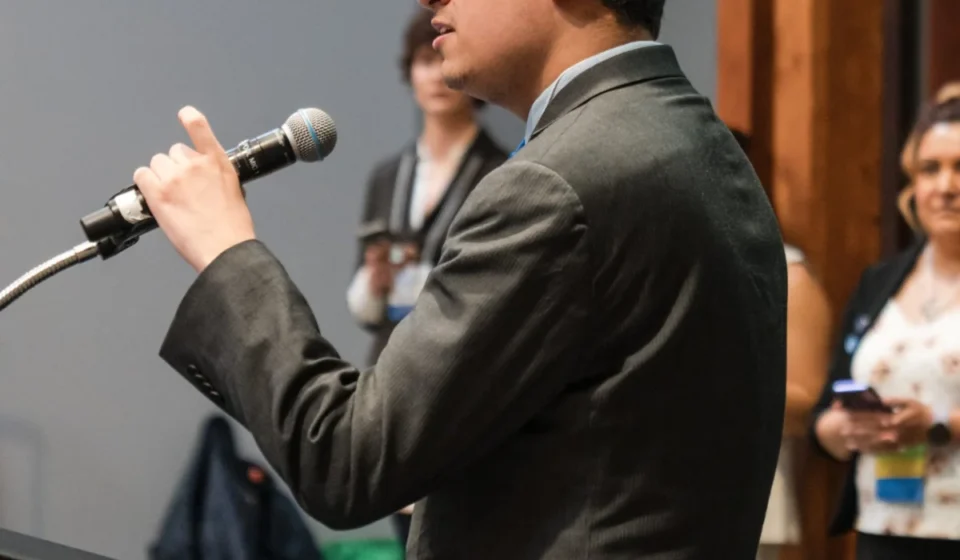
The program, which provided $222 million in aid to over 75,000 students in the last fiscal year, is currently struggling under the weight of a $131 million budget shortfall. For students like 19-year-old Aaron Eischen, a graphic design student at Dakota County Technical College, these state grants are not merely a bonus—they are a lifeline. Balancing a demanding academic schedule with a job at Sam’s Club, Eischen relies on this aid to maintain his path toward long-term financial stability.
"Stripping away that aid would be devastating to a lot of students," Eischen says. "It’s a constant stressor that hangs over you while you’re trying to focus on your future."
A Pattern of Shortfalls: The Financial Landscape
The current $131 million deficit is not an isolated event; it marks the fourth consecutive fiscal year that the State Grant Program has faced a multimillion-dollar funding gap. This recurring crisis points to a deeper, more systemic instability that state lawmakers have thus far failed to resolve.
The immediate impact of this year’s shortfall is severe. State officials estimate that approximately 80% of grant recipients will see their awards reduced this fall. Data obtained by MinnPost reveals that about one-third of these students stand to lose $1,000 or more from an average award that, just last year, sat at $2,927. Perhaps most alarmingly, projections suggest that between 17,000 and 20,000 students could see their grant support eliminated entirely.
The surge in demand is driven by a convergence of factors. After a decade of declining applications, the program has seen an influx of nearly 27,000 new requests since 2023. This is partly due to increased college enrollment, but also to federal changes that expanded eligibility for the Federal Pell Grant. Because Minnesota’s state grant formula is tied to federal benchmarks, the state’s program has seen its financial obligations grow in tandem with federal aid expansion. Simultaneously, two decades of rising tuition costs at public institutions have further strained the program’s capacity, as the grant is structured to account for the price of attendance.
A Chronology of Legislative Gridlock
The history of the State Grant Program is rooted in a 1969 mandate that declared financial support for low-income students to be in the "best interests of the state." However, the path to the current crisis has been marked by a series of stop-gap measures and failed negotiations.
In the 2023-24 academic year, the Minnesota Office of Higher Education attempted to mitigate a $9 million shortfall through internal fund shuffling. By the following year, the deficit grew, leading to the total elimination of aid for over 8,400 students. In the spring of 2025, lawmakers attempted a broader fix, closing a $239 million hole by injecting $44.4 million in new funding and implementing austerity measures, such as reducing the number of college credits the state would cover.

Despite these efforts, costs have consistently outpaced resources. During the most recent legislative session, Gov. Tim Walz and various party leaders proposed competing solutions, none of which gained the necessary consensus to pass.
One proposal from the Governor’s office sought to change the calculation of student need, which would have saved $38 million but resulted in lower awards for the state’s poorest students. Rep. Jessica Hanson (DFL-Burnsville) sharply criticized the plan, characterizing it as "pulling out the rug from underneath poor students who need it the most, for whom college is arguably one of the only ladders out of poverty."
Conversely, Republican legislators proposed offsetting the shortfall by barring undocumented students from grant eligibility—a move projected to save $5 million—and diverting funds from the "North Star Promise" program, a newer initiative that covers tuition and fees for students after other aid is applied. These proposals have met stiff resistance from Democrats, who argue that North Star is essential for reducing long-standing equity barriers in education.
Data and Demographics: Who Is Being Affected?
The impact of these cuts is not distributed evenly. The State Grant Program serves a demographic that is uniquely vulnerable to tuition hikes and funding fluctuations. According to the Office of Higher Education, over 50% of grant recipients in fiscal year 2025 come from families earning less than $40,000 annually. Nearly half of the recipients identify as students of color, and over 40% are enrolled in the state’s community colleges and technical schools.
These institutions are often the primary engine for workforce development in Minnesota. When aid is cut, these students—many of whom are first-generation college attendees—are the first to face the prospect of dropping out.
A 2024 state report highlighted the fragility of this student population, finding that nearly 40% of undergraduate students in Minnesota struggle to afford basic necessities, including food, housing, and transportation. For these students, a reduction in grant money is not a minor budget adjustment; it is a potential barrier to graduation.
Official Responses and Strategic Failures
The leadership within the state’s higher education system is sounding the alarm. Scott Olson, chancellor of the Minnesota State system, which encompasses 26 two-year colleges and seven universities, warns that the shortfall will have a profound effect on affordability.
"The best thing the Legislature can do is fully fund higher education so schools can maintain tuition rates," Olson noted in an interview. "But that hasn’t happened lately, and so you see people raising tuition, which then puts the pressure on financial aid."

At the legislative level, the debate has become increasingly polarized. Sen. Zach Duckworth (R-Lakeville) described the program as "hobbling along," arguing that without a fundamental restructuring, the state will continue to face these cyclical crises.
Meanwhile, advocates like BG Tucker, executive director of College Possible Minnesota, are frustrated by the lack of cooperation. "Both political parties have competing interests right now, and that is preventing conversation to address what is happening at the state funding level," she said. "We needed everyone to come to the table and come together on it, and that didn’t happen."
Implications for the Future: The Cost of Inaction
The failure to reach a long-term solution has ripple effects that extend far beyond the legislative chambers. Nonprofit organizations are now bracing for an influx of requests for emergency aid as students scramble to cover the gaps left by the state.
"You would hate to see a failure of systems be the reason that a kid is not finishing their second-to-last semester in college," Tucker added.
For students like Eischen, the uncertainty is a constant companion. Though he recently learned that his own grant reduction was limited to $215, he remains vocal about the broader implications. He spends his limited free time advocating for better access to higher education, recognizing that even if he graduates, the systemic issue remains for those who follow.
"Even when I’m done with college, there’s still going to be people who are in college who are trying to afford it," Eischen said.
As Minnesota looks to the future, the state faces a critical choice. In 2015, lawmakers set a goal for 70% of residents aged 25 to 44 to hold a degree or credential. The state has already missed that benchmark, hindered by persistent equity gaps. If the current trajectory of the State Grant Program continues, those gaps are likely to widen.
The Minnesota Office of Higher Education is currently studying ways to redesign the financial aid system to be more sustainable. However, any structural overhaul will require political will that has been noticeably absent in recent years. Until that consensus is reached, the "ladder out of poverty"—as it was once called—remains at risk of being dismantled, one budget cycle at a time.