





















































By [Your Name/News Agency]
For more than a century, the Iron Range of Northern Minnesota has been defined by the rhythmic pulse of extraction—the heavy machinery, the deep pits, and the taconite pellets that fueled the American industrial revolution. But as the traditional iron-ore industry faces a long-term decline driven by global competition and the rise of recycled steel, a new, high-tech frontier is emerging.
Minneapolis-based Niron Magnetics is currently scouting the Iron Range for what could be a transformative economic engine: a $1.8 billion manufacturing facility. Unlike the controversial mining proposals that have dominated headlines for years, Niron’s project promises to leverage Minnesota’s historic resources to solve a modern geopolitical crisis—ending the United States’ near-total reliance on Chinese rare-earth minerals.
Main Facts: A Paradigm Shift in Domestic Manufacturing
Niron Magnetics represents a bridge between Minnesota’s industrial past and a decarbonized future. The company is currently in the site-selection phase for its third and largest facility, a massive 1.6-million-square-foot plant. If the Iron Range is selected, the project would bring more than 700 high-paying permanent jobs to a region that has seen its workforce thinned by the automation and consolidation of taconite mining.
The core of Niron’s value proposition is a technological breakthrough: the "Clean Earth Magnet." For decades, the high-performance magnets required for electric vehicle (EV) motors, wind turbines, and defense systems have relied on rare-earth elements like neodymium and dysprosium. Currently, China controls approximately 70% of the global mining of these minerals and upwards of 90% of the specialized manufacturing required to turn them into magnets.
Niron’s alternative is based on iron nitride—a compound created from iron and nitrogen, two of the most abundant elements on Earth. By utilizing domestically sourced iron, Niron aims to create a supply chain that is not only environmentally superior to traditional rare-earth mining but also insulated from the volatile trade restrictions recently imposed by Beijing.
The proposed $1.8 billion facility would be a "gigafactory" of magnets, aiming to produce 10,000 tons of finished product annually. This scale is intended to meet the soaring demand from the automotive and renewable energy sectors, where Niron has already secured blue-chip partners including General Motors, Volvo, and Stellantis.
Chronology: From University Lab to Industrial Scale
The journey of Niron Magnetics is a classic story of academic innovation meeting venture capital. The technology was originally pioneered by University of Minnesota Professor Jian-Ping Wang, whose research into the magnetic properties of iron nitride sought to overcome the stability issues that had plagued the compound for decades.
- The Early Years: Following the patenting of the technology, Niron spent several years in stealth mode, refining the chemical processes required to manufacture iron nitride at a molecular level without the need for the extreme heat and toxic acids typically associated with rare-earth processing.
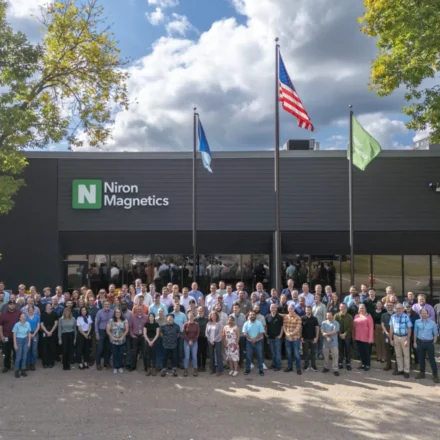
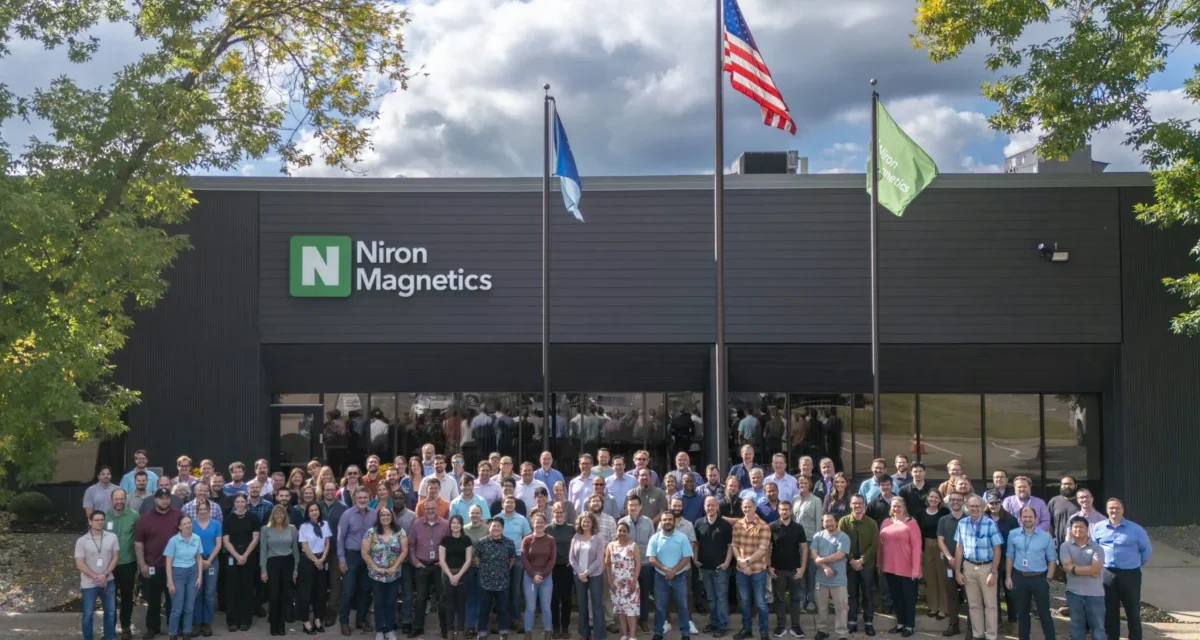
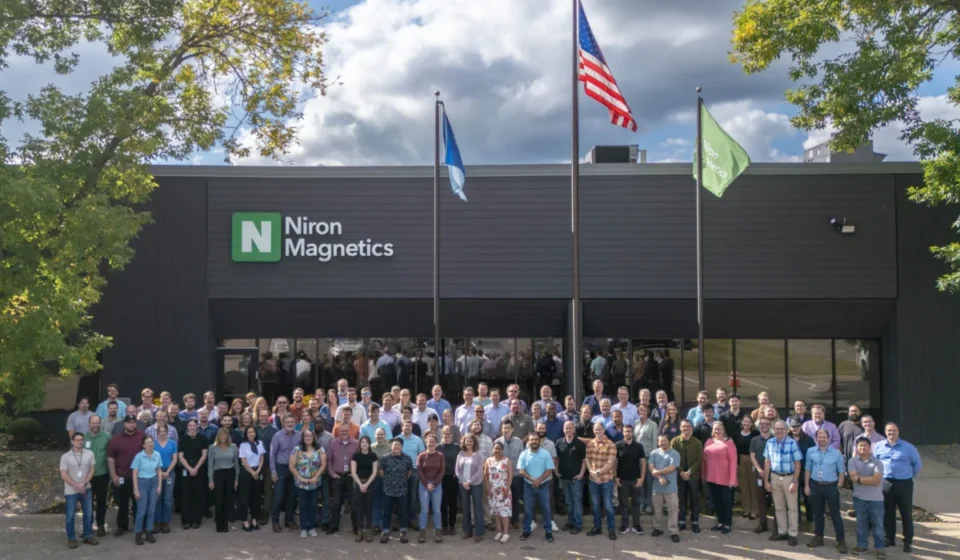
- The Pilot Phase: The company established its headquarters and a pilot production plant in Northeast Minneapolis. This facility, which currently employs 185 people, served as the proof-of-concept for the commercial viability of the "Clean Earth Magnet."
- The Sartell Expansion: In 2023, Niron broke ground on its first mid-scale production plant in Sartell, near St. Cloud. Backed by a $10 million investment from the state’s Department of Employment and Economic Development (DEED), the Sartell plant is expected to employ 175 people and produce 1,500 tons of magnets per year once fully operational.
- The 2024 Site Selection: Earlier this year, Niron hired Savills, a global commercial real estate adviser, to lead the search for its "Facility 3." While several states are being considered, the Iron Range has emerged as a frontrunner due to its existing infrastructure and "mining-adjacent" workforce.
- Future Milestones: Niron expects to finalize its site selection by late 2024 or early 2025. Construction is slated to begin in 2028, with full-scale production hitting the market by 2029. To fuel this growth, the company—which has already raised $300 million—is weighing an initial public offering (IPO) within the next 24 months.
Supporting Data: The Rare-Earth Crisis and Market Demand
To understand the scale of Niron’s opportunity, one must look at the precarious nature of the current global supply chain. According to data from the Center for Strategic and International Studies (CSIS), the U.S. currently imports nearly all of its rare-earth magnets. In 2023, China intensified this pressure by implementing export controls on several critical minerals and the technologies used to process them, effectively weaponizing the supply chain in response to U.S. semiconductor restrictions.
Niron’s iron-nitride magnets offer a compelling statistical alternative:
- Cost Efficiency: Because iron and nitrogen are commodity materials, Niron’s magnets are projected to be significantly cheaper than rare-earth alternatives, which are subject to extreme price volatility.
- Environmental Footprint: Traditional rare-earth mining produces toxic tailings and radioactive byproducts. Niron’s process, which uses iron powder and atmospheric nitrogen, is significantly cleaner, requiring less energy and producing no hazardous waste.
- Market Reach: The $1.8 billion plant’s goal of 10,000 tons annually would represent a significant portion of the projected U.S. demand for EV motor magnets by 2030.
Financially, Niron is backed by a formidable coalition. Beyond automotive giants like GM and Volvo, the company has received funding from the U.S. Department of Energy (ARPA-E), Samsung Ventures, and Western Digital. With designs on reaching $1 billion in annual revenue, the company’s trajectory is aimed at becoming a cornerstone of the "New North" economy.
Official Responses: Bipartisan Support and Economic Hope
The prospect of a $1.8 billion investment has created a rare moment of political alignment in Minnesota. Both the DFL administration of Governor Tim Walz and the Republican-leaning leadership of the Iron Range have expressed enthusiastic support for the project.
"It’s a massive opportunity that fits agency priorities," said Ryan Malich, executive director of business development at the Minnesota Department of Iron Range Redevelopment and Resources (IRRR). "These are the types of jobs that we’re trying to add to the area—evolving, innovative technologies. We want to be on the front side of technological development. We have a highly skilled, available workforce. All the elements seem to line up well for this potential development."
Kevin McKinnon, Deputy Commissioner of DEED, echoed this sentiment, highlighting the company’s homegrown roots. "Niron is a fabulous story about technology developed at the University of Minnesota and commercialized here. The promise, the trajectory of where they are going is very exciting. The third project would dwarf Sartell. We believe Minnesota is a compelling location for such a project."
Even U.S. Representative Pete Stauber, a Republican who has been a vocal advocate for traditional mining, has signaled support for Niron. While Stauber continues to push for projects like Twin Metals, he views Niron as a complementary addition to the Range’s industrial portfolio.
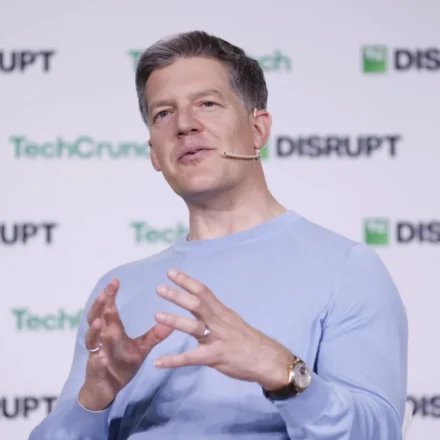
Niron CEO Jonathan Rowntree has emphasized that the site selection is about more than just real estate; it is about finding a community partner. "This process is about identifying a partner that shares our commitment to rebuilding U.S. manufacturing capability for technologies that are essential to the global economy," Rowntree stated during a congressional testimony.
Implications: A Tale of Two Projects
The Niron proposal arrives at a sensitive time for Northern Minnesota, providing a stark contrast to the Chilean-owned Twin Metals project. While Twin Metals seeks to mine copper, nickel, and cobalt within the watershed of the Boundary Waters Canoe Area (BWCA), it has faced a decade of litigation and federal bans due to fears of acid mine drainage polluting the pristine wilderness.
Niron offers an "environmentally safe" alternative for the Iron Range’s economic future. Because Niron’s plant would be a manufacturing facility—not a mine—it would be located outside the sensitive BWCA watershed, likely on the site of a shuttered taconite plant. This allows the region to claim a stake in the "green energy" transition without the environmental risks associated with hard-rock mining.
Furthermore, the "Niron Model" suggests a shift in how the Iron Range views its resources. Instead of simply shipping raw ore to mills in Pennsylvania or Indiana, the region could become a hub for "value-added" manufacturing. By converting Minnesota iron into high-tech magnets on-site, the region retains more of the economic value and creates a more resilient job market.
However, the stakes are global. Niron has already indicated plans to expand into Europe and Asia. If Minnesota fails to secure the $1.8 billion plant through competitive infrastructure packages and tax incentives, it risks losing a homegrown "unicorn" to other states or nations eager to break the Chinese monopoly on magnetism.
As the site selection process continues, the people of the Iron Range are watching closely. For a region that has spent decades looking back at its glory days of mining, Niron Magnetics represents a rare chance to look forward—positioning Northern Minnesota at the center of the 21st-century global supply chain.