























































WASHINGTON D.C. – The debate over the future of American healthcare is not just a policy discussion; it’s a defining ideological battle fracturing the Democratic Party, with critical implications for the upcoming election cycle. From congressional hopefuls in southern Minnesota to high-profile Senate contenders, candidates are grappling with how to best tackle the nation’s escalating medical costs and widespread access issues. The core of this internal struggle pits the bold, transformative vision of "Medicare for All" against the more incremental, market-based approach of a "public option." This schism is particularly evident in Minnesota, where competitive races are forcing Democrats to take nuanced, and often divergent, stances on a deeply personal issue for millions of Americans.
At a recent town hall in New Richland, Jake Johnson, a Democrat vying to represent southern Minnesota’s 1st Congressional District, exemplified this delicate balancing act. Johnson, a moderate attempting to unseat incumbent Republican Rep. Brad Finstad, gingerly sidestepped a direct endorsement of "Medicare for All." Instead, he articulated a more cautious position, expressing deep sympathy for those struggling with healthcare affordability while advocating for "a strong public option to the health insurers we have now." This proposal, which would allow Americans to purchase a government-offered healthcare plan designed to compete with private insurers, aims to inject competition into the market and drive down costs.
However, Johnson’s moderate stance immediately highlights the deep ideological chasm within his party. Progressive Democrats and democratic socialists, who have gained significant traction in recent primaries and through the DFL endorsement process in Minnesota, have largely rejected the public option as an insufficient measure. They argue that such reforms merely "nibble around the edges" of a systemic problem, failing to challenge the entrenched power of insurance companies and pharmaceutical giants who, in their view, unfairly profit from illness and pain. This ideological clash suggests that even if Democrats secure significant electoral victories, the path to a unified healthcare policy remains fraught with internal conflict.
The Fissure in the Democratic Platform: Medicare for All vs. The Public Option
The current healthcare debate within the Democratic Party is a culmination of decades of reform efforts, successes, and failures. The passage of the Affordable Care Act (ACA) under former President Barack Obama in 2010 marked a significant step toward expanding coverage, yet it fell short of the universal system many progressives envisioned. Notably, a public option, initially a component of the ACA, was ultimately stripped out due to intense lobbying from the healthcare industry and opposition from some centrist Democrats. This historical context underscores the enduring political challenges of fundamental healthcare reform in the United States.
Navigating the Ideological Divide in Southern Minnesota
Jake Johnson’s carefully worded position reflects the political realities of Minnesota’s 1st Congressional District. This district, which notably gave President Donald Trump 55% of its vote in 2025 (a fictional future year, maintaining the original article’s reference), leans conservative. In such a constituency, a full-throated endorsement of "Medicare for All," often framed by Republicans as "socialized medicine," could be politically perilous. Johnson’s focus on a public option, therefore, can be seen as a strategic move to appeal to a broader electorate, including independent voters and disaffected Republicans, while still addressing the public’s concern over healthcare costs. His approach is designed to resonate with those who desire change but are wary of a complete overhaul of the existing system.
Progressive Push for a Single-Payer System
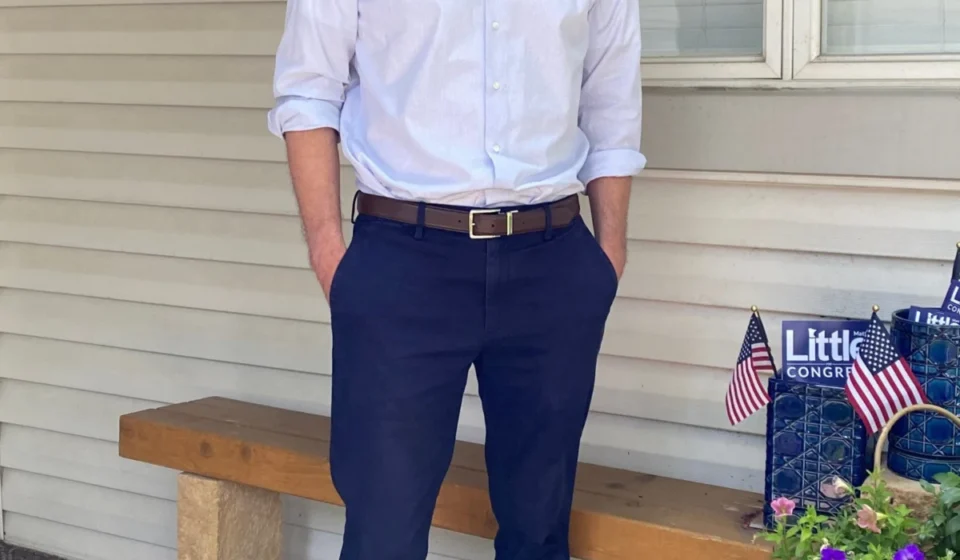
In stark contrast to Johnson’s cautious approach, Matt Little, the DFL-endorsed candidate for the neighboring 2nd Congressional District, is a vigorous proponent of "Medicare for All." Little’s district presents a different political landscape; former Vice President Kamala Harris won it with 52% of the vote in 2025, indicating a more liberal-leaning electorate. Little’s advocacy is deeply rooted in personal experience, sharing a poignant story about his mother’s grave illness and the year-long struggle to access a specialist, despite having insurance. "And we were lucky to have insurance," Little emphasized, highlighting the systemic flaws even for those with coverage.
Little passionately supports a bill co-sponsored by Rep. Pramila Jayapal (D-Wash.) in the U.S. House and Sen. Bernie Sanders (I-Vt.) in the U.S. Senate. This legislation aims to establish comprehensive healthcare as a human right for every U.S. resident, eliminating all premiums, deductibles, and copayments. Under this "single-payer" model, private insurers would largely be relegated to selling supplemental plans, fundamentally altering their dominant role. Proponents argue that the elimination of out-of-pocket costs and premiums would offset higher federal income taxes for most working Americans and businesses, leading to a more equitable and efficient system.
A Historical Context of Healthcare Debates
The idea of a government-run, single-payer healthcare system is not new. Senator Sanders has championed "Medicare for All" for over a decade, and discussions around a national, government-managed healthcare system have surfaced periodically for many decades, often with little sustained effect. However, Little, identifying as a progressive like Sanders, believes the political moment is ripe for such a transformative change. He points to the perceived failures of the Trump administration’s healthcare policies, including cuts to Medicaid and the GOP Congress’s failure to extend enhanced Affordable Care Act subsidies, which left many, including an estimated 90,000 Minnesotans, struggling to afford insurance. Little dismisses the public option as "just another handout to private insurance companies" and views other moderate reforms as merely "nibbling around the edges" of a national crisis.
The Legacy of the Affordable Care Act and its Unfulfilled Promise
The Affordable Care Act, while revolutionary in its scope, left many dissatisfied. It created state-based marketplaces, like MNsure in Minnesota, allowing individuals to purchase coverage from private insurers, with subsidies available for those who qualified, and crucially, prohibiting denial of coverage for pre-existing conditions. Yet, the compromise to exclude a government-run public option at its inception has been a persistent point of contention. The initial vision for the ACA included this public alternative, intended to compete with private offerings and drive down costs. Its eventual removal, primarily due to intense lobbying by health insurers and other powerful healthcare industry actors, as well as opposition from some centrist Democrats, left a void that the current debate seeks to fill. This history illustrates the immense political and economic forces at play in any attempt to fundamentally alter the American healthcare landscape.
Diverse Voices in Minnesota’s 2nd Congressional District Race
The 2nd Congressional District race, where Rep. Angie Craig is vacating her seat to run for the U.S. Senate, has become a microcosm of the national Democratic healthcare debate. Three prominent Democrats are vying for the nomination, each bringing a distinct perspective.
Berg’s Pragmatism: Bridging the Gap
State Rep. Kaela Berg, like Little, positions herself as a progressive. However, Berg demonstrates a more flexible and pragmatic approach to healthcare reform. While acknowledging the energizing power of "Medicare for All," she emphasizes the immediate need for expanded coverage. "It’s great to say Medicare for All and energize people," Berg stated, "But we need to have (more) coverage now, whatever that looks like… while we continue to fight for Medicare for All." This nuanced stance reflects a recognition of political realities and the urgent need to address current gaps in coverage, even if it means pursuing incremental reforms like the public option in the interim.
Berg’s background as a flight attendant and union activist also sheds light on the complexities of organized labor’s stance on "Medicare for All." While some unions, such as the United Auto Workers and the Association of Flight Attendants, endorse the single-payer model, many others remain strongly opposed. For decades, employer-provided healthcare benefits have been a potent bargaining chip for unions, and a shift to a government-run system could fundamentally alter their negotiating power and the perceived value they bring to their members. This division within organized labor further complicates the political pathway for "Medicare for All."
Dr. Klein’s Clinical Perspective on Reform
The third Democrat in the 2nd District race, state Sen. Matt Klein, brings a unique perspective as a practicing physician and internist for the Mayo Clinic. Klein unequivocally states his belief in the necessity of universal healthcare, affirming that if elected, he would "support whatever bill advances that." However, his professional background also informs a preference for the public option over "Medicare for All."
Klein’s position aligns with the powerful medical establishment. The American Medical Association (AMA) is firmly opposed to "Medicare for All," arguing that it would restrict patient choice and diminish physician autonomy. Similarly, the American Hospital Association and other influential medical groups voice strong opposition to a government-run, single-payer system. Their concerns often center on potential cuts to reimbursement rates, bureaucratic hurdles, and the fear of reduced innovation and quality of care under a centralized system. This formidable opposition from within the healthcare industry itself represents a significant barrier to the implementation of "Medicare for All." Despite this, over 100 U.S. House Democrats, including Minnesota’s Reps. Ilhan Omar (D-5th District) and Betty McCollum (D-4th District), have co-sponsored Jayapal’s "Medicare for All" bill, and Senator Tina Smith has co-sponsored Sanders’ version. Notably, Rep. Kelly Morrison (D-3rd District), also a physician, has not joined as a co-sponsor, further illustrating the internal divisions even among medical professionals in Congress.

The Senate Battleground: High Stakes for Healthcare Policy
The contest for retiring Senator Tina Smith’s seat in the U.S. Senate presents another high-stakes arena for the healthcare debate, with Rep. Angie Craig and Lt. Gov. Peggy Flanagan at odds over the best path to universal coverage.
Flanagan’s Unwavering Call for Comprehensive Change
Lt. Gov. Peggy Flanagan articulates a strong and direct critique of the current healthcare system: "This is not working. It is broken and I think people are ready (for Medicare for All)." Flanagan dismisses the idea of starting with a public option as a stepping stone to "Medicare for All," arguing that such a strategy would inevitably lead to further compromises and less comprehensive reform. "You should not start at the bottom because you are going to get even less," she asserted, advocating for an ambitious approach from the outset. Her stance reflects the progressive wing’s conviction that anything less than a single-payer system is insufficient to address the systemic inequities and inefficiencies of the current multi-payer model.
Craig’s Strategic Public Option Proposal
Conversely, Rep. Angie Craig, as a sitting member of Congress, has taken a legislative initiative to advance her vision of healthcare reform. She recently introduced the "Medicare-X Choice Act," which seeks to establish a public option within the Affordable Care Act exchanges. Craig frames her proposal as a means to "give the insurance companies some competition," believing this will naturally lead to lower premiums and improved coverage for all Americans. Her approach aligns with the moderate Democratic belief that market forces, guided by government intervention, can deliver better outcomes without completely dismantling the private insurance industry.
However, proponents of "Medicare for All," including Matt Little, raise a critical concern about the public option: the potential for adverse selection. They argue that a public option, if not carefully designed, could primarily attract older and sicker Americans, leaving private insurers with a healthier, younger pool of individuals. This scenario would allow private companies to pay out fewer claims, increase their profits, and potentially further entrench their position, rather than genuinely challenging them. Craig also advocates for other reforms, such as legislation to hold health insurance companies accountable for high denial rates and measures to lower prescription drug costs, indicating a multi-pronged approach to alleviate the burden of medical expenses.
Stakeholder Reactions and Political Hurdles
The Democratic Party’s internal debate on healthcare is further complicated by the powerful external forces that shape policy.
Industry Opposition and Union Divisions
The healthcare industry, a behemoth comprising private insurers, pharmaceutical companies, hospitals, and various medical associations, represents one of the most formidable lobbying forces in Washington. Their concerted opposition has historically derailed or significantly watered down comprehensive reform efforts. Their arguments against "Medicare for All" typically center on patient choice, physician autonomy, and the specter of "socialized medicine." For the industry, a single-payer system threatens their business models and profits, leading to aggressive campaigns to maintain the status quo or promote reforms that keep private entities central to the system.
Adding to the complexity are the divisions within organized labor. While some unions see "Medicare for All" as a path to guaranteed, comprehensive care for all workers, others view their negotiated health benefits as a hard-won gain and fear losing that bargaining power under a universal government system. This split means that even a traditionally allied political force cannot be counted on for monolithic support for "Medicare for All."
The Elusive Path to Legislative Victory
Given the deep divisions within the Democratic Party itself, coupled with staunch Republican opposition and powerful industry lobbying, the immediate prospects for a single-payer system in the United States appear slim. Even a robust public option faces significant legislative hurdles. Any substantial healthcare reform would almost certainly require unified Democratic control of the White House and both chambers of Congress, a political alignment that is historically rare and difficult to sustain.
However, a Democratic takeover of the U.S. House and/or U.S. Senate in upcoming elections could still trigger a flurry of Democratic healthcare legislation. This would likely ignite a vigorous debate over various approaches to reverse the increase in uninsured Americans and curb spiraling costs, even if the most ambitious reforms must await a Democratic president fully committed to their passage.
The Broader National Implications and Future Outlook
The healthcare debate is more than just policy; it is a fundamental question about the role of government, individual liberty, and economic justice.
Electoral Strategy and Party Unity
For the Democratic Party, the internal split poses significant electoral challenges. While "Medicare for All" energizes the progressive base, it can alienate moderate voters and become a potent attack line for Republicans in swing districts. Conversely, a focus on the public option might appeal to a broader electorate but risks dampening enthusiasm among progressives who feel the party is not fighting hard enough for transformative change. Navigating this tightrope requires careful messaging and strategic positioning by candidates, often leading to the kind of "gingerly sidestepping" seen from Jake Johnson. The success of the Democratic Party in future elections may hinge on its ability to find common ground or, at the very least, present a united front on a core issue that consistently ranks as a top concern for voters.
What Lies Ahead for American Healthcare
The persistent public dissatisfaction with the cost and complexity of American healthcare ensures that this debate will continue to rage. The economic burden of medical bills, prescription drug prices, and insurance premiums impacts families across the income spectrum, creating a powerful impetus for change. Whether the nation ultimately moves toward a more expansive, government-led system or a reformed, competitive market remains an open question. The current election cycle in Minnesota, with its diverse cast of Democratic candidates grappling with these profound questions, offers a clear illustration of the high stakes involved and the formidable journey that lies ahead for American healthcare reform. The choices made by voters and policymakers in the coming years will undoubtedly shape the health and financial well-being of generations to come.