




















































Escapism and Activism: The Zephyr Theatre’s "The Hobbit" and the Guthrie’s "Private Lives" Offer a Summer of Reflection

In an era defined by rapid technological shifts, global uncertainty, and a palpable societal restlessness, the human appetite for mythic escapism has surged. This trend, evidenced by the runaway success of cinematic spectacles like Christopher Nolan’s The Odyssey, suggests that audiences are increasingly seeking narratives that transport them to faraway realms while simultaneously mirroring our own complicated reality. Joining this wave of immersive storytelling is the Zephyr Theatre’s latest outdoor production of J.R.R. Tolkien’s classic, The Hobbit.
Set against the pastoral, sun-drenched backdrop of Aamodt’s Apple Farm in Stillwater, Minnesota, this production is not merely a nostalgic romp through Middle-earth. It is a deliberate, modern interrogation of courage, community, and the moral imperative to act in the face of injustice.
The Artistic Vision: Why Now?
For Reed Sigmund, the Zephyr Theatre’s newly appointed artistic director, the decision to stage The Hobbit was driven by a fundamental question: "Why this show, why now?" A familiar face to local audiences due to his prolific work at the Children’s Theatre Company, Sigmund found his answer in the unlikely protagonist, Bilbo Baggins.
Bilbo is the quintessential comfort-loving homebody, a character who prefers the safety of his pantry to the perils of the wild. However, Tolkien’s narrative forces him to choose between a life of comfortable isolation and joining a struggle that, initially, does not appear to be his own. Sigmund posits that this choice resonates deeply with the current social climate in Minnesota. He draws a direct parallel to the community mobilization witnessed during the state’s recent "Operation Metro Surge," where neighborly spirit and collective action became the defining features of a difficult winter.
"A wrong that is silently seen will not fix itself," one character poignantly remarks during the performance—a line that serves as the thematic anchor for the entire production.
Chronology and Production Design: A Minimalist Approach
Unlike the sprawling, multi-part film adaptations of Peter Jackson, which often suffered from pacing issues and "slog," the Zephyr Theatre’s production, adapted by Greg Banks, favors agility and precision. The play moves with a kinetic energy that hits essential plot points without lingering in unnecessary exposition.
The Aesthetics of Economy
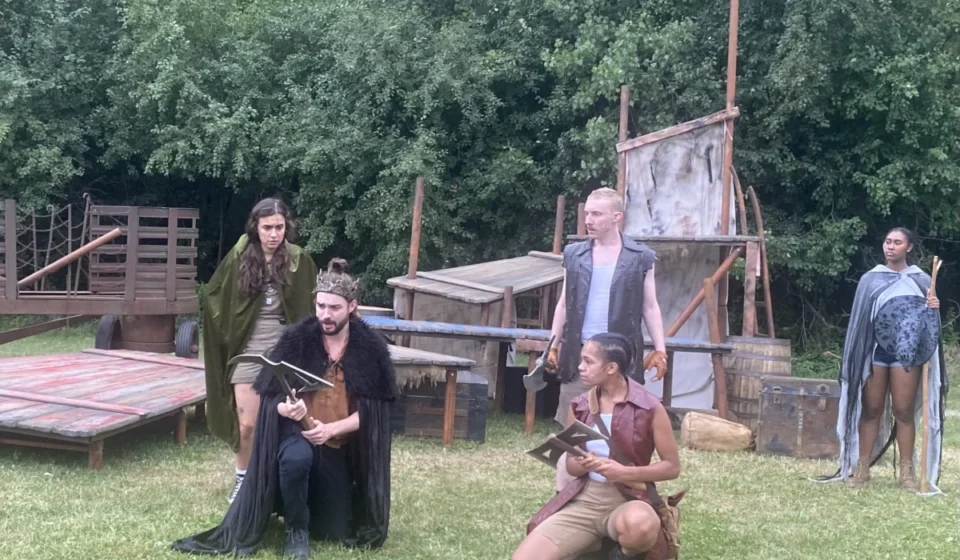
Sigmund’s directorial style prioritizes the imagination of the audience over high-budget spectacle. In a move that celebrates the "ensemble spirit," the cast of five performers tackles multiple roles, utilizing creative physicality to build the world of Middle-earth. Rather than relying on expensive animatronics or complex stage machinery, the actors simulate the thunderous gallop of horses or the movement of forest creatures through sheer performative technique.
Costuming is similarly economical. Characters are defined by singular, emblematic pieces rather than elaborate regalia. The production’s goblin masks are masterclasses in minimalist design, and the iconic scene involving the escape from wood-elves in wine barrels is staged with nothing more than a handful of plain cylinders, transforming the mundane into the magical.
Casting and Gender Dynamics: A Fresh Perspective
Perhaps the most striking departure from traditional interpretations of Tolkien’s work is the gender-blind casting. In this production, Bilbo Baggins is portrayed by Grace Hillmyer, while the wizard Gandalf is played by Antonisia Collins. Additionally, the dwarf Balin is played by Anya Naylor.
This choice serves two purposes: it opens space for women in a narrative traditionally dominated by male archetypes, and it introduces a refreshing tonal shift to the story. Collins imbues Gandalf with a savvy, unflappable calm, while Hillmyer offers a Bilbo defined by an empathetic vulnerability. When Hillmyer’s Bilbo declares, "I’m here because right now it’s the right time to do what’s right," the line lands with a contemporary weight that bridges the gap between fantasy and civic duty.
A Welcoming Alternative
The inclusion of women in these roles also provides a point of contrast to other fantasy franchises currently embroiled in political controversy. For audiences seeking to avoid supporting creators whose recent actions—such as J.K. Rowling’s stated intent to fund anti-trans advocacy—have alienated fans, the Zephyr Theatre’s inclusive approach offers a welcoming, socially conscious alternative for engaging with the fantasy genre.

Supporting Data: Performance Highlights
The ensemble performance is anchored by the versatility of Jeffrey Nolan, who manages a grueling schedule of costume and character changes. Nolan’s portrayal of the dwarf Kili is grittily endearing, but his performances as the wretched Gollum and the haughty dragon Smaug demonstrate true theatrical range. His Smaug, in particular, is a delight, eschewing pure terror for an impish, dragon-like silliness that keeps the audience engaged.
However, the production is not without its minor missteps. The sound design, curated by Sophia Schott, presents an inconsistent experience. While the individual sound effects are expertly crafted, the inclusion of folk standards—such as Simon and Garfunkel’s "Bridge Over Troubled Water" or John Denver’s "Country Roads"—often feels disconnected from the narrative. While "Puff the Magic Dragon" is thematically relevant to a dragon-filled quest, these musical choices frequently disrupt the suspension of disbelief, suggesting that a more period-appropriate or original score might have better served the production’s atmosphere.
Location and Context: An Immersive Experience
The choice of venue at Aamodt’s Apple Farm adds a layer of community-centered charm that traditional indoor theaters cannot replicate. The performance space overlooks a dense, wooded area, creating a natural amphitheater that grounds the fantasy in the physical world.
The experience is designed as an evening out. Attendees are encouraged to arrive early to participate in the local amenities, including apple picking, sampling hard ciders at Thor’s Hard Cider, or visiting Saint Croix Vineyards. The integration of local food—such as apple brats and Honeycrisp apple salsa—transforms the play into a holistic cultural event, emphasizing the importance of supporting local businesses alongside the arts.
A Comparative Look: "Private Lives" and the Return of Fine Dining
For theater enthusiasts in the Twin Cities, the summer of 2026 offers a distinct "dinner and a show" revival. While the Zephyr Theatre provides an outdoor fantasy escape, the Guthrie Theater in Minneapolis offers a more sophisticated, albeit cynical, domestic experience with its production of Noël Coward’s Private Lives.
Following a recent screening, the juxtaposition between the play’s dark, farcical look at marriage and the opening of Sean Sherman’s new restaurant, Indígena by Owamni, was clear. Private Lives, which runs through August 23, remains a technically brilliant, if ethically challenging, piece of theater. The play’s romanticization of domestic violence remains a point of contention for modern audiences, providing a stark contrast to the heroic, virtuous quest found in The Hobbit.
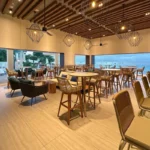
The ability to move from the Guthrie’s auditorium to the refined, indigenous-inspired menu at Indígena—featuring maple and sumac glazed venison skewers and smoked whitefish tostadas—signals a return to the post-show social culture that has been largely missing from the Minneapolis arts scene in recent years.
Implications for the Future of Regional Theater
The success of these two disparate productions points to a broader shift in the regional theater landscape. Audiences are no longer content with passive consumption; they are looking for productions that provoke, include, and integrate into the wider life of the community.
Whether it is through the gender-swapped heroics of a halfling in Stillwater or the sharp, biting social commentary of a 20th-century farce in downtown Minneapolis, the theater is proving its resilience. By embracing local history, challenging traditional casting, and connecting with the culinary landscape, these organizations are ensuring that the performing arts remain a vital, necessary component of the public sphere.
Performance Details: The Hobbit
- Location: Aamodt’s Apple Farm & Saint Croix Vineyard, 6428 Manning Ave N., Stillwater.
- Dates: Thursday, July 30, and Friday, July 31, at 7 p.m.; Saturday, August 1, at 2 p.m. and 7 p.m.; Sunday, August 2, at 2 p.m.
- Pricing: $42 for a chair seat; $37 to bring your own chair (adults); $21 to bring your own chair (ages 10 and under).
- Information: Stillwater Zephyr Theatre
Performance Details: Private Lives
- Location: Guthrie Theater, 818 S. 2nd St., Minneapolis.
- Dates: Through August 23.
- Pricing: $24–$94.
- Dining: Indígena by Owamni, 806 S. 2nd St., Minneapolis. Open Tuesday–Thursday and Sunday, 11 a.m.–11 p.m.; Friday–Saturday, 11 a.m.–midnight.