


























































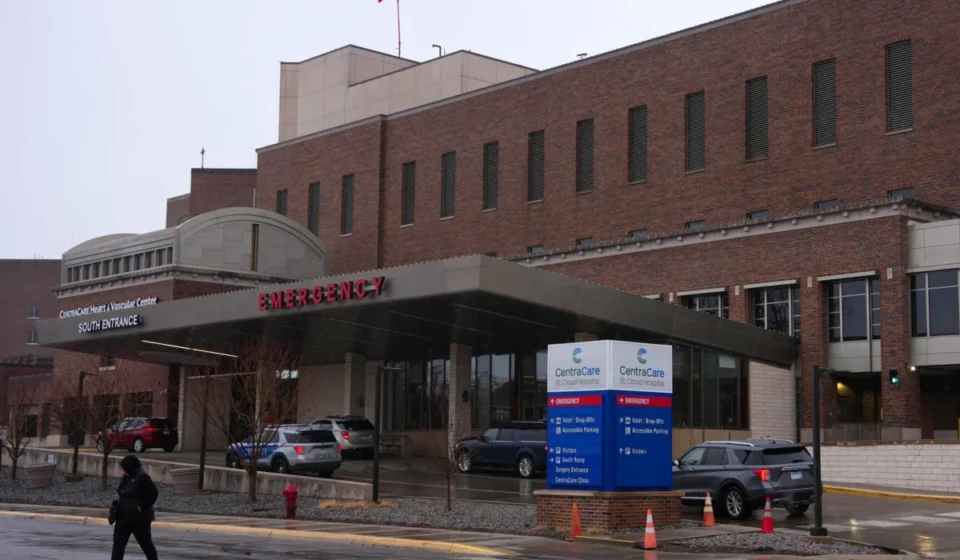

In the quiet suburbs of St. Cloud, Minnesota, Cori Roberts keeps a file folder that serves as a grim monument to a system she feels betrayed her. Four years ago, while navigating the terrifying diagnosis of early-stage cervical cancer, Roberts was not only fighting for her life but also battling the crushing weight of medical debt. A recently divorced mother of two, she had re-entered the workforce in her mid-40s, earning $41,000 a year. Despite maintaining health insurance, a sudden surge of $8,000 in out-of-pocket medical bills left her living in a rented basement with little more than her car and a few baskets of clothes.
When Roberts reached out to CentraCare—a prominent nonprofit health system that enjoys significant federal, state, and local tax exemptions—she expected the safety net promised by the "nonprofit" designation. Instead, she was told she earned too much to qualify for assistance. For two years, she sacrificed basic needs, skipping groceries and holiday gifts for her children to chip away at the debt. Eventually, CentraCare sued her.
Roberts’ story is not an outlier; it is a symptom of a systemic crisis. A sprawling investigation by the Minnesota Star Tribune and KFF Health News has revealed that Minnesota’s hospitals—many of which enjoy the privileges of tax-exempt status—are among the least charitable in the United States, frequently providing a smaller fraction of their operating budgets to charity care than their counterparts in states like Texas, Nevada, and Iowa.
The Disparity: A Statistical Breakdown
The data paints a stark picture of institutional priorities. Nationwide, hospitals devote an average of 2.4% of their operating budgets to charity care, according to research from Johns Hopkins University. In Minnesota, that figure is consistently closer to 0.8%.

Of the state’s 123 general hospitals, 62 spent less than 0.5% of their operating budgets on financial aid between 2020 and 2024. CentraCare’s flagship facility in St. Cloud is a notable example, spending less than 0.25% of its budget on charity. In practical terms, this means that for every $10,000 the hospital spends on operations, it allocates only $25 to help those who cannot afford their bills.
The investigation, which spanned five years of financial reports and dozens of interviews with patients and hospital administrators, reveals a "charity gap" that is widening as the state’s uninsured rate hits its highest level since 2017. As federal budget debates loom and the potential for Medicaid cuts increases, this lack of institutional support threatens to push thousands of families into financial ruin.
A Chronology of Financial Erosion
The erosion of the healthcare safety net has occurred in stages, accelerated by both bureaucratic complexity and a shift in hospital administrative culture.
- 2020–2022: As the pandemic strained the healthcare system, hospitals faced rising labor costs and supply chain volatility. During this period, the focus on revenue cycle management tightened. Many systems implemented more aggressive, automated billing processes that prioritized collection over patient advocacy.
- 2023: Recognizing the growing tension, the Minnesota state legislature passed a law requiring hospitals to post their financial assistance policies online. However, the legislation lacked teeth, leading to inconsistent implementation. Some hospitals only updated their sites after being contacted by journalists.
- 2024: The state began to take a more active role. Attorney General Keith Ellison initiated investigations into large systems like the Mayo Clinic, accusing them of systematically discouraging patients from applying for aid.
- 2025: Under pressure from state regulators, some systems saw a marked increase in charity spending. For example, Mayo Clinic’s charity care spending nearly doubled after the investigation began, finally topping 1.5% of its operating expenses.
Barriers to Access: The Maze of Eligibility
For patients like Arleen Mullenax, who underwent surgery for a cancerous neck tumor at the Mayo Clinic, the process of applying for aid was described as a "cancer fog." The administrative burden is intentional for some and incidental for others, but the result is the same: fewer people receive the help they are technically entitled to.

There is no standardized criteria for charity care in Minnesota. A patient might find themselves eligible for 100% debt forgiveness at one facility, while a neighbor with the same income and medical issue is denied help at a facility just 15 miles away.
Furthermore, the application process is often invasive. Many hospitals require detailed disclosures of assets, including retirement accounts, life insurance policies, and even the value of livestock or recreational vehicles. Madelia Health’s policy, for instance, explicitly mentions that patients may be required to sell recreational vehicles to qualify for financial assistance.
"Hospitals have optimized to get payment," says Jared Walker, founder of Dollar For, a nonprofit that assists patients in navigating these applications. "If you want to get on a payment plan or use a credit card, it’s seamless. If you want to apply for charity care, you are met with a maze of documentation and questions."
Official Responses and Hospital Defense
The hospital industry maintains that the criticism is unfair, arguing that the public narrative ignores the complex financial realities of modern healthcare.

"Rural hospitals like ours are often portrayed as though we are sitting on piles of cash," says Robert Pastor, CEO of Rainy Lake Medical Center. "We are operating on razor-thin margins while navigating escalating labor costs and routine underpayment by public programs like Medicaid and Medicare."
The Minnesota Hospital Association (MHA) echoes this sentiment, noting that hospitals contribute to their communities in ways beyond direct debt forgiveness, such as training the next generation of doctors and maintaining essential, albeit money-losing, services like mental health care and obstetrics. Spokesperson Tim Nelson argues that mandates for more charity care would only increase bureaucratic barriers and fail to solve the underlying affordability problem, which he attributes to private insurers and systemic underfunding.
However, Attorney General Keith Ellison remains skeptical. "There is a benefit you get from being a nonprofit hospital in the state of Minnesota—you don’t pay taxes," Ellison noted. "But do the people get the benefit? The data suggests that in many cases, they do not."
The Human Toll and Future Implications
The consequences of this system are measured in more than just dollars. Studies have shown that medical debt is a leading cause of stress and is linked to poorer health outcomes, and in some cases, premature death.

Abby Kelley-Hands, a special education coordinator in St. Paul, faced $20,000 in bills after a brief lapse in insurance coverage. Despite her modest income, she was denied aid. To survive, she and her husband sold their car, stopped using a dishwasher, and delayed their honeymoon for seven years. "It causes all of this additional stress, which then makes you sicker and less able to even figure things out," she said.
The path forward, according to state officials and patient advocates, requires a complete overhaul of how charity care is administered:
- Standardization: Implementing uniform eligibility thresholds across the state, similar to models in New York and Maryland.
- Automation: Moving toward systems that automatically screen patients for charity care eligibility using financial data, rather than requiring patients to navigate complex, labor-intensive applications.
- Accountability: Strengthening the link between tax-exempt status and the actual provision of care, ensuring that nonprofit hospitals meet their social contract to the communities they serve.
As for Cori Roberts, she finally cleared her debt after taking a loan against her retirement plan, a move that will affect her long-term financial security. Now remarried and living in a house filled with inspirational plaques, she remains deeply cynical about the healthcare industry. When she drives past the $200 million expansion of the CentraCare campus, she is reminded of the stark divide between hospital boardrooms and the patients they treat.
"They have all the money," she says. "But they can’t grant a good person some grace?"

As the state of Minnesota continues to grapple with these findings, the question remains: Can a hospital system that prioritizes its own financial growth over its mission of mercy continue to justify its status as a pillar of the community? For the thousands of Minnesotans currently waiting for a bill they cannot pay, the answer is already clear.