
























































The "Implementation Gap": Why Startups Are Betting $20M That AI Needs a Map, Not More Consultants

For the modern enterprise, the promise of Artificial Intelligence has been consistent: increased productivity, autonomous workflows, and a radical reduction in operational overhead. Yet, the reality on the ground for Fortune 500 companies is often far grittier. Rather than a seamless integration of intelligent agents, IT departments are finding themselves buried in technical debt, fragmented data silos, and a desperate, expensive reliance on a new breed of human labor: the "forward-deployed engineer" (FDE).
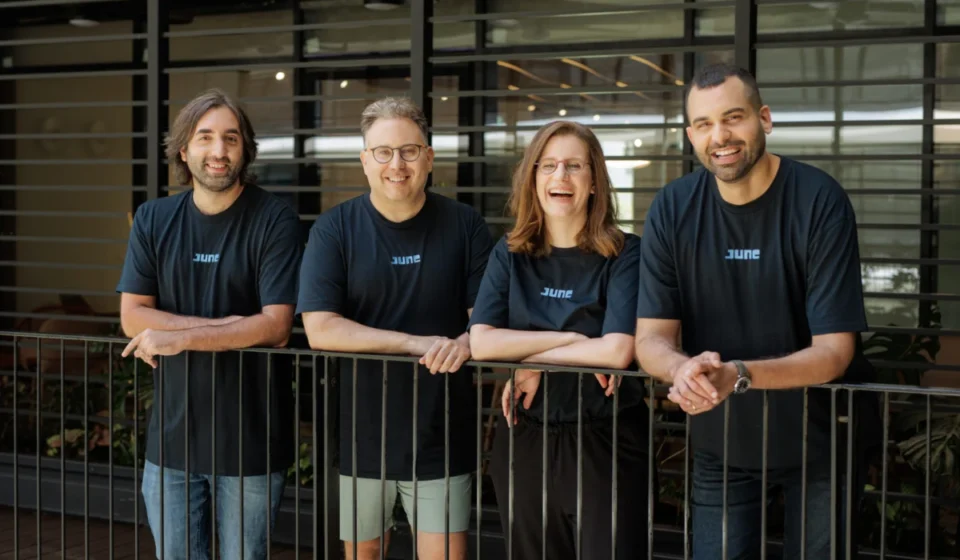
As the industry grapples with what some call the "SaaSpocalypse"—the fear that AI will render traditional software firms obsolete—a new venture is emerging with a different premise. June, a startup co-founded by former Salesforce executives, officially emerged from stealth mode this week with $20 million in pre-seed funding. Their mission? To automate the very implementation of AI, effectively replacing the need for an army of consultants with a platform that maps, optimizes, and deploys intelligent agents directly into the messy, legacy-laden reality of corporate infrastructure.
The Human-Capital Paradox
The paradox of the current AI boom is that it has triggered a massive expansion in professional services. Efrat Rapoport, CEO and co-founder of June, notes that while AI is intended to automate tasks, the industry’s current answer to implementation is simply, “let’s hire more and more people.”
This dependency on external experts has become a significant bottleneck. Companies are bringing in specialized engineers to "drop into" their organizations, diagnose system failures, and painstakingly stitch together disparate tools like Salesforce, ServiceNow, and Databricks. For leadership, this is a double-edged sword: they are paying premium rates for human intervention to fix systems that were supposed to be "smart" enough to manage themselves.
Chronology: From Bonobo to June
The story of June began long before this week’s announcement. The founding team—Rapoport, Ohad Hen, Barak Goldstein, and Idan Tsitiat—are no strangers to the enterprise AI landscape. Their previous venture, Bonobo AI, was a pioneer in language modeling, launching a voice-to-text service back in 2017—well before the current generative AI fervor.
Bonobo AI was acquired by Salesforce in 2019, bringing the team into the heart of one of the world’s largest enterprise software ecosystems. It was here, during their multi-year tenure working on Salesforce’s internal AI initiatives, that the founders observed the "Implementation Gap" firsthand. They watched as customers struggled to bridge the divide between cutting-edge AI models and the complex, legacy-burdened reality of their existing business platforms.
The founders realized that while the tech giants were focused on building better models, nobody was focused on the "plumbing." Convinced they had identified a massive market inefficiency, they departed Salesforce to start June. The conviction of their vision was such that, according to Rapoport, the team did not even need a traditional pitch deck to secure their $20 million pre-seed round. Led by Marc Benioff’s Time Ventures—with participation from titans like Michael Dell, Aaron Levie, and George Kurtz—the funding reflects a high-conviction bet that the enterprise AI market is ready for a tool that prioritizes implementation over mere model creation.
The Mess Beneath: Why AI Fails in the Enterprise
To understand the necessity of June, one must understand the state of the average corporate tech stack. Most enterprises are not starting from a clean slate; they are operating on years of technical debt.
“Before AI can create value, someone has to deal with legacy systems,” says Rapoport. The challenge is rarely the AI agent itself; building an agent template is, by comparison, the easy part. The real difficulty lies in the “mess underneath.”
In a typical enterprise environment, data is fragmented across a dozen platforms. Teams often use duplicate database fields that contain conflicting information, and workflows are intertwined with legacy code that hasn’t been updated in years. When a company tries to deploy an AI agent into this environment, the agent often fails because it lacks the context of these underlying complexities. It doesn’t know which of the five different database entries for "Customer ID" is the correct one, or which team owns the workflow it is supposed to be automating.
The June Solution: A Roadmap for Automation
June functions as an intelligent diagnostic and deployment layer. Instead of requiring a team of FDEs to manually audit a company’s systems, the June platform scans existing infrastructure to map business processes. It identifies bottlenecks, pinpoints where data is misaligned, and determines exactly how an agent can be safely integrated into the current architecture.
The platform then generates a step-by-step roadmap for the enterprise. It might, for example, issue instructions such as: "Remove these duplicate fields," or "Connect to this specific data source." Once the user confirms the task, June automatically begins building the integration. By replacing the manual, opaque process of human consultation with a transparent, automated guide, June aims to turn AI deployment into a repeatable, scalable software task rather than a bespoke engineering project.
Real-World Impact: The CMG Case Study
The need for such a tool was best illustrated by the experience of Paul Akinmade, chief strategy officer at CMG, a major U.S. mortgage lender. Tasked with the ambitious goal of having 100 AI agents operational within his company, Akinmade found himself hitting a wall.
Despite his team’s deep expertise and their early adoption of tools like Claude Code, they struggled to bridge the gap between their engineering efforts and their Salesforce environment. "My team spent weeks hitting a wall—meeting with architects, talking to forward-deployed engineers, consulting everybody they could—without making progress," Akinmade shared.
The pressure was mounting, especially after he had publicly promised to return to the Salesforce annual conference with 100 agents live. It was at this juncture that CMG began piloting June. The platform provided the visibility his team lacked, showing them exactly where to deploy agents safely and effectively. Crucially, it did so before a single formal kickoff meeting occurred, demonstrating the speed at which automated implementation can move.
Implications for the Future of Enterprise IT
For corporate leaders, the takeaway is clear: the era of the "black box" consultant is nearing its end. When Akinmade first spoke with Rapoport, his terms were blunt: "If your product requires FDEs, I don’t want your product. I’ve already done that and I’m getting annoyed by it. I don’t want a black box. I want an easy-to-use tool."
This sentiment underscores a broader trend in the enterprise market. Companies are suffering from "consultant fatigue." They are tired of high-cost, high-complexity engagements that leave them dependent on external experts. They are demanding tools that provide agency, clarity, and, most importantly, speed.
While Rapoport acknowledges that June will likely complement existing FDEs—who will always be needed for the most complex, high-stakes edge cases—the core value proposition is the democratization of implementation. By automating the mapping of legacy systems and the configuration of agents, June is shifting the power dynamic back to the in-house IT team.
As the industry moves into the next phase of AI adoption, the winners will likely not be the companies that build the "smartest" models, but those that build the best "connective tissue." If June’s platform can consistently deliver on its promise to turn months of architectural consulting into a click-to-build experience, it may well define the next generation of enterprise software infrastructure. The "SaaSpocalypse" may be looming, but for those who can navigate the legacy mess, there is a massive opportunity to build the bridge to an AI-native future.