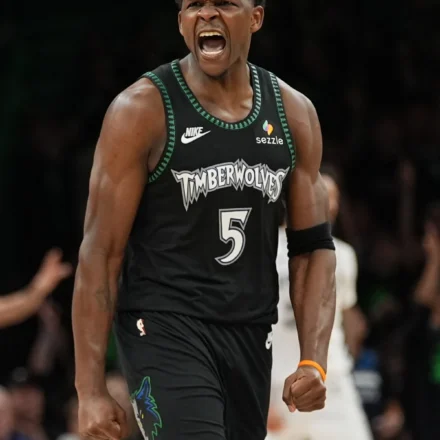





















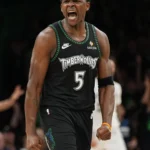




















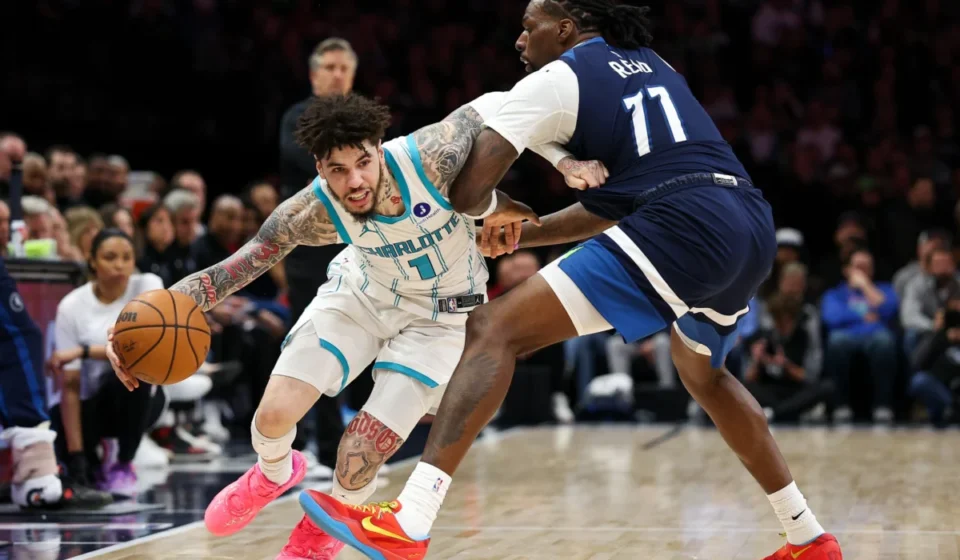

In the high-stakes boardroom of the Minnesota Timberwolves, Tim Connelly has once again opted to set the draft capital ablaze in pursuit of a championship vision that exists entirely on his own terms. In a move that has sent shockwaves through the NBA, the Timberwolves have acquired All-Star point guard LaMelo Ball from the Charlotte Hornets. The cost? A king’s ransom in draft picks, the departure of a beloved franchise icon, and a complete reimagining of the team’s identity.
For a fan base still reeling from the sudden exit of Julius Randle just 48 hours prior, the trade is a stark reminder that in Connelly’s Minnesota, no roster spot is sacred and no legacy is too large to be traded away.
The Chronology of a Summer Upheaval
The transformation of the Timberwolves’ roster began in earnest on Tuesday when Connelly orchestrated a salary-dumping maneuver involving Julius Randle. By shipping out the veteran—who led the team in assists and ranked second in scoring last season—Connelly signaled that the team was entering a new phase of fiscal and tactical flexibility. For two days, the narrative in Minneapolis centered on the “Naz Reid Era.” Fans and analysts alike assumed that after seven years of steady, high-level production, the fan-favorite big man would finally step into the starting power forward role.
That dream was shattered on Thursday. In a move reminiscent of the 2024 trade that sent long-tenured veteran Karl-Anthony Towns packing, Connelly dealt Naz Reid. To call Reid a fan favorite is an understatement; he is a Minnesota folk hero, a player whose name adorns hundreds of fan tattoos and whose promotional beach towels have become high-priced collector’s items on the secondary market.
By offloading Reid and bundling a massive collection of future draft capital—including a 2033 first-round pick and swap rights for 2028, 2029, and 2030—Connelly secured Ball and wing player Josh Green. The deal represents the most aggressive play of the Connelly era, effectively mortgaging the team’s future for a "win-now" window tethered to the prime of Anthony Edwards.
The Tactical Rationale: Why LaMelo?
At 25 years old, LaMelo Ball is 17 days younger than Anthony Edwards, creating a tandem that is theoretically built for the next decade. Ball’s credentials as a floor general are elite; he currently ranks fourth among active players in career assist percentage, trailing only the likes of Trae Young, Luka Dončić, and Russell Westbrook.
However, the trade is not merely about talent accumulation—it is about optimization. The front office identified the lack of a traditional, high-usage playmaker as the primary bottleneck to Anthony Edwards’ development. According to advanced analytics, Edwards is one of the most efficient "catch-and-shoot" players in the league, shooting a staggering 49.6% on such attempts last season. Yet, because he was frequently tasked with primary ball-handling duties, only 28% of his three-point attempts were catch-and-shoot opportunities.
By bringing in Ball, the Timberwolves intend to liberate Edwards from the grind of running the offense. The goal is to allow Edwards to operate off-ball, exploiting his shooting gravity while Ball navigates the seams of opposing defenses. If Ball can successfully transition into a facilitator role that elevates the team’s overall efficiency, the trade could prove to be the final piece of the puzzle.
Supporting Data: The Ball Effect
Critics of the trade point to Ball’s erratic shot selection and injury history, but the offensive impact of his presence cannot be ignored. Last season, while the Hornets struggled as a team, their offensive rating surged significantly whenever Ball stepped onto the court. The Hornets scored 123.2 points per 100 possessions with him in the lineup, compared to 110.6 when he sat—a net positive impact that mirrors the influence of a perennial MVP candidate.
Furthermore, Ball’s integration with Rudy Gobert presents a fascinating strategic wrinkle. Ball is perhaps the most gifted lob initiator and pick-and-roll partner Gobert has played with in his Minnesota tenure. If the duo can establish a rhythm, it could unlock a version of Gobert that is more involved and aggressive offensively, which in turn tends to spark the entire team’s energy. Defensively, while Ball has been criticized for his lack of effort, the presence of a rim protector like Gobert behind him provides a safety net that Ball has never experienced in his career.
Official Stance and Philosophy
Connelly has remained unapologetic about his "fever dream" approach to roster building. Addressing the media five weeks ago, following a disappointing playoff exit against San Antonio, Connelly made his philosophy clear:
"The thing about risk, it is all self-induced pressure. Like, if you don’t win, what’s the risk? I’d rather get fired than sit here being in job-survival mode. If we mess up, we will mess up loudly. We are going to try and be as aggressive as possible."
This trade is the embodiment of that promise. Connelly is not interested in incremental improvements; he is placing a massive bet on the internal growth of a young core. The roster now boasts eleven players aged 26 or younger, including Jaden McDaniels, Ayo Dosunmu, and Bones Hyland. By clearing the deck of veteran contracts, Connelly is betting that the synergy between Edwards, Ball, and a collection of athletic wings will transcend the sum of its parts.
The Implications: A High-Wire Act
The risks inherent in this transaction are undeniable. The Timberwolves have traded away their depth and their ability to acquire young talent through the draft for the next several years. If LaMelo Ball’s injury woes continue—he has failed to play more than 70 games in any of his six seasons—the move will be scrutinized as a catastrophic failure of asset management.
Furthermore, the team now faces a vacuum in the frontcourt. With both Randle and Reid gone, the rotation is thin. Will Jaden McDaniels be asked to slide into the power forward spot? Is rookie Joan Beringer ready for the rigors of backup center duties? These are questions that will define the team’s success in the coming months.
Perhaps most importantly, the success of this trade hinges on the "character" of the team. The 2025-26 Timberwolves were often criticized for a lack of collective grit on both sides of the ball. Connelly has now doubled down on his vision, betting that the talent floor of this new-look roster is high enough to paper over those inconsistencies.
As the team prepares for the new season, the atmosphere in Minneapolis is one of nervous anticipation. The Timberwolves are no longer a team of steady, incremental growth; they are a team defined by the high-velocity, high-reward, and high-risk gamble of their front office. If Anthony Edwards is to reach his ceiling as the best two-way guard in the NBA, and if LaMelo Ball can finally bring his playmaking brilliance to a championship contender, Connelly’s finger-painting may eventually be recognized as a masterpiece.
If not, the echoes of this "loud mistake" will be felt in Minnesota for a generation. For now, the Timberwolves have their point guard, and the rest of the league is watching to see if the gamble pays off.