



























WASHINGTON D.C. – As the 2024 election cycle intensifies, a familiar and potent ideological schism is fracturing the Democratic Party, both nationally and within the crucial battleground state of Minnesota: the contentious debate over the future of American healthcare. At the heart of this divide lie two distinct visions – the incremental reform of a "public option" versus the sweeping transformation of "Medicare for All" – each championed by different factions and candidates, reflecting a fundamental disagreement on how best to address the nation’s soaring medical costs and persistent coverage gaps.
The complexity of this internal struggle was on full display in New Richland, Minnesota, where Jake Johnson, a Democrat vying for the state’s 1st Congressional District seat, carefully navigated a town hall question regarding his stance on "Medicare for All." Johnson, a self-identified moderate seeking to unseat Republican incumbent Rep. Brad Finstad, articulated a position emblematic of the party’s center-left: a "strong public option" designed to compete with private insurers. This proposal, allowing Americans to purchase a government-sponsored healthcare plan, aims to inject competition into the market, thereby driving down costs and expanding access.
However, Johnson’s measured approach, while appealing to centrists and some independent voters, immediately draws a stark contrast with the progressive wing of the party. Democratic socialists and progressives, who have demonstrated growing influence through impressive primary victories and the DFL endorsement process in Minnesota, dismiss the public option as an insufficient palliative. For them, such reforms merely "nibble around the edges" of a systemic crisis, perpetuating a landscape where private insurers and pharmaceutical companies allegedly "unfairly profit from pain and illness." This fundamental disagreement has created deep fissures, making healthcare a defining issue that tests party unity and electoral strategy across the nation.
The Policy Divide: Public Option vs. Medicare for All
The terms "public option" and "Medicare for All" are often invoked in political discourse, yet their precise meanings and implications are frequently misunderstood. A clear understanding of each proposal is essential to grasp the depth of the Democratic Party’s internal conflict.
The Public Option: A Market-Based Approach to Expansion
The public option, as advocated by moderates like Jake Johnson and Rep. Angie Craig, envisions a government-administered health insurance plan offered alongside existing private plans on the Affordable Care Act (ACA) marketplaces. The core idea is to introduce a non-profit, publicly accountable competitor into the insurance market. Proponents argue that this competition would force private insurers to lower their premiums, improve their coverage, and become more efficient, ultimately benefiting consumers.
The arguments in favor of a public option are multifaceted:
- Increased Competition and Lower Costs: By providing an alternative, the public option would put pressure on private insurers to offer more affordable and comprehensive plans. This could particularly benefit individuals in areas with limited insurer choice.
- Expanded Access: It would offer a stable, affordable option for those who currently lack employer-sponsored insurance or find private plans prohibitively expensive. This is seen as a way to reduce the number of uninsured without completely upending the existing system.
- Building on the ACA: The public option is often framed as a natural evolution and strengthening of the Affordable Care Act, which established state-based marketplaces (like MNsure) but stopped short of including a government plan.
- Political Feasibility: Many moderates believe the public option is a more politically achievable goal than Medicare for All, as it maintains a role for private industry and avoids the more radical connotations of a single-payer system.
However, progressives and "Medicare for All" advocates offer sharp criticisms of the public option. They contend that it would:
- Not Go Far Enough: It would still leave millions uninsured or underinsured, as it doesn’t guarantee universal coverage or eliminate out-of-pocket costs.
- Risk Adverse Selection: The public option might disproportionately attract older and sicker individuals who struggle to find affordable private insurance. This could lead to higher costs for the public plan, potentially undermining its competitiveness, while healthier, younger individuals remain with private insurers, allowing them to maintain high profits.
- Perpetuate Profit Motives: It would continue to allow private insurance companies to operate for profit, which critics argue is fundamentally incompatible with the goal of universal, affordable healthcare. Matt Little, a leading progressive voice in Minnesota, dismisses the public option as "just another handout to private insurance companies."
Medicare for All: A Universal, Single-Payer Transformation
"Medicare for All," championed by progressives like Matt Little and Lt. Gov. Peggy Flanagan, proposes a fundamental overhaul of the American healthcare system. It envisions a single-payer model, similar to systems in many other industrialized nations, where the government becomes the primary insurer for all U.S. residents. This system would guarantee comprehensive healthcare as a human right, eliminating premiums, deductibles, and most copayments for medical services. Private insurers would largely be relegated to selling supplemental plans for services not covered, or perhaps for elective procedures.
The core arguments for Medicare for All include:
- Universal Coverage and Equity: Everyone would be covered, regardless of income, employment status, or pre-existing conditions, ensuring true healthcare equity.
- Elimination of Financial Barriers: With no premiums, deductibles, or copayments, patients would no longer face financial hardship when seeking necessary medical care, removing a major source of personal bankruptcy and stress.
- Administrative Simplification and Cost Savings: Proponents argue that a single-payer system would drastically reduce administrative waste associated with billing, claims processing, and marketing across thousands of private plans. This administrative efficiency, combined with the government’s enhanced bargaining power over pharmaceutical companies and medical providers, could lead to significant overall cost savings, offsetting the higher federal taxes required to fund the system.
- Improved Public Health Outcomes: By ensuring early access to care and preventive services, a universal system could lead to healthier populations and reduce emergency room visits for treatable conditions.
- Healthcare as a Human Right: This philosophy underpins the entire movement, asserting that access to healthcare should not be tied to one’s ability to pay.
Opponents of Medicare for All, primarily Republicans but also some moderate Democrats and powerful medical lobbies, raise several concerns:
- Massive Tax Increases: Funding a universal system would require substantial increases in federal income taxes for most working Americans and businesses, a politically fraught proposition.
- Government Bureaucracy and Control: Critics fear an overly centralized, bureaucratic system that could lead to long wait times, reduced patient choice, and government interference in medical decisions.
- Loss of Private Insurance Choice: The elimination of the leading role for private insurers is seen by many as a loss of individual freedom and choice.
- "Socialized Medicine" Label: Republicans frequently label Medicare for All as "socialized medicine," invoking fears of government inefficiency and lower quality care, often drawing comparisons to systems in Canada or the UK, which they portray negatively.
- Opposition from Medical Groups: Organizations like the American Medical Association (AMA) and the American Hospital Association (AHA) firmly oppose Medicare for All, citing concerns about limiting patient choice, reducing physician autonomy, and potentially underfunding hospitals and clinics.
A Historical Arc of Reform Efforts
The current debate is not new; it is deeply rooted in decades of American healthcare reform efforts. The most significant modern attempt, the Affordable Care Act (ACA), signed into law by President Barack Obama in 2010, aimed to expand coverage through state-based "marketplaces" where individuals could purchase subsidized private insurance, and through the expansion of Medicaid. Crucially, the initial ACA blueprint included a public option, but it was ultimately stripped out due to intense lobbying from health insurers and pharmaceutical companies, coupled with opposition from some centrist Democrats. This historical precedent underscores the formidable political and economic hurdles facing any attempt at comprehensive healthcare reform.
The idea of a national, government-run healthcare system modeled on Medicare has existed for decades, but it gained significant renewed momentum with Senator Bernie Sanders’ presidential campaigns. His consistent and vocal advocacy for "Medicare for All" catapulted the concept into mainstream Democratic discourse, mobilizing a new generation of progressive activists. This progressive resurgence has reshaped the party’s internal dynamics, pushing the debate on healthcare further to the left and making "Medicare for All" a litmus test for many progressive candidates.
Today, this ideological battle plays out in legislative proposals. Rep. Pramila Jayapal (D-Wash.) and Sen. Bernie Sanders (I-Vt.) are co-sponsoring legislation that embodies the "Medicare for All" vision, seeking to guarantee comprehensive healthcare as a human right, free of out-of-pocket costs. On the other side, Rep. Angie Craig (D-Minn.) recently introduced the "Medicare-X Choice Act," her version of a public option designed to create competition within the ACA exchanges. These parallel legislative efforts highlight the ongoing struggle within the party to define its collective path forward on healthcare.
Minnesota’s Battleground: District-by-District Divide
The national healthcare debate finds granular expression in Minnesota’s congressional races, where candidates’ stances are often tailored to their districts’ political leanings and their personal convictions.
1st Congressional District: A Moderate Approach in Conservative Territory

Jake Johnson’s cautious embrace of the public option in Minnesota’s 1st Congressional District is a pragmatic political calculation. This district, which handed former President Donald Trump 55% of the vote in 2024, is largely rural and traditionally conservative. Johnson, seeking to unseat a Republican incumbent, must appeal to a broader electorate that may be wary of more radical reforms. His emphasis on sympathizing with those struggling with healthcare costs while promoting a less disruptive public option positions him as a problem-solver rather than a revolutionary, a strategy often favored in purple or red-leaning districts.
2nd Congressional District: A Microcosm of the Progressive-Centrist Split
The neighboring 2nd Congressional District, by contrast, presents a different political landscape. Former Vice President Kamala Harris won this district with 52% of the vote, indicating a more liberal base. This district, currently held by Rep. Angie Craig (who is now running for U.S. Senate), is a vibrant battleground for the Democratic Party’s healthcare debate, featuring multiple candidates with distinct approaches.
-
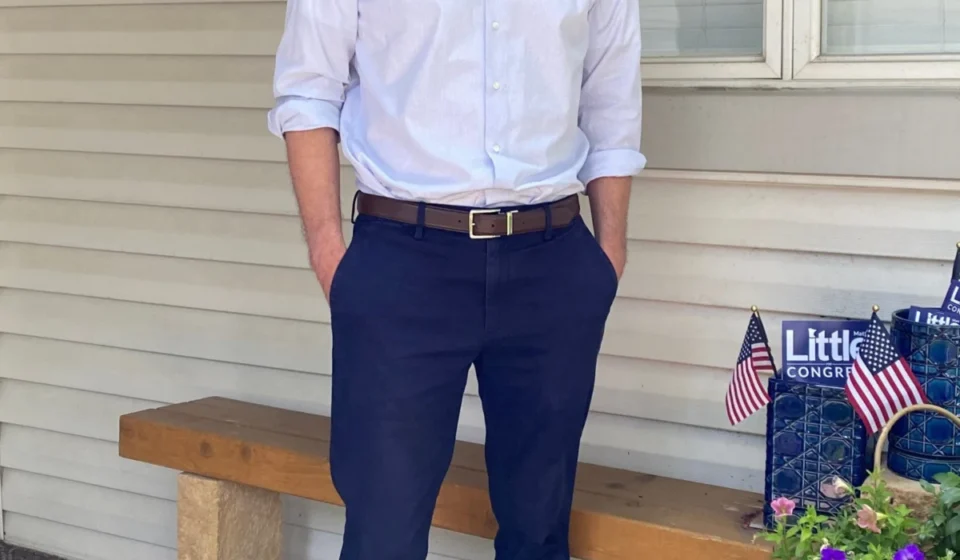
Matt Little (DFL-Endorsed Candidate): A Vigorous Proponent of Medicare for All. Little, a former state senator and mayor of Lakeville, is an unequivocal champion of "Medicare for All." His conviction is rooted in personal experience, citing his mother’s struggle to access a specialist even with insurance, which he calls a "defining moment." Little views the public option as merely "nibbling around the edges" and believes the time is "ripe politically" for a "single payer" system, especially given recent cuts to Medicaid and the failure to extend ACA subsidies under the Trump administration. He fully supports the Jayapal/Sanders bill, aiming to eliminate premiums, deductibles, and copayments and relegate private insurers to supplemental roles.
-
Kaela Berg: Progressive, but Pragmatic. State Rep. Kaela Berg, also running for Craig’s seat, identifies as a progressive but demonstrates more flexibility on healthcare reform. While she supports the ultimate goal of "Medicare for All," she emphasizes the immediate need for "more coverage now, whatever that looks like… while we continue to fight for Medicare for All." Berg, a flight attendant and union activist, implicitly acknowledges the complex position of organized labor on this issue. While some unions, like the United Auto Workers and the Association of Flight Attendants, endorse Medicare for All, others remain strongly opposed, viewing employer-provided healthcare benefits as a crucial bargaining chip they are unwilling to surrender.
-
State Sen. Matt Klein: A Physician’s Perspective. The third Democrat in the 2nd District race, State Sen. Matt Klein, brings a unique perspective as a physician and internist at the Mayo Clinic. He firmly believes in the need for "universal healthcare" and would "support whatever bill advances that." However, like many in the medical profession, he stops short of endorsing Medicare for All, instead preferring the implementation of a public option. Klein’s stance aligns with the American Medical Association’s (AMA) opposition to Medicare for All, which argues it would limit patient choice and physician autonomy – concerns that resonate deeply within the healthcare provider community.
Beyond the 2nd District: The split extends to other Minnesota representatives. Reps. Ilhan Omar (D-5th District) and Betty McCollum (D-4th District) are co-sponsors of the Jayapal Medicare for All bill, reflecting the progressive leanings of their urban and suburban districts. Conversely, Rep. Kelly Morrison (D-3rd District), also a physician, has not co-sponsored Medicare for All legislation, underscoring that even within the medical community, there is no monolithic view on the best path forward. Senator Tina Smith has co-sponsored the Sanders’ bill, aligning herself with the more progressive stance.
The Defining Issue in Minnesota’s U.S. Senate Race
The ideological divide is perhaps most stark and consequential in Minnesota’s U.S. Senate race, where Rep. Angie Craig and Lt. Gov. Peggy Flanagan are vying for the seat currently held by retiring Sen. Tina Smith. Both acknowledge the profound flaws in the current healthcare system, but they offer dramatically different strategies for reform.
-
Lt. Gov. Peggy Flanagan: Unwavering for Medicare for All. Flanagan is a fervent advocate for Medicare for All, declaring, "This is not working… It is broken and I think people are ready." She rejects the incremental approach of the public option as a starting point, arguing, "You should not start at the bottom because you are going to get even less." For Flanagan, the solution requires bold, transformative change, not compromise, even if full implementation depends on Democrats controlling the White House and both chambers of Congress.
-
Rep. Angie Craig: Championing the Public Option. Craig, in contrast, has positioned herself as a leader on the public option. She recently introduced the "Medicare-X Choice Act," which aims to create a public option within the ACA exchanges. Craig argues this would "give the insurance companies some competition," leading to lower premiums and better coverage for all. She also advocates for other reforms, such as holding health insurance companies accountable for above-average denial rates and legislation to lower prescription drug costs, viewing these as crucial steps to provide immediate relief to Americans. However, Medicare for All proponents counter that her public option would risk adverse selection, drawing the oldest and sickest Americans into the government plan, thus benefiting private insurers who would retain healthier, younger individuals and increase their profits.
Implications for the Democratic Party and Future Legislation
The deep-seated disagreement over healthcare reform carries significant implications for the Democratic Party’s unity, electoral prospects, and the future of legislative action.
A Fissure of Strategy and Philosophy: The debate is not merely about policy specifics; it reflects a fundamental difference in strategic approach and political philosophy. Progressives believe that only bold, transformative change, like Medicare for All, can truly solve the systemic problems of the U.S. healthcare system. They argue that incremental reforms merely prop up a failing, profit-driven model. Moderates, conversely, contend that politically feasible, incremental changes – such as a public option or strengthening the ACA – are the only realistic path to expand coverage and lower costs in a deeply polarized nation, particularly given the entrenched opposition from powerful lobbies and the Republican Party.
Electoral Ramifications: This internal conflict can complicate general election campaigns. While Medicare for All energizes the progressive base, it can be a liability in swing districts or states, where "socialized medicine" attacks resonate with moderate and independent voters. The public option, while less inspiring to the left, may offer a more palatable middle ground. Candidates must carefully calibrate their messaging to avoid alienating key voter blocs while staying true to their convictions.
Legislative Gridlock: The most significant implication is the potential for continued legislative gridlock. As long as Democrats remain split, forming a cohesive strategy to pass comprehensive healthcare reform will be exceedingly difficult. Even with a Democratic trifecta (control of the White House, House, and Senate), the slim majorities often seen in Congress mean that every Democratic vote is crucial. Without a unified front, ambitious reforms are likely to falter.
The Path Forward: Given the current political landscape, the immediate establishment of a single-payer system like Medicare for All appears unlikely. The formidable opposition from the Republican Party, powerful healthcare lobbies (AMA, AHA, pharmaceutical companies, private insurers), and a segment of centrist Democrats creates a nearly insurmountable hurdle.
However, a Democratic takeover of the U.S. House, U.S. Senate, or both, alongside a Democratic president, would undoubtedly lead to a renewed "rush of Democratic healthcare legislation." This would likely spark a vigorous debate over how to reverse the increase in uninsured Americans and curb escalating medical costs. In such a scenario, the public option, perhaps in a strengthened form, might become the most viable, albeit still challenging, path for substantial change. Reforms aimed at lowering prescription drug costs, increasing transparency, and strengthening consumer protections within the existing ACA framework would also likely gain traction.
Ultimately, the healthcare debate within the Democratic Party is more than just a policy disagreement; it is a fundamental struggle for the party’s identity and its vision for America’s future. As Minnesota’s candidates illustrate, the answers they provide will not only shape their individual electoral fates but also dictate the trajectory of healthcare reform for millions of Americans for years to come.