


















































The Cost of Correction: Assessing the Timberwolves’ Strategic Pivot and the Exit of Julius Randle

During his four-year tenure as president of basketball operations for the Minnesota Timberwolves, Tim Connelly has earned a reputation as a front-office surgeon—adept at excising roster tumors and rectifying gambits that failed to bear fruit. However, the frequency of these "corrective surgeries" has reached a concerning cadence, suggesting that the Timberwolves’ championship window is being managed through a series of expensive, high-stakes pivots rather than a stable, long-term blueprint.
The latest maneuver, a salary-dumping trade involving Julius Randle executed on the eve of the NBA Draft, marks a jarring reversal for a franchise that, just one season ago, viewed Randle as an anchor. As the dust settles on this transaction, the Timberwolves are left to reconcile the immediate financial relief with the bitter reality of recent roster mismanagement.
The Chronology of a Failed Gambit
The trajectory of the Timberwolves’ roster since the 2024 Western Conference Finals has been defined by a series of aggressive, often contradictory, moves. The timeline of these strategic shifts paints a picture of a front office oscillating between "win-now" desperation and the necessity of long-term fiscal responsibility.
- February 2025: The organization moves on from lottery pick Rob Dillingham less than two years after investing significant capital to address a backcourt need. This move, while creating space, served as an admission of a failed draft-day assessment.
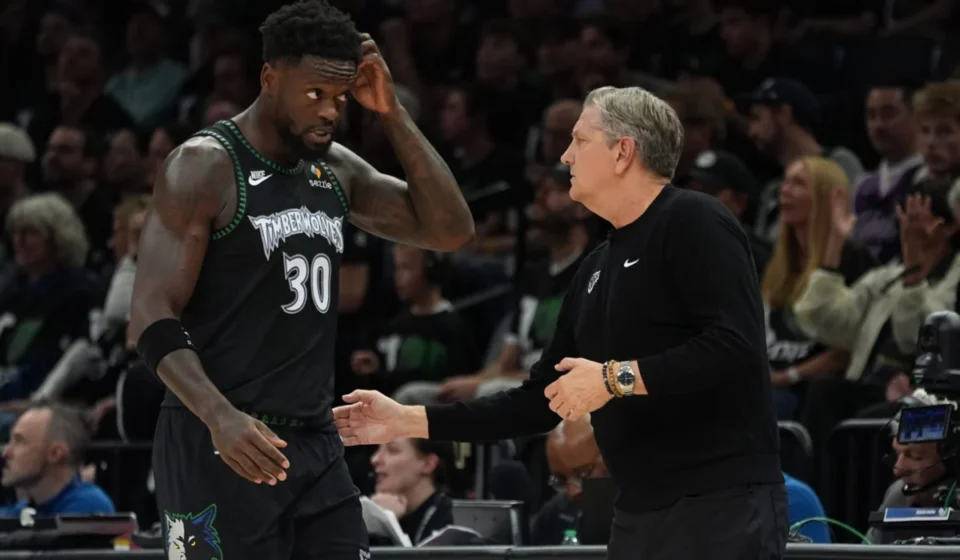
- The Randle Era: Julius Randle arrived in Minnesota with high expectations. During his first season, he served as the team’s primary playmaker, leading the Wolves in assists while finishing second only to Anthony Edwards in scoring. Head coach Chris Finch publicly labeled him "maybe our most important player."
- June 2025 (Draft Week): In a swift, pre-draft maneuver, the Timberwolves traded Randle to the Brooklyn Nets. The deal required Minnesota to surrender their 28th pick in the draft to facilitate the salary dump, settling for Brooklyn’s 33rd pick instead.
- Post-Trade: The team acquired power forward Mo Gueye—a depth piece with minimal NBA experience—to satisfy the contractual requirements of a three-team trade involving the Chicago Bulls. It is widely expected that Gueye will be waived.
Supporting Data: The Financial and Tactical Calculus
To understand why the Timberwolves would part ways with a player of Randle’s statistical caliber, one must look at the restrictive mechanics of the modern NBA salary cap. The trade was fundamentally driven by the "First Apron" constraints.
By shedding Randle’s $33 million salary—and avoiding his $36 million player option for 2027-28—the Timberwolves successfully navigated their way under the first apron. This technical maneuver unlocked the "non-taxpayer midlevel exception," which experts like podcast analyst Dane Moore describe as a "$15 million gift card" for teams looking to add talent while maintaining financial flexibility.
Furthermore, the structure of the deal provides the Timberwolves with a $33.3 million trade exception. This is a vital asset that grants the organization significant "wiggle room" for the next 12 months, allowing them to absorb contracts or facilitate future trades without the immediate burden of being hard-capped.
Tactically, the move addresses the "spacing" issue that plagued the team’s offensive efficiency. Randle’s struggles from beyond the arc, combined with his high usage rate, frequently stifled the rhythm of Anthony Edwards. With the concurrent signing of Ayo Dosunmu to a five-year, $112 million contract, the Timberwolves have pivoted toward an accelerated, high-pace offensive identity that prioritizes floor spacing and defensive transition.
Official Responses and Internal Friction
While the public-facing narrative from the organization remains one of "strategic alignment," observers have noted subtle cracks in the facade between Connelly and head coach Chris Finch.
The two players whose tenures were marked by a lack of total consensus were Dillingham and Randle. Dillingham was widely viewed as a Connelly project, while Randle was a staunch "Finch favorite." Sources indicate that while no outright shouting matches occurred, there was a palpable difference in enthusiasm regarding these players. Connelly’s preference for younger, cost-controlled assets eventually outweighed the coach’s desire to maintain the veteran presence that Randle provided.
The departure of Randle also comes against the backdrop of Karl-Anthony Towns’ success in New York. Watching Towns thrive during the Knicks’ championship run has intensified scrutiny on the Timberwolves’ front office. Critics argue that moving KAT to facilitate a "new era" only to move that era’s primary acquisition a year later displays a lack of institutional patience.
Implications: The New Core and the Path Forward
The "addition by subtraction" argument holds weight, but only if the resulting roster configuration delivers on its promise. The departure of Randle officially opens the door for Naz Reid to assume a permanent starting role. Reid, who has spent years waiting in the shadow of high-usage starters like KAT and Randle, is now expected to anchor the frontcourt alongside Rudy Gobert.
For Jaden McDaniels, the shift represents a chance to evolve from a defensive specialist into a secondary playmaker. The core of the team—Edwards, McDaniels, Reid, Dosunmu, and Joan Beringer—now represents a younger, more cohesive unit with a shared timeline.
Character and Culture
The 2025-26 season was marred by questions regarding the team’s internal character. While Randle cannot be blamed for the entirety of those struggles, his lack of defensive intensity and his abrupt exit from the arena following a dismal performance in the second round of the playoffs signaled a mismatch in team culture. The Timberwolves are now betting that a locker room filled with "two-way" players who prioritize defensive effort will yield better results than a high-priced veteran who struggled to fit into a selfless offensive scheme.
Conclusion: A Championship Template or a Perpetual Rebuild?
Tim Connelly remains in a precarious position. The decision to trade for Rudy Gobert and the subsequent roster churn have cost the organization an immense amount of draft capital—a reality underscored by the 2031 first-round pick they still owe the San Antonio Spurs due to the Dillingham trade.
However, the team has successfully cleared the path for a core group of players who fit the current "championship template" of the NBA: wing-heavy, defensively sound, and playing at an accelerated pace. The Wolves have traded the immediate production of Julius Randle for long-term flexibility and a more defined identity.
The question remains: can this team actually win a title, or are they simply burning assets to correct the mistakes of the previous off-season? The Timberwolves have the talent to compete, but after years of radical roster shifts, the pressure is now on the front office to prove that this latest iteration is the one that sticks. With a locked-in core through 2027, the time for "rectifying gambits" is over. It is time for the Minnesota Timberwolves to produce results.