




























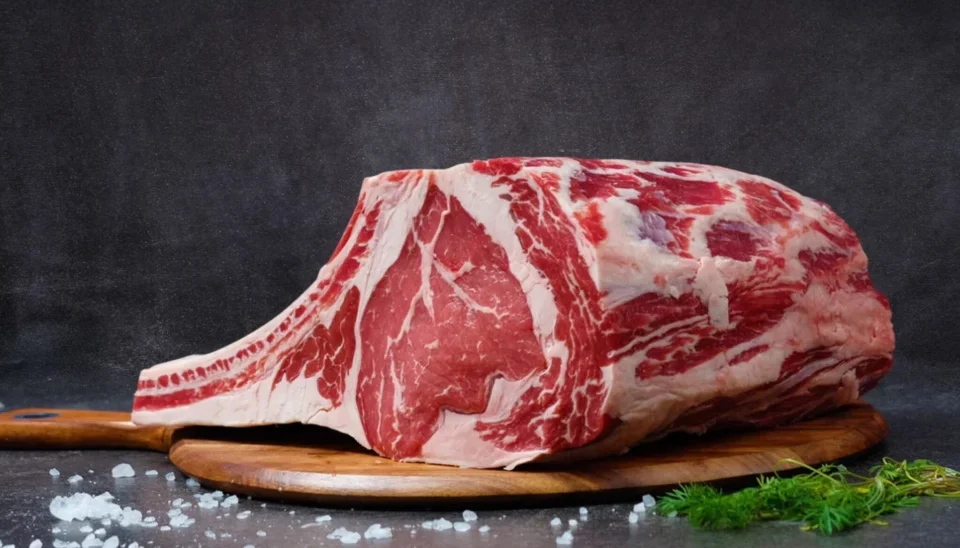

On August 7, 2026, a South Florida beef importer quietly initiated a recall that exposed a significant vulnerability in the United States’ food safety net. Corte Argentino USA LLC, based in Aventura, Florida, pulled 29,628 pounds of raw, boneless Argentine beef from commerce across Florida and Texas.
The U.S. Department of Agriculture (USDA) designated the action as a Class I recall—the most urgent classification, reserved for health hazard situations where there is a reasonable probability that eating the food will cause serious, adverse health consequences or death.
Yet, despite the alarming classification, no illnesses have been reported. No laboratory has detected pathogens, spoilage, or chemical contamination in the meat. In fact, the meat was never tested at all.
Instead, the recall hinges on six words embedded in the Food Safety and Inspection Service (FSIS) public alert: the shipment entered domestic commerce “without the benefit of import reinspection.”
This regulatory lapse reveals a breakdown in the system designed to monitor foreign meat imports, raising critical questions about how nearly 15 tons of unverified beef could circulate through American distribution channels for 11 weeks before anyone noticed.
1. Main Facts: The Scope of the Recall and the Class I Paradox
The recalled product consists entirely of raw, boneless beef cuts produced by a single, long-established Argentine packing plant: Frigorífico Gorina SAIC (Establishment Number: EST. Nº OF. 2025), located in La Plata, Argentina.
The affected products were shipped in cardboard boxes of varying weights and can be identified by a combination of two specific markings:
- Establishment Number:
EST. Nº OF. 2025 - Shipping Mark:
26644-AA
Identifying the Cuts
Because the boxes are labeled primarily in Spanish, wholesale buyers, chefs, and consumers scanning their freezers must look for specific Spanish terms. The recalled cuts include:
| Label on Box (Spanish) | English Cut Name | Culinary Description |
|---|---|---|
| Cuadril Sin Tapa | Top Sirloin Butt | Rump primal with the cap removed; a premier cut for traditional Argentine grilling. |
| Peceto | Eye Round | Lean, cylindrical cut from the hind leg, heavily utilized for roasts and matambre. |
| Nalga AD S/Tapa | Topside Cap Off | Inside round with the cap removed; typically sliced thin for milanesas. |
| Carnaza Cuadrada | Flat | Shoulder clod cut, ideal for braising and stewing. |
| Bola de Lomo | Knuckle | Sirloin tip from the round, frequently used for cubing, slicing, or grinding. |
All five cuts were produced between May 15 and May 20, 2026, and carry use-or-freeze-by dates ranging from September 15 to September 20, 2026.
[Argentine Packing Plant: Frigorífico Gorina]
       │
       ▼ (May 15-20, 2026: Production)
[Shipped to US under Mark 26644-AA]
       │
       ├──► Gate 1: Customs & Border Protection (Passed)
       ├──► Gate 2: USDA APHIS Animal Disease Screen (Passed)
       └──► Gate 3: FSIS Port-of-Entry Reinspection (SKIPPED)
       │
       ▼ (Entered US Commerce: Mid-May 2026)
[Distributed in FL & TX for 79 Days]
       │
       ▼ (August 7, 2026: Recall Announced)
The Foodservice Dilemma
Notably absent from the recall list are retail-friendly items like individually portioned steaks, trimmings, or ground beef. These are whole-muscle primals sold in bulk cardboard boxes. Corte Argentino USA LLC primarily supplies restaurants, hotels, catering operations, and niche international supermarkets.
Consequently, a significant portion of this shipment likely bypassed retail shelves entirely, heading straight into commercial walk-in freezers. For a restaurant or catering hall that purchased a 60-pound box of cuadril in June, the meat may still be sitting in storage, or worse, already served to patrons.
Deconstructing the "Class I" Label
To understand why the USDA applied its most severe warning label to a product with no documented contamination, one must understand how the FSIS manages risk.
By law, any imported meat that enters U.S. commerce without undergoing mandatory port-of-entry reinspection is legally "adulterated." Because the agency was bypassed, it cannot verify the shipment’s safety.
Rather than assessing the actual physical state of the meat, the Class I designation is a default regulatory mechanism. When the FSIS cannot verify a shipment, it assumes the worst-case scenario. The classification is a measure of the agency’s lack of information, not a confirmed biological threat.
2. Chronology: The 79-Day Tracking Gap
The timeline of this shipment shows a significant delay between production, distribution, and regulatory action:
- May 15–20, 2026: The beef is processed, vacuum-packed, boxed, and stamped at Frigorífico Gorina SAIC in Argentina.
- Late May 2026: The shipment arrives at a U.S. port of entry. It successfully clears U.S. Customs and Border Protection (paperwork verification) and the Animal and Plant Health Inspection Service (APHIS) disease screening. However, it bypasses the third and final checkpoint: the FSIS import reinspection facility.
- June–July 2026: The unverified beef is transported to distributors in Florida and Texas, where it is sold to commercial foodservice operators and select retail markets.
- August 7, 2026: During routine administrative reconciliations, FSIS officials discover that shipping mark 26644-AA was never presented for reinspection. The USDA issues a Class I recall notice.
- August 11, 2026: Four days after the recall announcement, the FSIS has yet to publish a list of retail and commercial establishments that received the beef, leaving buyers in Houston, Dallas, Miami, and Tampa to manually audit their purchase histories.
This 79-day gap represents a major vulnerability. In the fast-moving food service industry, an 11-week delay is often longer than the entire inventory turnover cycle. Much of the shipment may have already been consumed before the recall notice was even drafted.
3. Supporting Data: Historical Context and Systemic Performance
This incident is not an isolated occurrence. A review of FSIS records reveals a persistent pattern of imported meat products bypassing the final port-of-entry inspection desk:
Recent "Without Benefit of Reinspection" Recalls
- August 7, 2026: Corte Argentino USA LLC — 29,628 lbs of raw beef (Argentina)
- July 23, 2026: BCI Foods, Inc. — 4,300 lbs of chicken noodle soup (Canada)
- October 30, 2023: Olymel — 11,016 lbs of ready-to-eat ham (Canada)
- September 7, 2023: Empacadora Frape USA LLC — 20,455 lbs of pork chicharrón and carnitas (Mexico)
These cases show that the breakdown is not limited to a single country, importer, or product type. It is a recurring operational failure at the border.
       [Historical Import Recalls: "Without Benefit of Reinspection"]

  Corte Argentino (Aug 2026) ───────────────────────────────► 29,628 lbs (Beef)
  Empacadora Frape (Sep 2023) ─────────────────────► 20,455 lbs (Pork)
  Olymel (Oct 2023) ──────────────► 11,016 lbs (Ham)
  BCI Foods (Jul 2026) ────► 4,300 lbs (Soup)
The Challenge of Recall Recovery
Once unverified meat enters the U.S. supply chain, recovering it is difficult. The most comprehensive study on this issue remains a landmark Government Accountability Office (GAO) report.
The GAO analyzed ten USDA-monitored food recalls and found that, on average, only 38 percent of the recalled food was ever recovered or destroyed.
Furthermore, the study revealed that it took FSIS district staff an average of 38 days just to verify that distributors and retailers had been notified—a window of time that exceeds the shelf-life of most fresh meat products.
In the two decades since that study, the USDA has not published updated, comprehensive statistics on recall recovery rates, leaving the public without clear data on the long-term effectiveness of these safety actions.
4. Official Responses and Regulatory Context
The recall has sparked debate among industry groups, federal regulators, and political observers.
The Domestic Cattle Industry
Domestic ranching advocates have used the incident to question the wisdom of expanding foreign meat imports. Justin Tupper, president of the U.S. Cattlemen’s Association (USCA), has long argued against the rapid expansion of import quotas.
"A safe, secure, and resilient beef supply starts with a strong domestic industry," Tupper noted during recent discussions on import policy.
Domestic producers point to a shrinking American herd—which dropped to a historic low of 86.2 million head in January 2026—and rising retail prices (with ground beef averaging $6.83 a pound in June 2026) as evidence that the U.S. is becoming overly dependent on foreign supply chains that bypass federal safety checks.
The USDA and Staffing Concerns
Some industry analysts have raised questions about staffing levels at the FSIS. Between January and March 2025, the agency lost approximately 8 percent of its workforce after 555 experienced personnel accepted deferred resignation packages. Sixty-three of those departures came directly from the critical Investigations group.
However, the USDA has strongly rejected any link between staffing levels and import inspection gaps. In an official statement, the USDA’s public affairs office declared:
"There is no connection between recent recalls and FSIS vacancy rates. Import reinspection protocols are highly structured, and individual facility compliance is the responsibility of the importing entity."
Clarifying the Trade Policy Context
Several media outlets have linked this recall to the high-profile trade agreement signed on February 6, 2026, which expanded Argentine beef quotas by 80,000 metric tons.
However, an analysis of U.S. tariff schedules shows this connection is incorrect:
- The 2026 Trade Agreement: Specifically targets lean beef trimmings (HTSUS codes
0201.30.5085and0202.30.5085), which are imported in bulk to be blended into domestic ground beef. - The Recalled Shipment: Consists of premium, whole-muscle cuts (cuadril, peceto, bola de lomo). These products enter under Argentina’s pre-existing, long-term 20,000-ton quota, which has been active for years and was unaffected by the February 2026 expansion.
With a volume of 29,628 pounds (roughly 13.4 metric tons), the recalled shipment represents just 0.01% of Argentina’s annual U.S. export allotment.
5. Implications: What This Means for Consumers and Commercial Buyers
This incident highlights the complex logistics of the modern food supply chain and the practical limits of federal oversight.
The Three Gates of Import Entry
For imported meat to legally enter the United States, it must pass three distinct checkpoints:
┌────────────────────────┐     ┌────────────────────────┐     ┌────────────────────────┐
│         GATE 1         │     │         GATE 2         │     │         GATE 3         │
│  Customs & Border Pro  ├────►│       USDA APHIS       ├────►│       USDA FSIS        │
│  Paperwork & Customs   │     │ Animal Disease Screen  │     │  Port-of-Entry Inspection│
└────────────────────────┘ └────────────────────────┘ └────────────────────────┘- Customs and Border Protection (CBP): Reviews international cargo manifests, tariff compliance, and customs documentation.
- Animal and Plant Health Inspection Service (APHIS): Screens shipments for animal health risks, ensuring the product does not originate from regions with active outbreaks of Foot-and-Mouth Disease (FMD) or other high-risk livestock pathogens.
- Food Safety and Inspection Service (FSIS): Conducts physical inspections at designated port-of-entry warehouses. Inspectors check foreign health certificates, verify shipping marks, inspect the physical condition of the containers, and run random laboratory analyses for chemical residues and pathogens like E. coli and Salmonella.
By skipping the third gate, the Corte Argentino shipment bypassed the only physical food-safety check in the import process.
Recommendations for Food Service Operators and Consumers
For commercial kitchens and distributors in Texas and Florida, managing this recall requires checking inventory records back to late May 2026.
If any cardboard shipping boxes match the establishment number EST. Nº OF. 2025 and shipping mark 26644-AA, operators should take immediate action:
- Do Not Serve or Consume: Even if the meat appears fresh and has been kept frozen, it should not be cooked or served.
- Why Cooking is Insufficient: While proper cooking temperatures kill common biological pathogens, they do not neutralize chemical or veterinary drug residues, nor do they address potential physical contamination or temperature abuse during transport—both of which are evaluated during the FSIS reinspection process.
- Return for Refund: Foodservice operators should contact their distributor or reach out to Corte Argentino USA LLC’s general manager, Eial Kaplun, at
786-350-5805. - General Inquiries: Consumers with broader food safety questions can contact the USDA Meat and Poultry Hotline at
888-674-6854.
Looking Ahead
Whether this incident remains an isolated administrative error or points to a broader gap in border enforcement depends on the coming months. If more shipments slip through the port-of-entry system undetected, regulators may face growing pressure to reform how import logistics are monitored at the border.