















































The promise of the Affordable Care Act (ACA) was simple: universal access to high-quality, affordable health insurance. For over a decade, Minnesota’s own marketplace, MNsure, served as a vital lifeline for thousands of residents who fell into the "coverage gap"—those who earn too much to qualify for Medical Assistance or MinnesotaCare, yet lack access to employer-sponsored health benefits. However, as of late 2025, that lifeline is straining under the weight of an unprecedented economic shift.
Following a staggering 57% increase in monthly premiums announced last fall, new data from MNsure indicates that the state is witnessing a mass exodus from the marketplace. As costs spiral, Minnesotans are being forced to choose between financial stability and essential medical coverage, a trend that mirrors a broader, troubling decline in enrollment across the United States.
The Chronology of a Market Shift
To understand the current crisis, one must look back at the legislative and economic volatility of the last eighteen months.
The Stability Era (2020–2024): For several years, enrollment in ACA marketplaces nationwide was on a steady, upward trajectory. Federal interventions, including enhanced subsidies introduced during the pandemic, kept premiums artificially low and accessible, leading to record-breaking participation.
The Warning Signs (Early 2025): Throughout the first half of 2025, economists and healthcare policy experts began signaling that the federal subsidies—designed as a temporary bridge—were nearing expiration. Despite pleas from state officials in Minnesota and across the nation, Congress failed to reach a consensus on extending these supports.
The Price Shock (Fall 2025): The "57% spike" became the defining headline of the autumn. MNsure officials warned that without the federal financial cushion, insurance carriers were forced to recalibrate their rates to account for the rising cost of medical care and administrative overhead.
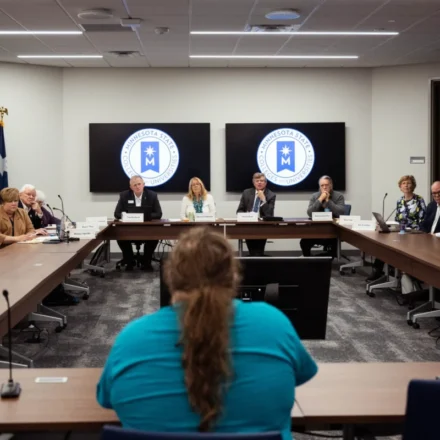
The Current Reality (Late 2025): At a recent board meeting, MNsure officials confirmed that the worst-case scenarios are coming to fruition. Enrollment numbers have plummeted, and those who remain in the system are increasingly "buying down" their coverage, shifting from comprehensive plans to high-deductible, lower-cost alternatives.
Supporting Data: By the Numbers
The evidence of this decline is stark. According to federal data released by the Department of Health and Human Services (HHS), ACA marketplace enrollment is down 13% nationally. Minnesota is tracking closely with this trend, showing a 12% decline in enrollment within the state.
A recent report by KFF, the prominent healthcare policy research nonprofit, highlights that 2026 marks the first time enrollment has dropped since the early years of the first Trump administration. This reversal is significant, as it suggests that the progress made in expanding the insured population over the last decade is being rapidly undone.
The "Buy Down" Effect
The impact isn’t just felt in the raw number of people leaving the marketplace; it is also reflected in the behavior of those who choose to stay. MNsure’s internal data highlights a desperate attempt by consumers to maintain some level of coverage while minimizing monthly expenses:
- Plan Migration: Among those who remained at their current "medal level" (Gold, Silver, or Bronze), 52% switched to a cheaper, less comprehensive plan within that category.
- Tier Downgrading: There has been a 112% increase in consumers "buying down" to a cheaper medal level compared to the transition between 2024 and 2025. This indicates a massive migration from Gold and Silver plans—which offer lower out-of-pocket costs—toward Bronze plans, which carry significantly higher deductibles and financial risk for the enrollee.
Factors Driving the Cost Crisis
While the expiration of federal subsidies is the primary catalyst for the current enrollment collapse, it is not the only factor. Minnesota faces a unique confluence of economic pressures that have driven premiums to record highs.
1. Rising Pharmaceutical Costs
The cost of specialty drugs continues to outpace inflation, putting significant pressure on health insurers. As pharmaceutical companies pass research, development, and marketing costs onto the healthcare system, insurers are forced to raise premiums to cover the utilization of these expensive treatments.
2. State-Funded Reinsurance and Claims
Minnesota operates a state taxpayer-funded reinsurance program designed to help health insurers manage high-cost claims. While this program was intended to stabilize the market, critics argue it has become a necessary but insufficient patch for a broken pricing model. As medical claims for chronic conditions and rare diseases increase in both frequency and severity, the fund is being stretched thin, creating a feedback loop of rising costs that eventually lands on the consumer.
3. The Employer-Sponsored Gap
The population served by MNsure remains in a precarious position. These are individuals who earn enough to be ineligible for state-sponsored medical assistance but not enough to easily absorb a 57% hike in premiums. When employer-sponsored insurance is unavailable, these individuals have no alternative market to turn to, effectively leaving them to self-insure or go without coverage entirely.
Official Responses and Stakeholder Sentiment
The tone from MNsure officials and healthcare advocates is one of alarm. During the recent board meeting, representatives emphasized that the marketplace was designed to be a safety net, not a luxury service.
"We are seeing a trend that threatens to undo years of hard-won progress in reducing the uninsured rate," one official noted during the proceedings. While the organization is actively trying to educate consumers on available plan options, they acknowledge that the math simply doesn’t work for a large segment of the population without federal intervention.
Advocacy groups are echoing these sentiments, calling on state and federal lawmakers to reconsider the expiration of subsidies. They argue that the "market" is not functioning correctly because the cost of care—specifically in pharmaceuticals and hospital services—is untethered from the actual economic capacity of the average Minnesota worker.
Implications for the Future
The current state of Minnesota’s healthcare marketplace holds severe implications for both public health and the state’s economy.
For Public Health: The "buy down" trend is perhaps the most concerning. When patients move to high-deductible, lower-tier plans, they are statistically more likely to delay or forego routine care. This leads to the exacerbation of chronic conditions, ultimately resulting in more expensive emergency room visits later on. In the long run, this shift could result in poorer health outcomes for a large swath of the Minnesota population.
For the State Economy: A less-insured population places a greater burden on the state’s emergency safety nets and uncompensated care systems. When individuals cannot pay their medical bills, hospitals and clinics must absorb those costs, which often leads to further premium increases for everyone else—a cycle of cost-shifting that perpetuates the instability.
The Political Horizon: As the U.S. approaches another federal election cycle, the future of the ACA and its associated subsidies will undoubtedly be a central topic of debate. Minnesota’s experience serves as a microcosm of the national struggle: a system that was built on the assumption of federal support is now revealing its fragility in the face of austerity.
Unless there is a significant shift in legislative priorities or a radical change in the cost of medical delivery, the outlook for 2026 remains bleak. Minnesotans are bracing for a future where access to healthcare may once again become a privilege, rather than a standard of living. As the dust settles on the recent enrollment figures, one thing remains clear: the state’s healthcare marketplace is at a crossroads, and the decisions made in the coming months will determine the health and financial security of thousands of families for years to come.