



















































Rematch in the Heartland: A Teacher’s Bid to Flip Minnesota’s First District Amid Shifting Political Tides

NEW ULM, Minn. – In a political landscape increasingly defined by partisan divides and national narratives, a familiar story is unfolding in Minnesota’s 1st Congressional District. A Democratic newcomer, Jake Johnson, a high school teacher with no prior political experience, is mounting a formidable challenge against the Republican incumbent, Rep. Brad Finstad. This electoral contest echoes a significant upset from two decades ago when another teacher, then-Democrat Tim Walz, successfully unseated a long-standing Republican in the same largely rural, conservative-leaning district.
Johnson’s campaign has quickly garnered national attention, earning him a coveted spot on the Democratic Congressional Campaign Committee’s (DCCC) "Red to Blue" list. This designation signals the national party’s belief in his potential to flip a Republican-held seat, providing him with crucial fundraising and strategic support. However, the political environment of the 1st District, and indeed the nation, has undergone profound transformations since Walz’s 2006 victory, presenting Johnson with a uniquely challenging path.
Echoes of Walz: Teachers Turned Challengers
The parallels between Jake Johnson’s current campaign and Tim Walz’s ascent in 2006 are striking and deliberate. Twenty years ago, Walz, a history teacher and football coach from Mankato, was an unknown quantity in political circles. He successfully campaigned as a moderate Democrat, defying expectations in a district that had long been a Republican stronghold, then represented by former Rep. Gil Gutknecht. Walz’s victory was a testament to his ability to connect with voters across the political spectrum, leveraging his roots in the community and his background in education.
Today, Jake Johnson, a 42-year-old high school math teacher from Stewartville, mirrors many aspects of Walz’s underdog narrative. Like Walz, Johnson is making his first foray into electoral politics, bringing a classroom sensibility to the campaign trail. He has demonstrated a surprising prowess for fundraising and grassroots organizing, catching the eye of national Democratic strategists eager to expand their thin majority in the U.S. House.
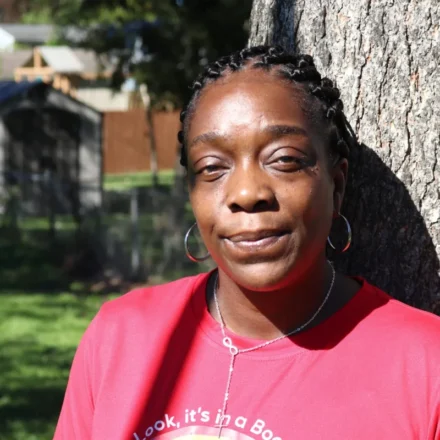
Both men have effectively leveraged their decades of experience as educators within the district, tapping into a natural network of former students, colleagues, and the politically influential teachers’ unions. This foundation of community trust and established relationships provides a unique advantage in a district where personal connections often outweigh national party affiliations. Pat Booker, a long-time resident and voter in the district, notes the similarity in their approach: "Johnson doesn’t hesitate to answer questions and doesn’t hesitate to meet with constituents, and that was the same way with Tim. That’s something that Brad absolutely refuses to do."
A Centrist Pitch in a Polarized Era
While their professional backgrounds align, the political strategies of Walz and Johnson, though both leaning centrist, reflect the evolving dynamics of their respective eras. Walz ran as a pragmatic moderate, appealing to voters who valued his local focus and independent streak. While some 1st District voters now contend that Walz became more liberal after ascending to the governor’s office, his initial campaign was rooted in a broad appeal.
Johnson, too, is positioning himself as a centrist Democrat, acutely aware of the district’s conservative lean. He is deliberately cultivating an image as a fiscal conservative, vowing to vote against any legislation that would permit the federal government to borrow more money without a balanced budget. "Members of both parties are not taking this seriously," Johnson stated, referring to the nation’s nearly $40 trillion national debt. This stance is a strategic move to differentiate himself from the perceived fiscal liberalism often associated with the national Democratic Party and appeal to fiscally conscious voters in the district.

However, like most mainstream Democrats, Johnson also champions the strengthening of the federal social safety net. This commitment is deeply personal for him, as it was for Walz. Johnson grew up in Stewartville as one of 11 siblings, recounting how his father collected garbage and his mother read meters door-to-door. His family frequently relied on assistance from their church, neighbors, and government programs. "I was a SNAP (food stamp) kid," he shared, adding, "We were a Medicaid family." Walz likewise experienced hardship, with his mother and younger brother depending on Social Security survivor benefits after his father’s death. These personal narratives of resilience and reliance on public support resonate with many working-class families in the district, allowing both candidates to bridge the ideological gap between fiscal conservatism and social welfare.
The Shifting Political Terrain of Minnesota’s First
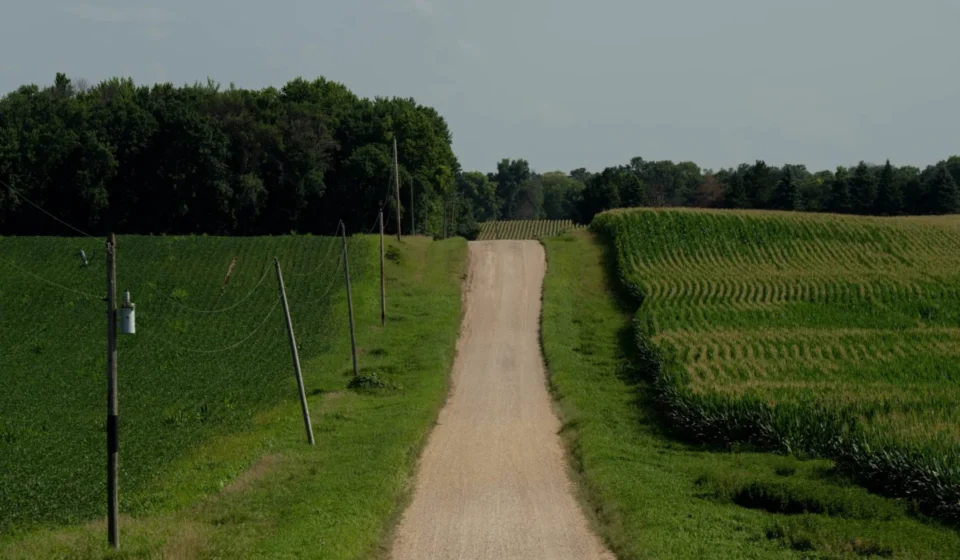
Despite the shared biographical and ideological threads, the political landscape Johnson navigates is significantly different from the one Walz encountered in 2006. The Minnesota 1st Congressional District, a vast expanse of largely rural territory stretching across southern Minnesota, has become even more reliably Republican. The Cook Political Report currently rates the district as "likely Republican," a testament to its rightward drift.
In 2024, former President Donald Trump secured a commanding 55% of the vote in the district, underscoring its strong allegiance to the GOP. Incumbent Rep. Brad Finstad, 50, has successfully defended the seat since winning a special election in 2022, consistently defeating Democratic challengers. Unlike Gil Gutknecht, the moderate Republican Walz unseated, Finstad has closely aligned himself with Trump, reflecting the Republican Party’s national shift to the right.
Redistricting following the Census has further cemented the district’s rural and conservative character. By incorporating new territory along the Mississippi River in the southern part of the state, the district grew even more rural, diminishing the influence of its few urban centers. This demographic shift aligns with a broader national trend: rural areas across the United States have increasingly gravitated towards the Republican Party.
Social scientists attribute this phenomenon to a confluence of factors. Many rural residents express concerns that their core cultural values – centered around faith, family, and freedom from government interference – are under threat in a rapidly changing nation. Furthermore, there’s a pervasive belief that the Democratic Party has become the party of urban elites, prioritizing metropolitan or immigrant populations over the struggles of the rural working class. Kate Knutson, a political science professor at Gustavus Adolphus College, observes that the "farmer" component of Minnesota’s Democratic-Farmer-Labor Party has effectively "peeled off."
Grassroots Engagement vs. Incumbent Confidence
Johnson’s campaign strategy is one of relentless engagement, a stark contrast to Finstad’s more insulated approach. Johnson has committed to holding town halls in each of the district’s 21 counties, a Herculean effort to reach every corner and demonstrate his accessibility. He recently participated in New Ulm’s Bavarian Blast festival parade and plans to host a town hall in the city in August, actively taking the fight to Finstad’s home turf.
New Ulm itself is a microcosm of the district’s complexities. Steeped in German heritage, with landmarks like the Hermann statue and events like Oktoberfest, it is a city that prides itself on history and tradition. While residents like Pat Booker note that the community has become more open-minded over time, it remains a conservative, Republican-majority city. Brown County, where New Ulm is the county seat, handily supported Donald Trump in 2024. In such an environment, newcomers can still face challenges shedding the "auslander" (outsider) label.

Despite Johnson’s vigorous outreach, Finstad appears confident in his position. Political science professor Kevin Parsneau of Minnesota State University in Mankato suggests, "He’s certainly acting like internal (campaign) polls are telling him he has a wide lead." Finstad’s campaign strategy largely involves participating in official business events – meeting with police officers, farm groups, and local companies – rather than engaging directly with his challenger in unscripted public forums. Parsneau notes, "He’s speaking to his base. He does not want to be in an unscripted situation."
When pressed, Finstad maintains his commitment to constituent engagement. "I travel all over southern Minnesota," he told MinnPost. "I’m always listening and communicating with constituents who agree and don’t agree with me. I’m having those conversations and I would say reach out to me, reach out to our office. I’m more than willing to have a conversation and answer questions." However, Booker’s experience contradicts this, as she spent eight months fruitlessly seeking a meeting with Finstad to discuss concerns about SNAP and Medicaid cuts, receiving only a "pat letter saying thank you for your concerns."
The "Red to Blue" Imperative
Johnson’s inclusion on the DCCC’s "Red to Blue" list is a significant boost for his campaign, granting him access to critical fundraising support, strategic guidance, and training. This national recognition underscores the Democrats’ ambition to regain control of the U.S. House, a goal that hinges on winning swing districts and, ideally, flipping Republican-held seats in challenging territories like the 1st District.
The financial strength of Johnson’s campaign reflects this national backing. As of June 30, Federal Election Commission reports show he has amassed nearly $1.9 million in campaign funds, a remarkable feat for a political newcomer. Finstad, as an incumbent with established fundraising networks, has slightly outpaced him, raising nearly $2 million. The close fundraising figures suggest a competitive race, where both candidates have the resources to disseminate their messages effectively.
Democrats are banking on several factors to create a favorable environment for candidates like Johnson. Low approval ratings for former President Trump, an energized Democratic base, and the historical advantage typically enjoyed by the party out of power in midterm elections are all seen as potential catalysts. However, the 1st District’s strong conservative lean means Johnson’s path to victory is steeper than in a true swing district.
Agriculture at a Crossroads: Tariffs, Trade, and Farm Inputs
One of Johnson’s key strategies to chip away at Republican dominance among rural voters is to highlight the economic challenges faced by farmers, particularly those he attributes to Trump-era policies embraced by Finstad. Knutson suggests Johnson "might succeed in depressing – at least a little bit – the enthusiasm among farmers for the GOP by continuing to hammer Finstad for embracing Trump policies that have hurt farmers."
Farmers in southern Minnesota have been grappling with significant headwinds. "Farmers are frustrated by tariff and immigration sweeps that are hurting the meat packing industry in southern Minnesota," Knutson points out. Beyond these specific issues, broader global events have exacerbated the situation. The shutdown of the Strait of Hormuz, for instance, has stalled crucial deliveries of oil and fertilizer, leading to skyrocketing costs for essential farm inputs. These economic pressures, directly impacting livelihoods, could potentially loosen the GOP’s traditional grip on the agricultural vote.

Finstad, however, has largely deflected these criticisms, attributing agricultural distress to the policies of the current Democratic administration rather than the previous Republican one. "We’re heading in the right direction," Finstad told MinnPost after a roundtable on veterans’ issues in Mankato. "We have come out of some tough times where the inputs have been really crippling for the last six years, and then on top of that we’ve had that stale market because of that lack of trade." This narrative aligns with the broader Republican strategy of blaming the current White House for economic woes, aiming to consolidate his base and maintain confidence among farmers.
The Road Ahead for Minnesota’s First
As the election draws nearer, the race for Minnesota’s 1st Congressional District promises to be a closely watched contest. Jake Johnson faces an undeniable uphill battle in a district that has moved further to the right since Tim Walz’s historic win. The advantages of incumbency, heightened name recognition, and a district map favorable to Republicans are formidable obstacles.
Yet, Johnson’s energetic campaign, his ability to fundraise, and his personal narrative resonate with a segment of the electorate. His centrist messaging, coupled with his focus on fiscal responsibility and the social safety net, is a calculated attempt to appeal to a broader base than a typical progressive Democrat might attract in this district.
Finstad, for his part, relies on consolidating his conservative base, avoiding direct engagement with his challenger, and focusing on events that reinforce his image as a representative connected to the district’s core industries and values. He is confident in his position and his work ethic: "It’s an honor of a lifetime to serve the 1st District’s 750,000 residents, but my goal is heaven, not Congress. When November comes, the voters of southern Minnesota will decide, but no one is going to outwork me."
The outcome of this race will offer crucial insights into the evolving political dynamics of rural America, the effectiveness of centrist appeals in a polarized nation, and the enduring power of a compelling personal story in local politics. Can Jake Johnson replicate Tim Walz’s improbable feat, or will the district’s strong Republican lean and the current political climate prove too great an obstacle for another teacher’s bid to turn Minnesota’s 1st District "Red to Blue"? Only the voters of southern Minnesota will decide.