














































The $1.8 Billion Magnet: Why Niron Magnetics Chose Alabama Over Its Minnesota Home

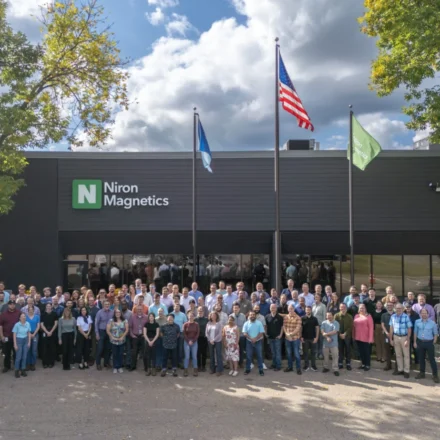
In the competitive landscape of American industrial expansion, few stories are as bittersweet for a local economy as that of Niron Magnetics. A company forged in the laboratories of the University of Minnesota, nurtured by the Twin Cities’ venture ecosystem, and headquartered in the heart of Minneapolis, Niron Magnetics has long been heralded as the "darling" of the state’s burgeoning green-tech corridor. However, the company’s recent announcement of a massive $1.8 billion manufacturing investment in Alabama has sent ripples through the Midwest, prompting a rigorous self-examination of Minnesota’s ability to retain the very titans of industry it helps create.
The news, confirmed by Alabama Governor Kay Ivey’s office on November 20, marks a pivotal moment for Niron Magnetics. While the company remains rooted in Minnesota through its research and development and its first commercial plant in Sartell, the sheer scale of the Alabama project—dubbed "Plant Two"—dwarfs its previous domestic footprint. This move highlights a growing tension between Minnesota’s academic excellence and the logistical and financial realities of high-stakes industrial scaling.
Main Facts: The $1.8 Billion Expansion
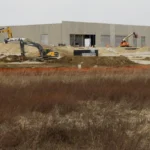
The centerpiece of the announcement is the construction of a state-of-the-art manufacturing facility in Alabama, representing a capital investment of approximately $1.8 billion. This facility, Plant Two, is designed to be the primary engine of Niron’s domestic production.
To understand the scale, one must look at the output metrics. Niron’s "Plant One" in Sartell, Minnesota, which is scheduled to begin operations in 2027, is projected to produce 1,500 tons of magnets per year. While significant, it is a pilot for the industrial might of Plant Two. The Alabama facility is expected to produce closer to 10,000 tons of magnets annually.
Niron’s core product is a high-performance, rare-earth-free magnet. Traditionally, the powerful magnets required for electric vehicle (EV) motors, wind turbines, and high-end electronics rely on rare-earth elements like neodymium and dysprosium—materials whose supply chains are overwhelmingly controlled by China. Niron’s technology utilizes iron nitride, a material that is both more abundant and environmentally sustainable, positioning the company as a critical player in U.S. national security and the global energy transition.
The Alabama site was selected after an exhaustive national search. The facility will benefit from direct access to the CSX rail network, a crucial logistical advantage for moving raw materials and finished products. Furthermore, the state of Alabama provided a "shovel-ready" site, meaning the land had been pre-permitted and prepared with the necessary infrastructure to allow for immediate construction.
Chronology: From University Research to Global Ambition
The journey of Niron Magnetics is a decade-long saga of academic breakthrough transitioning into industrial reality.
2014–2020: The Formative Years
The technology originated at the University of Minnesota, where researchers sought a way to stabilize iron nitride to create permanent magnets. Through the university’s technology commercialization ecosystem, Niron was spun off into a private entity. During these years, the company focused on refining its "Clean Earth Magnet" technology, attracting early-stage investment from venture capital and corporate partners like Volvo and Allison Transmission.
2021–2023: Prototyping and Pilot Production
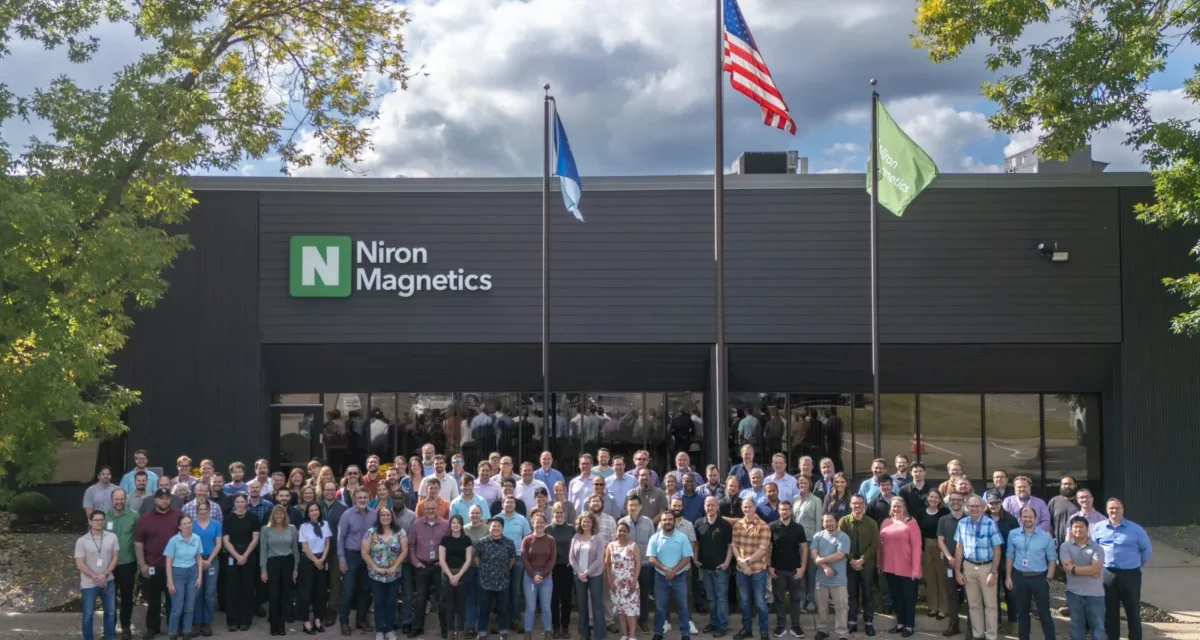
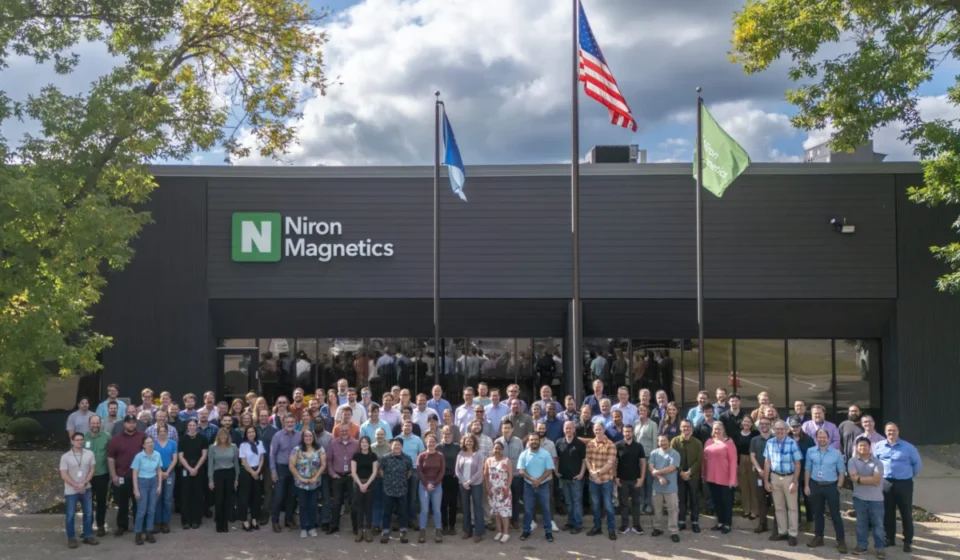
Niron established its headquarters in Northeast Minneapolis, where it currently produces roughly 1,000 magnets per day. This pilot-scale production allowed the company to send samples to global manufacturers in the automotive and consumer electronics sectors. During this period, the company announced "Plant One" in Sartell, Minnesota, a critical first step in moving from lab-scale to industrial-scale production.
Spring 2024: Signaling Global Ambition
In early 2024, CEO Jonathan Rowntree began a series of high-profile interviews, including the inaugural episode of The Twin Cities Business Show. Rowntree laid out a vision that extended far beyond Minnesota’s borders. He signaled that while Minnesota would always be the "brain" of the company, the "muscle" would need to be located where the economics of scale were most favorable.
November 2024: The Alabama Reveal
On November 20, the Governor of Alabama officially announced the $1.8 billion investment. This followed months of speculation regarding where Niron would place its high-volume "Plant Two." Just weeks prior to this, Niron had opened a new "Experience Center" in Minneapolis—a move that many now see as a strategic effort to reassure the local community of their continued presence even as the bulk of their capital investment moved south.
Supporting Data: The Magnet Gap and the Power Crunch
The decision-making process for Niron was driven by staggering demand and specific infrastructure requirements.
The Global Market
To put Niron’s 10,000-ton Alabama plant into perspective, one must look at the global context:
- Current U.S. Demand: ~50,000 tons per year.
- Current Global Demand: ~300,000 tons per year.
- Projected Global Demand: Expected to triple (reaching nearly 1 million tons) over the next decade as the world electrifies.
Niron’s Alabama plant alone will be able to supply 20% of current U.S. demand, making it a cornerstone of the domestic supply chain.
The Energy Requirement
A critical factor in the site selection was electricity. "We need several hundred megawatts of power," Rowntree noted in interviews. "It’s not data center level, but it’s not a small chunk of power."
Manufacturing high-performance magnets is an energy-intensive process. Alabama’s ability to guarantee this level of power capacity "off the shelf" was a decisive factor. In contrast, many industrial sites in the Midwest face aging grids or regulatory hurdles that can delay the delivery of high-capacity power by years—a timeline Niron could not afford.
Financial Incentives
While the exact figures of the Alabama incentive package have not been fully disclosed, the project is expected to involve significant public subsidies, tax abatements, and cost-effective loans. With interest rates remaining high, the cost of capital was a primary concern for Rowntree. Alabama’s package was designed to bridge the gap between a "billion-dollar project" and a "profitable billion-dollar project."
Official Responses: A Tale of Two States
The reactions to the move reflect the differing economic trajectories of the states involved.
Governor Kay Ivey (Alabama):
In her official statement, Governor Ivey characterized the investment as a win for Alabama’s "knowledge-based economy." She emphasized that Niron’s choice validates Alabama’s status as a leader in the "Southern Battery Belt," a region increasingly attracting EV-related manufacturing. "Niron Magnetics’ decision to build this massive facility in Alabama is a testament to our state’s incredible workforce and our commitment to fostering innovation," Ivey stated.
Jonathan Rowntree (CEO, Niron Magnetics):
Rowntree has maintained a delicate balance, praising Minnesota while being candid about its shortcomings. "Niron’s home is Minnesota. Our headquarters is Minnesota," he emphasized during the opening of the Minneapolis Experience Center. However, regarding the site selection, he admitted, "Minnesota was in the mix, but they’re struggling to be competitive on incentive packages, and we’ve still got some challenges on power."
Minnesota Economic Development Community:
Local analysts see this as a wake-up call. While Minnesota is excellent at "birthing" companies through the University of Minnesota and its healthcare ecosystem (Mayo Clinic, etc.), it often struggles to provide the industrial infrastructure—large, rail-accessible, high-power sites—needed for the "copy-and-paste" scaling phase of manufacturing.
Implications: An Indictment or a Natural Evolution?
The loss of Plant Two to Alabama serves as a dual-edged sword for the state of Minnesota.
The Indictment of Policy
For critics of Minnesota’s current economic climate, the Niron deal is an indictment. It suggests that even when a company is "born and bred" in Minneapolis, the state’s tax policy and regulatory environment are not enough to keep the manufacturing jobs at home. The "site-readiness" issue is particularly glaring. If a state cannot provide a shovel-ready site with hundreds of megawatts of power, it will continue to lose out on the "Green Industrial Revolution" to states in the South and West that have prioritized industrial infrastructure.
The "Copy and Paste" Future
From Niron’s perspective, this is simply the beginning of a global rollout. Rowntree has stated that Plant One in Sartell was designed to be a "replicable model." The goal is to "copy and paste" the production lines from Sartell into Plant Two, and eventually into Plants Three through Ten.
Rowntree’s vision includes future plants in Europe and Southeast Asia to facilitate an aggressive export business. By diversifying its manufacturing locations, Niron mitigates risk and places production closer to global automotive hubs.
The Strategic Retention of R&D
Despite the Alabama move, Minnesota retains the "Experience Center" and the corporate headquarters. This follows a trend where "high-value" intellectual property and executive functions remain in traditional tech hubs (like Minneapolis or Boston), while "high-volume" manufacturing moves to lower-cost, high-incentive regions. While Minnesota loses out on thousands of blue-collar manufacturing jobs and billions in property tax base, it keeps the researchers and engineers who will develop the next generation of iron-nitride technology.
Conclusion
The $1.8 billion Alabama investment by Niron Magnetics is a landmark moment for the American magnet industry and a sobering lesson for Minnesota. It proves that in the race to secure the green energy supply chain, academic brilliance is only the first step. To win the long game, states must be able to provide the raw industrial requirements—land, power, and capital incentives—that allow a "darling" startup to become a global titan. For Niron, the sky is the limit, but for Minnesota, the challenge is now to ensure that the next Niron doesn’t feel the need to look elsewhere to grow.