




































DFL Convention: Klobuchar Secures Gubernatorial Endorsement Amidst Vibrant Progressive Challenge; Flanagan Poised for Senate Run

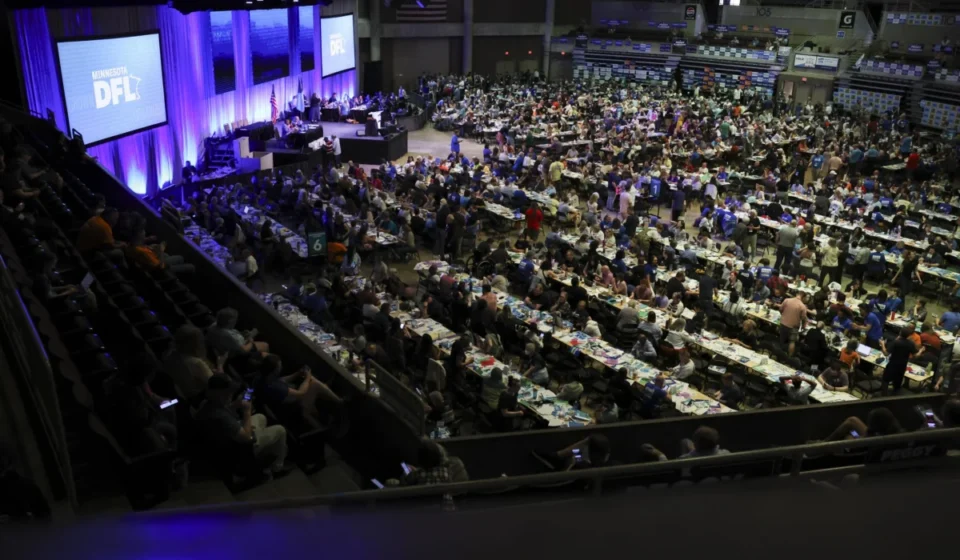
ROCHESTER, MN – May 30, 2026 – The Democratic-Farmer-Labor (DFL) state convention, held this past weekend at the Mayo Convention Center in Rochester, culminated in a decisive endorsement for Senator Amy Klobuchar as the party’s gubernatorial candidate. Her victory, however, was preceded by an unexpectedly spirited challenge from 26-year-old progressive newcomer Kobey Layne, whose impassioned plea for policy-driven politics captivated many delegates and injected a much-needed jolt of energy into an otherwise largely predetermined gathering.
In a convention notably devoid of major suspense regarding the U.S. Senate endorsement, following Congresswoman Angie Craig’s decision to forgo the party’s blessing for the open seat, Layne’s "quixotic quest" became the weekend’s most riveting subplot. Meanwhile, Lieutenant Governor Peggy Flanagan sailed to a unanimous endorsement for the U.S. Senate, positioning her to potentially become the first Native American woman elected to that body.
A New Voice Resonates: Layne’s Challenge to the Establishment
The Friday evening session saw a rare and compelling moment when Kobey Layne, a young activist with a Master’s in Public Policy from the University of Minnesota, garnered enough delegate support to earn a coveted 15-minute speech. Her goal: to convince the party faithful that she, not the seasoned incumbent Amy Klobuchar, should receive the DFL endorsement for governor.
"Wonderful, it moved me, I felt it," remarked Laura Turman, a delegate from the DFL state convention, reflecting the sentiment of many who witnessed Layne’s address. Unburdened by the typical political caution, Layne spoke with "jittery energy and concrete goals," a refreshing contrast to the often-measured rhetoric of veteran politicians. She laid out a progressive platform, advocating for a bonding bill to integrate Minnesota’s clean energy goals and a bold proposal to cap rent increases across the state at 3%.
Her core message, delivered while "bobbing left to right and back on the podium, fingers pointing to her eyes and ears," resonated deeply: "Politics is about policy, not personalities, not platitudes." This line was met with "raucous applause," highlighting a hunger among some delegates for a more substantive, less performative political discourse. Layne’s background, which includes a prior role as a legislative assistant for moderate Republican Jim Abeler and a personal transition to identifying as female after previously as a gay man, further underscored her unique perspective and journey into progressive politics.
Despite the enthusiasm for Layne’s vision, the weight of political experience and electability ultimately swayed the majority. Senator Klobuchar, a figure who has represented Minnesota in the U.S. Senate for two decades, delivered a powerful counter-argument that elicited an even louder ovation: "When you look at my track record, when I lead the ticket, we win." Her assertion underscored the pragmatic considerations that often guide party endorsements, especially in high-stakes gubernatorial races.

Rochester’s Convention Chronicles: From Strobe Lights to Digital Delays
The Mayo Convention Center, typically a hub for medical innovation, transformed into a microcosm of Minnesota’s political pulse. While the broader political landscape for the weekend lacked the drama of the GOP convention in Duluth, which saw Kendall Qualls secure the Republican gubernatorial endorsement, the DFL gathering was not without its memorable moments.
The initial proceedings were marked by the usual convention fare: procedural motions, delegate wrangling, and a noticeable lack of diverse food options, leading to some audible "grousing" among attendees. However, the atmosphere shifted dramatically with the nomination of Layne and the subsequent, albeit delayed, speeches from both candidates.
A peculiar hiccup arose from the Klobuchar campaign’s seemingly innocuous decision to distribute strobe lights to delegates. What was likely intended as a vibrant show of support quickly devolved into a point of contention. "The strobe lights need to be turned off," warned a visibly weary state Sen. Scott Dibble of Minneapolis, reiterating, "No strobe lights." But conventioneers, some citing legitimate health concerns for individuals with photosensitive epilepsy, took to the microphone to demand more stringent action, advocating for the confiscation of the glowing wands. This unexpected procedural tangent underscored the complex dynamics of managing a large political assembly and the diverse needs of its participants.
When Layne finally took the stage, her "high-velocity remarks" transcended economic policy, delving into critical cultural issues. She passionately argued for a more substantive diversity, equity, and inclusion statement for the DFL, declaring, "Just because we are not the Republican Party does not mean that our anti-racism work is done." This call for internal introspection and continued progress resonated with a segment of the party eager to push beyond established boundaries.
In contrast, Klobuchar leveraged her extensive political career, emphasizing her broad appeal across the state. She confidently asserted, "I think there are some counties where I have met nearly literally every person," a testament to her tireless campaigning and deep roots in Minnesota politics. This narrative of proven electability and widespread familiarity served as a powerful counterpoint to Layne’s fresh, but untested, appeal.
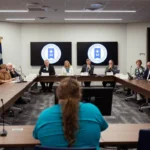
The final moments of the endorsement process were not without their own modern-day challenges. As delegates prepared to cast their votes electronically, many found themselves in a scene reminiscent of "your parents trying to use a QR code," converging around a folding table designated for IT support. Reminders to hit the crucial "submit" button after voting became a recurring mantra, highlighting the occasional technological hurdles even in an increasingly digital political landscape.

After 1 a.m., the results were announced: Klobuchar had "sailed to the endorsement" with a commanding 68% of the vote, compared to Layne’s respectable 28%. A small but significant 4% opted for "no endorsement," reflecting perhaps a desire for further debate or alternative options.
The Pragmatic Choice: Electability and Competence Prevail
Despite Layne’s loss, her performance left a lasting impression. "I really appreciated how specific she was at the things that she wanted to do," noted Andrew Ulasich, a delegate from South Minneapolis. This sentiment was echoed by many, suggesting a genuine admiration for her policy-focused approach and clear vision.
However, the ultimate decision for many delegates hinged on Klobuchar’s established track record of electability and perceived competence. Several delegates explicitly mentioned that Klobuchar’s leadership promised a "tighter ship" than that of outgoing Governor Tim Walz, whose administration had faced scrutiny over "fraud committed by social service providers." This concern about governance and accountability evidently played a significant role in delegates’ choices, reinforcing the pragmatic desire for a leader capable of effective administration.
When asked about potentially incorporating some of Layne’s progressive prescriptions into her platform, Klobuchar remained open-ended but confident. At a media availability, she stated, "I have so many ideas," referencing her plans for housing, childcare, and healthcare. "So, stay tuned," Klobuchar added, "We’re going to release a lot more ideas." This indicates a strategic approach to policy development, likely balancing established priorities with an openness to integrating popular progressive proposals as the campaign progresses.
The Shifting Sands of the U.S. Senate Race
While the gubernatorial contest provided unexpected drama, the U.S. Senate race evolved into a more straightforward affair following Congresswoman Angie Craig’s decision to withdraw from seeking the DFL endorsement for the open seat. This move significantly altered the dynamics, paving the way for Lieutenant Governor Peggy Flanagan’s unencumbered path to endorsement.
Don Slaten, a long-time DFL convention attendee from Hastings who has known Craig for 15 years, expressed a common sentiment of consternation regarding her political future. "I wanted her to stay in the House, because that will be a hard seat to keep," Slaten stated, referencing Craig’s current U.S. House seat. His concern reflects the strategic dilemma faced by the DFL: the potential to lose a hard-won House seat if Craig pursues a statewide office without party unity. Indeed, the party has already endorsed Matt Little, a former state senator, to replace Craig in the U.S. House, signaling their attempt to solidify the district in her absence.

Despite the strategic complexities, there was an underlying current of admiration for Craig among some delegates, with a few indicating they would "happily door-knock for Craig if she defeated Lt. Gov. Peggy Flanagan in the primary." This highlights the challenge of balancing party endorsement with individual candidate popularity and the potential for primary battles to divide resources and energy.
Saturday afternoon, however, became a "coronation party for Flanagan." Her endorsement was a moment of historical significance, as she stands poised to become the first Native American woman elected to the U.S. Senate. When asked about the importance of the party endorsement for primary voters, Flanagan emphasized the grassroots foundation it represents. "The delegates who are here today, they represent the nearly 40,000 Minnesotans who went to the caucus on Feb. 3," she asserted, connecting the convention to the vital precinct caucuses held during the height of "Operation Metro Surge." She eloquently described these delegates as "the heart of our party," reinforcing the democratic process and the collective will they embody.
The Enduring ‘F’ in DFL: Rural Minnesota’s Economic Plight
Throughout the convention, a recurring refrain punctuated speeches and casual conversations: "Remember, the F in DFL stands for farmer." While at times appearing as "reflexive pandering to rural Minnesota," especially as the state’s population continues to shift towards its metro areas, this adage carries significant weight amidst current economic challenges.
Mary Sullivan, a member of the DFL’s rural caucus who has presided over a livestock farm with her husband near Redwood Falls since 1980, painted a stark picture of the economic hardships facing Minnesota’s agricultural sector. She highlighted how "tariffs and the war in Iran have led to skyrocketing costs for fertilizer and fuel for tractors, among other price hikes." Sullivan grimly noted that her current economic situation rivals the dire conditions experienced during the infamous "farm crisis of the mid-1980s." This firsthand account underscores the very real, tangible struggles faced by a demographic often considered crucial to the DFL’s identity.
This crisis, as the saying goes, can also present an opportunity for Democrats. Don Slaten, from Hastings, observed that while many voters in his area are "conservative Catholics driven by their views on guns, gay people and abortion," economic realities might shift their political allegiances. "If what Trump has done to farmers doesn’t get them voting DFL, I don’t know what can," Slaten mused, articulating the hope that economic self-interest could transcend traditional ideological divides, particularly in rural communities heavily impacted by global trade policies.
Implications: Unity, Progress, and the Path Ahead
The DFL convention in Rochester served as a crucial bellwether for the party’s direction as it heads into a pivotal election cycle. Klobuchar’s decisive gubernatorial endorsement signals a party leaning towards experienced leadership and perceived electability, a pragmatic choice in a competitive political landscape. However, the compelling challenge from Kobey Layne illustrates the vibrant, growing progressive wing within the DFL, eager for bolder policy initiatives and a more explicit commitment to social justice. Her ability to garner significant delegate support, despite lacking establishment backing, demonstrates a powerful desire for new voices and substantive change.

For Peggy Flanagan, her clear path to the U.S. Senate endorsement marks a significant moment for representation and underscores the party’s commitment to diversity at its highest levels. Her campaign will undoubtedly highlight her historic potential and her deep connection to the state’s diverse communities.
The discussions surrounding Angie Craig’s decision and the economic plight of rural farmers reveal the multifaceted challenges facing the DFL. Balancing the aspirations of individual candidates with broader party strategy, and addressing the tangible economic concerns of rural voters while championing progressive urban policies, will be critical for maintaining unity and achieving electoral success.
As the convention closed, with delegates dispersing from the Mayo Convention Center, the DFL emerged with its endorsed candidates, but also with a renewed understanding of the diverse energies and priorities within its ranks. The stage is now set for the primaries and the general election, where the DFL will test its ability to unite behind its chosen leaders, integrate emerging progressive ideals, and appeal to a broad spectrum of Minnesota voters in the pursuit of power. The journey promises to be dynamic, reflecting the complex and evolving political landscape of the state.