


















A Legacy Reimagined: How Minnesota’s $2.3 Billion School Fund Could Transform Education Without Raising Taxes

In the high-stakes world of public education finance, where debates over property tax levies and school board referendums often divide communities, a rare bipartisan consensus has emerged in Minnesota. This fall, voters will face a ballot question that promises a financial boost for public schools—without increasing a single cent in taxpayer burden.
At the heart of this proposal is the Permanent School Fund (PSF), a financial reservoir that dates back to the very dawn of Minnesota’s statehood. While the fund has steadily grown over more than a century and a half to reach a valuation of $2.3 billion as of 2025, current constitutional constraints have effectively kept the vast majority of those assets locked away. Now, state lawmakers are asking the public to amend the Minnesota Constitution to unlock these resources, potentially providing a much-needed infusion of cash into classrooms across the state.
The Genesis of a State Treasure: A Historical Chronology
The story of the Permanent School Fund is as old as Minnesota itself. When the state was admitted to the Union in 1858, the federal government granted vast tracts of public land to the new state. These "school trust lands," encompassing millions of acres—primarily in the timber-rich regions of northern Minnesota—were designated specifically to support the future of public education.
The historical timeline of this fund is a reflection of Minnesota’s economic evolution:
- 1858 (The Foundation): Upon statehood, the federal government mandates that specific acreage in every township be set aside for the benefit of public schools. This land becomes the bedrock of the Permanent School Fund.
- Late 19th and 20th Centuries (Resource Extraction): Throughout the following decades, the state derives revenue from these lands through timber harvesting, mining leases, and land sales. This revenue is funneled into the PSF, which is managed as an endowment.
- The Modern Era (Investment Growth): In more recent history, the fund’s growth has been bolstered by savvy investment strategies. By 2025, the fund reached a staggering $2.3 billion valuation.
- 2024 (The Task Force Review): A state-appointed task force conducts a rigorous review of the fund’s performance. The findings are striking: the fund has seen an average annual investment return of 8% over the last decade, yet current constitutional law restricts the annual distribution to schools to a mere 2.5%.
- 2026 (The Legislative Pivot): Recognizing the widening gap between the fund’s performance and its actual contribution to students, the Legislature moves to place a constitutional amendment on the ballot, aiming to raise the distribution cap to approximately 4.5%.
Supporting Data: Why the Cap Matters
The argument for increasing the distribution is rooted in straightforward arithmetic. Currently, the PSF provides annual disbursements to every public school district in the state. However, because the withdrawal rate is capped by a constitutional provision established in a different economic era, the fund is essentially growing faster than it is helping students.
Data from the Minnesota Department of Education highlights the current impact of these distributions. Larger districts, such as Minneapolis Public Schools, received nearly $2 million in 2025. For smaller, rural districts, the disbursements are often in the hundreds of thousands—a critical sum in an era of tightening budgets.
However, the 2.5% cap limits the potential impact. If the constitutional amendment passes, the distribution rate could rise to 4.5%. This shift is not merely academic; it represents a significant increase in per-pupil funding. According to Sen. Mary Kunesh (DFL-New Brighton), a former educator who championed the Senate bill, this change is designed to provide immediate relief without the political volatility of a tax hike.
"I think everybody recognizes the need for additional funding for public schools," Kunesh noted during the legislative session. "This is one way to do it without putting an additional burden on our taxpayers."
Official Perspectives: A Rare Bipartisan Accord
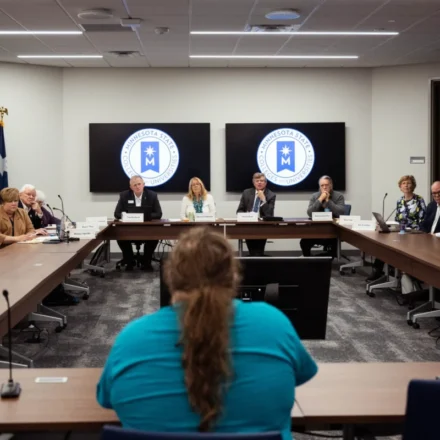
Perhaps the most remarkable aspect of the proposed amendment is the unity it has fostered at the Capitol. In an era of deep political polarization, the initiative is backed by a coalition of Democrats and Republicans who argue that the fund is a "sleeping giant" that should be working harder for Minnesota’s children.
Rep. Spencer Igo (R-Wabana Township), the House author of the companion bill, has been one of the proposal’s most vocal advocates. For Igo, the issue is personal; many of the school trust lands that feed the fund are located in his own district. He views the amendment as a fulfillment of a promise made by the state’s founders.
"Republicans and Democrats alike will be linking arms in saying, ‘Vote for this,’" Igo said. "The Legislature believes in it, and they believe in it in a bipartisan way. I think it’s the kind of policy Minnesotans want to see."

Igo is quick to address concerns about the long-term sustainability of the fund. He emphasizes that the task force data proves that the fund can sustain a 4.5% distribution rate without depleting the principal. By allowing the fund to grow at its current pace while distributing a larger share of the interest, the state can honor the original intent of the trust while adapting to modern educational needs.
The Practical Implications for Districts
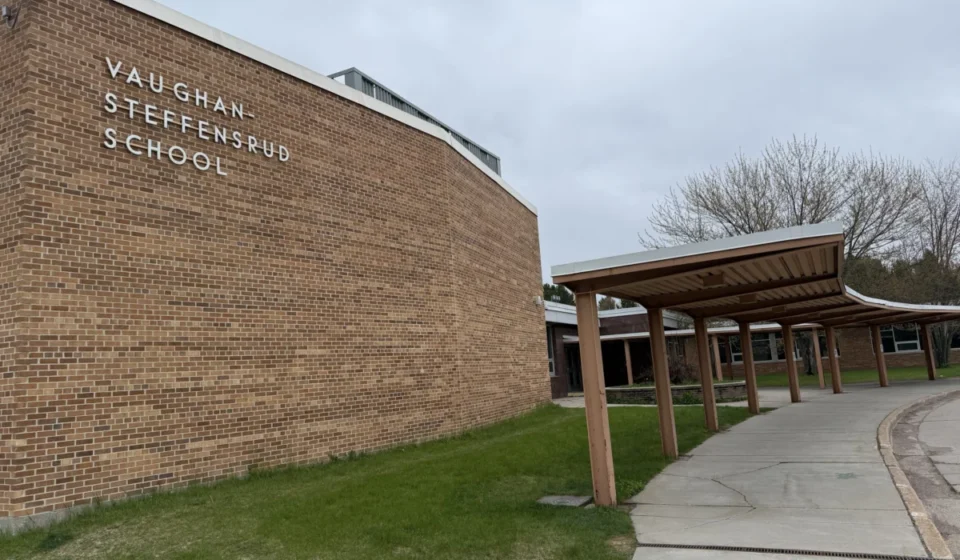
For local school districts, the implications of this change are tangible. As districts across Minnesota face rising costs and, in some cases, the closure of aging facilities, every dollar counts. Fred Nolan, interim executive director of the Minnesota Rural Education Association, notes that the current climate of school finance is exceptionally challenging.
"Levies and referendums have been tough sells in Greater Minnesota districts," Nolan explained. "Any bit of extra funding can relieve pressure."
The potential impact of the amendment, if passed, would be distributed across all districts, but the effect would be felt most acutely in how administrators manage their yearly budgets. A district with 2,000 students, for example, might see an increase from $65 per pupil to $95 per pupil—a total boost of $60,000.
"It might save a teacher; it might save a program," Sen. Kunesh said. "The nice thing about these funds is that those schools can choose to use those dollars in any way."
For small, rural schools that are often forced to consolidate classes or reduce staff due to budget crunches, the funds could be the difference between maintaining a local curriculum and having to cut essential services. Whether it is purchasing updated software, investing in teacher professional development, or providing necessary classroom materials, the flexibility of these funds provides a vital lifeline.
Looking Ahead: The Path to November
Despite the bipartisan support in the Legislature, the amendment faces a significant hurdle: the ballot box. Under Minnesota law, constitutional amendments require a majority of "yes" votes from all ballots cast in the election. Crucially, leaving the section blank is equivalent to a "no" vote. This means that proponents face a massive challenge in voter education.
"We have to ensure that every Minnesotan understands what this is," Igo noted. "It is a rare opportunity to invest in our future without reaching into the taxpayer’s wallet."
The state has a long history of utilizing constitutional amendments—voters have weighed in on 213 such proposals since statehood, with 120 passing. Proponents are confident that once the electorate understands the nature of the Permanent School Fund—that it is a legacy of the state’s natural resources being repurposed for human capital—they will support the change.
As the summer gives way to the fall campaign season, the debate will likely center on the vision of the state’s founders. "My dream for the school trust fund is one day we’ll see that be giving $300-$400 per pupil across this state," Igo said. "Our forefathers that founded our state can be smiling knowing that we actually accomplished the goal of funding public education."
Whether that dream becomes a reality now rests in the hands of the voters. As Minnesota prepares for the upcoming election, the Permanent School Fund stands as a testament to the state’s enduring commitment to its children—a commitment that, if the amendment passes, will be stronger, more efficient, and more impactful than at any point in the state’s history.