






















































Crisis in the Classroom: Minnesota State’s Controversial Plan to Rescue Foundering Universities

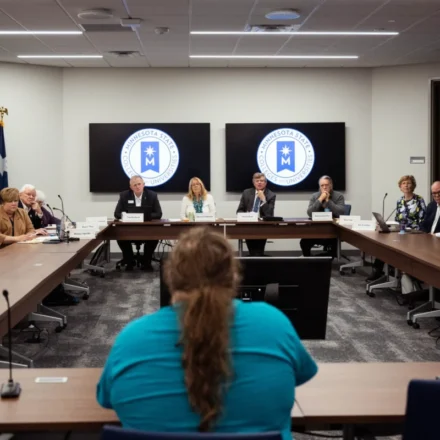
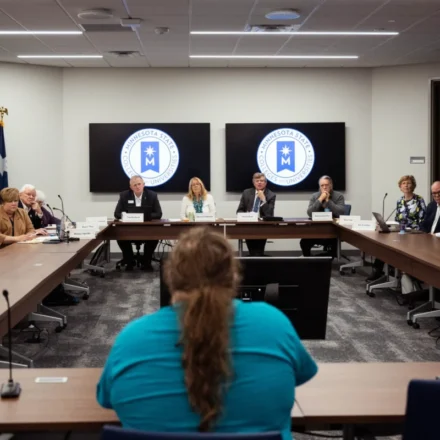
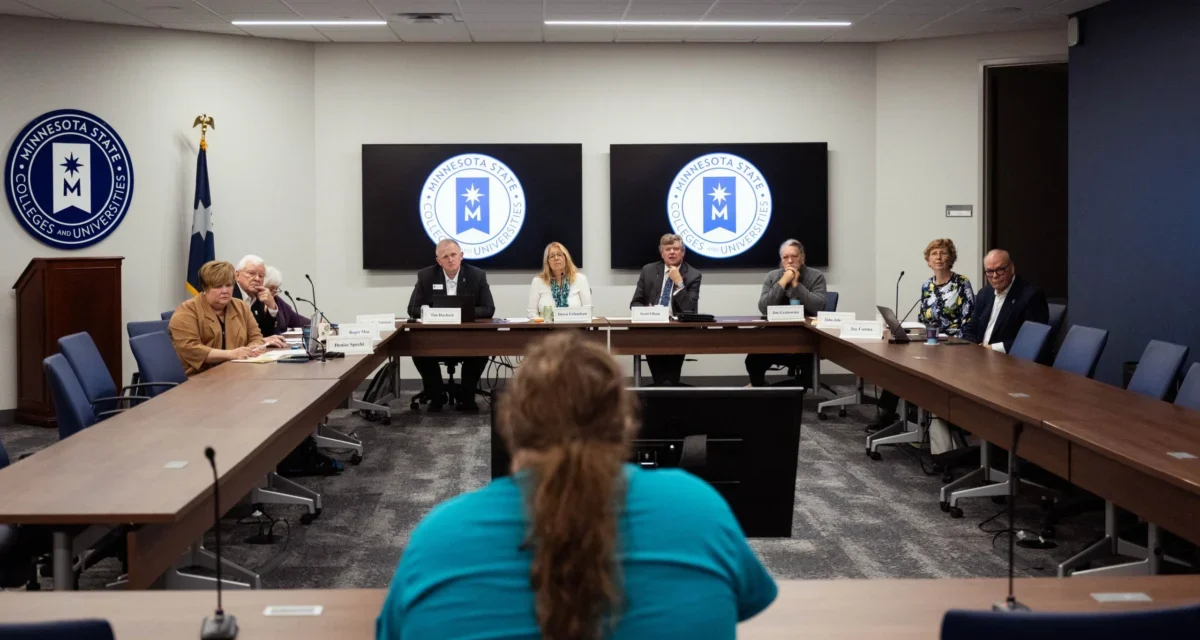
The Minnesota State system, the backbone of higher education for hundreds of thousands of students across the North Star State, is facing its most significant existential challenge in its three-decade history. As it grapples with a $31.5 million systemwide deficit—a figure projected to triple by 2028—the Board of Trustees is poised to vote on a controversial, "unprecedented" financial rescue package.
The proposal, scheduled for a final vote on October 14, seeks to reallocate up to $25 million annually for the next four years from healthy or stable institutions to bail out two of the system’s most financially beleaguered universities: St. Cloud State and Bemidji State. The move has ignited a firestorm of protest from faculty, students, and campus administrators, who argue that the plan acts as a "temporary bandage" that will only serve to cannibalize the budgets of the two-year colleges that form the bedrock of the state’s workforce pipeline.
The Core Conflict: A System at a Crossroads
The proposal represents a desperate attempt to stop the bleeding at institutions that have reached a critical juncture. Under the current plan, St. Cloud State University would receive $10 million, while Bemidji State University would be allocated $4.8 million. These funds are intended to stave off immediate insolvency as both institutions exhaust their cash reserves despite years of aggressive cost-cutting measures.

Bill Maki, the system’s vice chancellor for facilities and finance, has characterized the move as a necessary "stopgap." According to Maki, while the plan is far from perfect, the sheer scale of the crisis at these specific institutions necessitates an emergency response. "Action needs to be taken," Maki stated. "This is not by any means a perfect solution. It is temporary."
However, the opposition is fierce. Critics argue that by siphoning funds from smaller, community-focused colleges, the system is essentially punishing institutions that have maintained fiscal discipline and served their student populations effectively.
Chronology: A Decade of Warning Signs Ignored
The current financial turmoil is not a sudden emergence but the culmination of a decade of structural decay.

- 2016: An internal report warned in stark terms that the Minnesota State system faced "a future that is financially unsustainable" due to stagnant state funding, declining enrollment, and a massive surplus of aging buildings. The report urged immediate action, noting that waiting until 2025 would only compound the damage.
- 2005–2015: During this period, the system attempted a more modest redistribution of $5.5 million to assist struggling schools. Crucially, this funding did not come from the operating budgets of peer institutions, a distinction that makes the current proposal uniquely contentious.
- 2023–2024: St. Cloud State University, once a thriving hub for central Minnesota, saw its enrollment drop significantly. Having already slashed its workforce by 40% over 15 years and suspended nearly 200 academic programs, the university found its reserve fund—once worth $19 million—completely depleted.
- June 2026: The Board of Trustees first considered the current redistribution proposal. The outcry from LeadMN, the student organization representing thousands of learners, was immediate and scathing.
- September 2026: Chancellor Scott Olson announced a systemwide redesign, signaling that the current financial crisis would likely force campus mergers, administrative consolidation, and potential closures.
- October 2026: A town hall at Century College highlighted the growing divide between system leadership and faculty, with some professors openly questioning if it is time to shutter struggling universities rather than keep them on life support.
Supporting Data: The Arithmetic of Austerity
The numbers behind the proposal reveal the gravity of the situation. For the 2028 fiscal year, the contribution model requires two-year colleges to contribute three times as much as their four-year counterparts. Colleges will be asked to chip in between $121,000 and $1.8 million each, depending on their reserve levels.
St. Cloud State has lost roughly 5,400 students over the last two decades. While they currently enroll approximately 10,600 students, the tuition revenue is insufficient to cover the overhead of a large university. Bemidji State, while smaller, faces similar pressures: despite growing enrollment, the rising costs of faculty salaries and infrastructure maintenance have created what spokesperson Andy Bartlett calls "enduring deficits."
The broader system deficit is attributed to a "perfect storm" of factors:

- Declining Enrollment: Demographic shifts have resulted in fewer high school graduates entering the state system.
- Infrastructure Bloat: A surplus of aging buildings that are expensive to heat, cool, and maintain.
- Funding Constraints: A reluctance to pass costs on to students through tuition hikes, coupled with insufficient state support.
- Inflation: Rising operational costs that have outpaced the growth of state appropriations.
Official Responses and Internal Discord
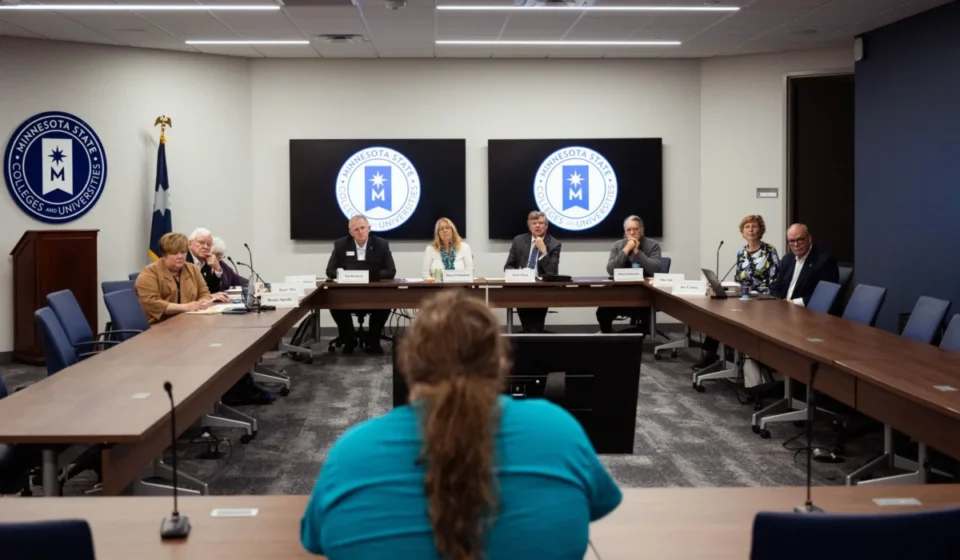
The atmosphere at board meetings and town halls has been increasingly tense. Chancellor Scott Olson has attempted to frame the situation as a moral imperative. When pressed by a professor at a recent town hall about the potential closure of St. Cloud State, Olson defended the institution’s value.
"Given their scale, given what they mean to the economy of central Minnesota, I guess I believe it’s worth another try at saving them," Olson said. "Not everybody agrees with that."
Faculty leaders remain unconvinced. Kevin Lindstrom, president of the Minnesota State College Faculty, emphasized that two-year colleges often operate with very thin margins. "Those places work really hard to stay afloat and to serve their communities," Lindstrom said. "They don’t have a margin for error, and this will impact them disproportionately."

Lori Kloos, president of St. Cloud Technical and Community College, offered a sobering assessment during the June board meeting: "A 5% reduction might not sound like a lot, but when 80% to 85% of our operating budgets are salary, there’s an impact."
Implications: The Long-Term Fallout
The decision to be made on October 14 is merely the first in a series of difficult moves. The Board of Trustees is already considering an additional $24.3 million extraction from all institutions to fund the demolition of excess facilities. This move, while necessary for long-term sustainability, will likely cripple technical programs—such as welding and automotive repair—that require significant investment in heavy equipment.
The broader implication is that the "Minnesota State" model, which has long prided itself on providing accessible, localized education, is undergoing a painful, forced evolution. The closure of the Minnesota State Community and Technical College’s Detroit Lakes campus is likely a harbinger of things to come. By consolidating services and potentially closing campuses, the system is attempting to "right-size" itself for a future with fewer students and less public funding.

Chancellor Olson has admitted that the 2016 warnings were ignored, noting, "It should have been dealt with. It wasn’t. Now we have to deal with it."
As the board prepares to vote, the stakeholders are left wondering if the "temporary" measures of today will lead to a more sustainable system tomorrow, or if the current strategy will simply spread the financial contagion to the institutions currently serving as the system’s lifeblood. The upcoming legislative session will be critical; the system is expected to request $50 million in total funding—$25 million for the bailouts and $25 million for demolition—a request that will likely face intense scrutiny from lawmakers wary of pouring money into a system that has struggled to implement structural change for over a decade.
For the students, faculty, and staff of the 33 institutions within the system, the next few months will be a period of profound uncertainty. The promise of an affordable, localized education is being tested against the cold reality of a balance sheet that no longer adds up. Whether the solution lies in consolidation, increased state support, or a radical rethink of the system’s mission, one thing is certain: the era of business as usual at Minnesota State has officially come to an end.