























































South Dakota Secretary of State Breaks Ranks, Endorses Democrat in Heated Election Integrity Battle

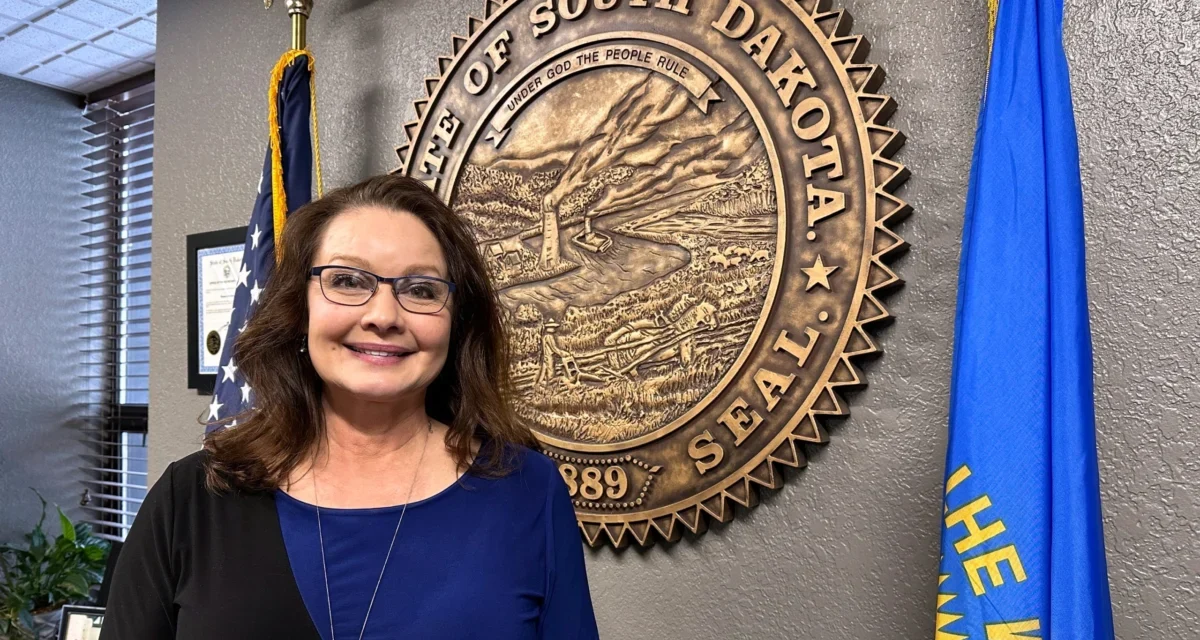
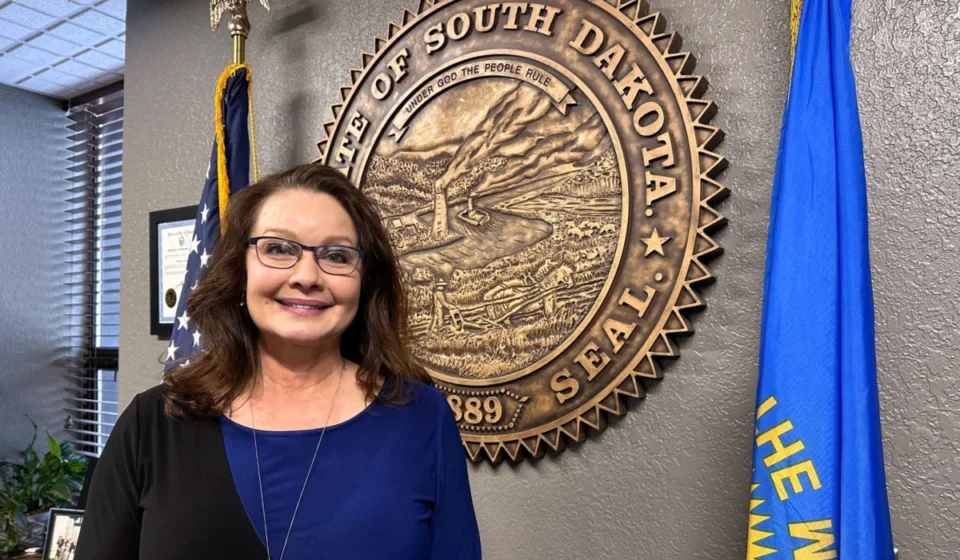
SIOUX FALLS, S.D. — In an extraordinary and politically seismic move, South Dakota’s sitting Republican Secretary of State, Monae Johnson, has publicly endorsed her Democratic challenger, Terrence Davis, for the very office she currently holds. Johnson, who lost her party’s nomination in June, cited profound concerns over the "integrity, stability, and professionalism" of the vital election administration post, directly challenging the agenda of her own party’s chosen candidate, Heather Baxter. This unprecedented endorsement sends shockwaves through the deeply conservative state, highlighting a growing fissure within the Republican Party over the foundational principles of election administration.
The decision by a high-ranking Republican official to abandon party loyalty in favor of an opponent underscores the escalating national debate surrounding election security, voter access, and the persistent influence of former President Donald Trump’s unsubstantiated claims of widespread electoral fraud. Johnson’s endorsement positions the race for South Dakota’s chief election officer as a critical battleground, not just between parties, but for the very trust in democratic processes.
A Stark Choice: Integrity vs. Ideology
Monae Johnson, a Republican who previously campaigned on "election integrity" themes herself, articulated her dramatic shift in a column published over the weekend in the conservative blog, South Dakota War College. "I am a Republican. Terrence is a Democrat. I understand that this decision will disappoint some people in my party and anger others," Johnson wrote, acknowledging the political fallout of her choice. Her statement emphasized Davis’s qualifications, including his background in law enforcement as a state trooper and his educational expertise in law and policy, presenting him as a candidate dedicated to upholding the nonpartisan duties of the office.
This endorsement directly contradicts the Republican Party’s choice, state lawmaker Heather Baxter, whose campaign has closely aligned with former President Trump’s rhetoric regarding elections. Baxter’s campaign website notably expressed concerns about "inaccurate voter rolls, mail in ballots, and voting machine issues." Crucially, earlier versions of her online platform explicitly advocated for the elimination of voting machines in favor of hand-counting ballots—a method widely discredited by election experts as inefficient, prone to error, and frequently promoted by those propagating conspiracy theories about rigged elections. While Baxter has since nuanced her public stance on hand-counting, the core tenets of her platform resonate with the broader national movement challenging the legitimacy of modern election technology.
Chronology of a Political Schism
The seeds of this political drama were sown in June when Monae Johnson failed to secure the Republican nomination for her re-election bid at the state GOP convention. Despite being the incumbent, Johnson was unseated by Heather Baxter, a freshman state legislator who successfully tapped into a vein of conservative activism fueled by skepticism surrounding the 2020 presidential election.
Baxter’s campaign gained traction by embracing a platform that mirrored many of Trump’s grievances. Her legislative efforts earlier this year included sponsoring a bill explicitly designed to prohibit the use of automatic tabulating systems in South Dakota. Although this legislation ultimately failed, it signaled a clear intent to fundamentally alter the state’s election procedures in line with the "election integrity" movement’s more extreme demands. Baxter’s initial website language, advocating for "hand-counted paper ballots, no more voting machines," further solidified her image as a proponent of significant, and potentially disruptive, changes to the electoral process.
Johnson’s endorsement of Davis, a Democrat, represents a remarkable turnaround for the outgoing Secretary of State herself. When Johnson first campaigned for the position in 2022, she notably declined to affirm the legitimacy of President Joe Biden’s victory in the 2020 election, instead focusing her messaging on the need for "election integrity"—a phrase that, in the post-2020 landscape, has often become a euphemism for skepticism and challenges to established electoral outcomes, frequently invoked by conspiracy theorists. Her current position, therefore, marks a significant evolution, prioritizing the perceived stability and professionalism of the office over her previous alignment with these "election integrity" narratives.
Johnson’s tenure has not been without its own controversies. Last year, her office faced criticism after inadvertently releasing sensitive voter registration data, which included information on whether individuals were receiving government assistance such as food aid. Furthermore, Johnson was issued a subpoena after failing to appear before a legislative committee to address questions regarding a contract her office had awarded to an electronic poll book company, drawing the ire of Republican lawmakers. These past issues, according to Jim Eschenbaum, chair of the South Dakota Republican Party, contributed to delegates souring on Johnson, explaining her loss at the convention. "An involved citizenry just won’t stand for that from their elected officials, period," Eschenbaum stated, referring to Johnson’s conduct.
Supporting Data: The National Landscape of Election Challenges
The South Dakota Secretary of State race is not an isolated incident but rather a microcosm of a broader national trend. Across the United States, Republican candidates aligned with former President Trump’s views on voting and elections have been highly visible in races for statewide offices responsible for election administration. In several states, these candidates, often echoing Trump’s unproven assertions of fraud, have successfully won their primaries, setting the stage for high-stakes general election contests that will profoundly impact the future of American elections.
The core of the dispute often revolves around the mechanics of voting, particularly the use of electronic tabulating machines versus hand-counting ballots. While advocates of hand-counting claim it is a more secure method, election experts and studies have consistently demonstrated that hand-counting ballots is significantly more time-consuming and far more prone to human error than machine tabulation. The sheer volume of ballots in most modern elections makes manual counting impractical, opening avenues for miscounts, subjective interpretations, and protracted delays that could undermine public confidence rather than bolster it. The Associated Press has extensively documented these challenges, highlighting instances where manual counts have introduced rather than resolved inconsistencies.
Former President Trump’s sustained campaign to undermine trust in the 2020 election results has had a profound and lasting impact on the political discourse surrounding elections. Six years after his defeat, he continues to propagate false claims of widespread voting fraud, despite overwhelming evidence to the contrary from federal and state election officials, independent audits, and numerous court rulings. His efforts have extended beyond rhetoric, with attempts to federalize election operations—powers traditionally reserved for states and, in some cases, Congress. These attempts have included proposals to place the U.S. Postal Service at the center of determining mail ballot eligibility, imposing a proof-of-citizenship requirement for voter registration in this year’s midterms, and pushing a narrative that non-citizens are "marring" U.S. elections—all initiatives lacking constitutional or practical merit.
The South Dakota Secretary of State’s office, like its counterparts nationwide, plays a pivotal role in maintaining the integrity of elections. Beyond merely certifying results, the office is responsible for voter registration, overseeing election procedures, ensuring compliance with state and federal election laws, and often maintaining business records and other official state documents. The nonpartisan execution of these duties is paramount to a functioning democracy, making the qualifications and philosophical approach of the individual holding this office critically important.
Official Responses and Campaign Dynamics
Following Johnson’s bombshell endorsement, the candidates quickly responded.
Secretary Monae Johnson declined to offer further comment beyond her published statement, allowing her written words to stand as her definitive position. Her column explicitly stated, "The integrity, stability, and professionalism of this office is at stake," framing her decision as a matter of principle rather than partisan preference. She lauded Terrence Davis, saying he "brings law enforcement experience from his years as a state trooper, as well as an educational background in law and policy," suggesting these qualities are essential for the Secretary of State.
Heather Baxter downplayed the significance of Johnson’s endorsement, framing it as an expected reaction from an incumbent who preferred the status quo. "It’s not surprising that she’d rather back someone who won’t change what she has done," Baxter stated, implying Johnson’s motivation was to preserve her own legacy rather than genuinely protect election integrity. Baxter also sought to clarify her position on voting machines, stating that she altered the wording on her website because she recognizes she does not unilaterally possess the power to change how ballots are tallied. She now asserts that she trusts county auditors "to do what’s best for their counties," a subtle but notable shift from her earlier, more absolute stance on hand-counting. Despite this adjustment, Baxter maintained her alignment with Trump’s agenda on voting and elections, describing it as "generally a reinforcement of current election laws."
Terrence Davis, the Democratic beneficiary of Johnson’s endorsement, emphasized the nonpartisan nature of the Secretary of State’s office. He underscored its mission to serve all residents "honestly and fairly," a message designed to appeal to voters across the political spectrum who prioritize competence and impartiality in election administration. Davis’s campaign will undoubtedly leverage Johnson’s endorsement to highlight his perceived commitment to these principles.
Implications: A Battle for Trust in Democracy
The South Dakota Secretary of State race now transcends a typical partisan contest. It has become a referendum on the fundamental nature of election administration and the enduring impact of election denialism within a major political party.
The immediate impact of Johnson’s endorsement in a state as overwhelmingly Republican as South Dakota remains uncertain. No Democrat has held statewide office in South Dakota since 2015, and the state has consistently voted overwhelmingly for Donald Trump in recent presidential elections. This deep-red political landscape presents a formidable challenge for Davis, even with the backing of a prominent Republican. However, the unusual nature of Johnson’s move—a sitting Republican official breaking ranks to explicitly endorse a Democrat based on principles of institutional integrity—could resonate with moderate voters and independent-minded Republicans who are weary of the constant questioning of election results. It lends a powerful, bipartisan credibility to Davis’s campaign that would otherwise be difficult to achieve.
More broadly, this race symbolizes a critical juncture for American democracy. The debate over election integrity has been co-opted and distorted by figures who spread disinformation, creating an environment where legitimate concerns about election security are conflated with baseless conspiracy theories. When a chief election officer from the party that has most actively pushed these narratives feels compelled to endorse across the aisle, it signals a profound alarm within the system itself. It suggests that for some Republicans, the pursuit of "election integrity" has veered into territory that threatens the very "stability and professionalism" of the institutions they are sworn to uphold.
The outcome in South Dakota will serve as another barometer for the strength of election denialism in state-level races. Should Baxter win, it would empower those who advocate for radical changes to election administration, potentially inspiring similar efforts in other states. Conversely, a victory for Davis, particularly with Johnson’s backing, could be interpreted as a rejection of extreme election rhetoric and a reaffirmation of established, verifiable election processes.
Ultimately, this race forces voters to confront a crucial question: What qualities are most essential in the officials responsible for safeguarding their ballots and their democracy? Is it unwavering party loyalty, even when it embraces unproven theories, or is it a commitment to established protocols, professional expertise, and the nonpartisan integrity of the office, regardless of party affiliation? South Dakota’s decision will offer a glimpse into the ongoing struggle for the soul of election administration in America.