




































The Art of Belonging: How Andy DuCett’s "Home(town)" Reimagines the Civic Soul of Winona

At Rocco’s Pub and Pizza in Goodview, Minnesota, a conspicuous void currently haunts the wall near the jukebox. A large, rectangular patch of discolored white paint serves as a ghostly silhouette where a beloved piece of local history once resided. The missing work is “Coming In” (1972), a serene, evocative landscape by the late artist Ron Hunt, depicting ducks drifting over a marshy riverbed. For decades, this painting was the quiet heartbeat of the restaurant, a gift from Hunt to Rocco’s founder, Tom Barth.
Today, however, that painting—along with two tables and three booth seats from the establishment—resides within the climate-controlled, white-walled sanctuary of the Minnesota Marine Art Museum (MMAM) in nearby Winona. This temporary "theft" is not a crime, but a cornerstone of a radical new exhibition titled "Home(town)," conceptualized by Minneapolis-based artist Andy DuCett. By transplanting pieces of local institutions into the gallery, DuCett has ignited a conversation about the intersection of memory, civic identity, and the institutional power of the museum.
The Chronology of a Civic Transformation
The narrative of "Home(town)" began long before the exhibition opened its doors. DuCett, a Winona native, has spent years observing the shifting cultural landscape of his hometown. His process, which blends traditional installation art with a healthy dose of meta-commentary, was already in development when he began collaborating with the MMAM.
The project gained momentum as DuCett sought to "codify" his investigation into the region’s past, present, and future. By mid-2026, the collaboration between the museum and local staples like Rocco’s became official. The "loan" of the booths and the Ron Hunt painting was formalized with a signage system that mimics institutional rigor, placing the pizza parlor’s humble décor on the same semiotic level as a Renaissance masterpiece.
This process follows a trajectory DuCett established earlier. As far back as 2024, his contribution to the museum’s "Fluid: What Is Marine Art, and What Can It Be?" exhibition introduced the concept of the "South London Museum of Maritime Kinetics." His work, "On Loan" (2019), featured a kinetic, rocking landscape painting that challenged viewers to question the purpose of marine art itself. With "Home(town)," he has scaled this inquiry from the abstract nature of maritime art to the very ground beneath his feet.
Supporting Data: The Architecture of an Installation
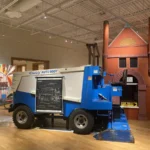
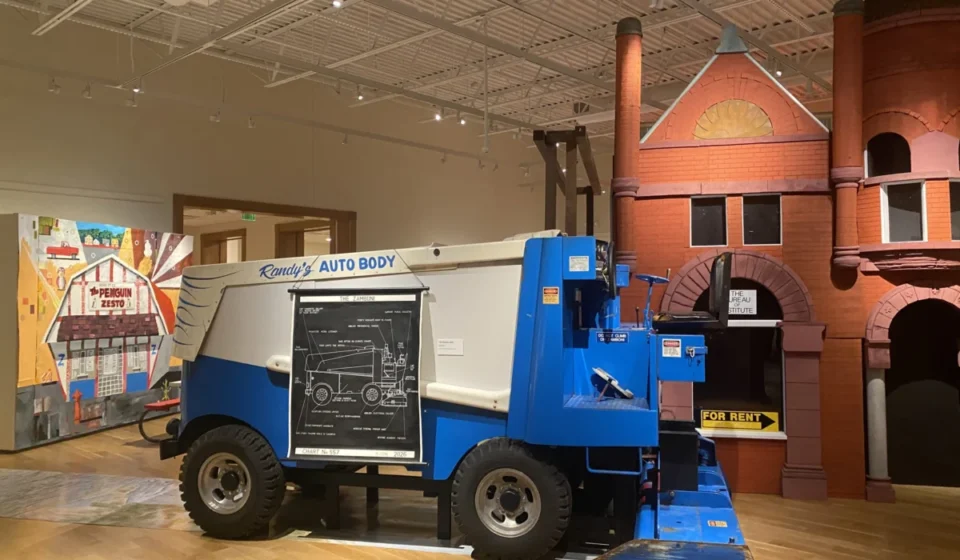
The exhibition is a labyrinthine experience, designed to pull the viewer through a "mythogeography" of Winona. Upon entering, visitors are greeted not by a traditional sculpture, but by a functional Zamboni—the iconic vehicle used to smooth ice rinks. This is not a replica; it is a literal machine, currently tasked with "polishing" a hand-penned map by artist Mike Schley. The map traces a whimsical, impossible route from Winona to the Mississippi River’s source at Lake Itasca.

The layering of information within the exhibit is dense and intentional:
- The Political Zamboni: Collaborator Mark Dion has applied a diagram to the machine that serves as an ironic political manifesto. It labels mechanical parts as legislative goals, such as "Overturn Citizens United" (on a tire) and "Term Limits for SCOTUS."
- The Bureau of Institute: A structure approximating local architecture features a "For Rent" sign and a banner for the "Bureau of Institute," a nonsensical agency that echoes the bureaucratic satire found in Vaclav Havel’s The Memorandum.
- Penguin Zesto: The exhibit honors the multi-generational ice cream shop through a collaborative mural and a series of zines by artist Carolyn Swiszcz, detailing the history of the shop and its iconic, long-gone giant ice cream sculpture.
These elements combine to form an "instruction manual" for civic engagement. By elevating local lore—the thin-crust pizza of Rocco’s, the dipped "rockets" of Penguin Zesto, and the icy, industrial aesthetic of a winter rink—DuCett transforms the mundane into the monumental.
Institutional Perspectives and the Redefinition of "Marine Art"
The Minnesota Marine Art Museum has long faced the challenge of defining its scope. Traditionally, marine art is tethered to the sea, boats, and the oceanic horizon. However, the MMAM has recently pivoted toward a more expansive definition of "water-related" art, one that encompasses the rivers, lakes, and the human communities that cluster around them.
"Home(town)" represents a zenith in this institutional evolution. By inviting a local artist to curate a show that centers on the town of Winona rather than the ocean, the museum is effectively arguing that the "marine" experience is as much about the local wildlife refuge as it is about the Atlantic. The museum’s willingness to participate in the "theatrical" loan of items from a local pub demonstrates a progressive approach to curation—one that values communal narrative as much as, if not more than, aesthetic value.
"The work fits well here," remarked a museum spokesperson. "It asks who gets to shape a community’s history and what happens when those stories enter a museum. It blurs the lines between memory, civic history, and dreaming."
Implications: The Future of the Hometown
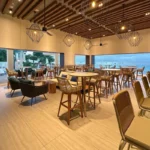
What happens when a town sees itself through the lens of a museum? For the residents of Winona, the exhibition serves as a mirror. When visitors walk through the Rocco’s-inspired corner of the museum, they are met with a neon Miller Lite sign and a menu that feels ready for an order. It is an exercise in "nostalgia laced with irony," according to critics.

However, the implications are more profound than mere sentimentality. By placing the "For Rent" signs and the "Bureau of Institute" in the gallery, DuCett is asking his audience to consider the future of their own hometowns. He is suggesting that we are all authors of our local history. The "mad kind of love" he displays for Winona serves as a blueprint for other communities to examine their own "mythogeographies."
The exhibition also serves to question the sustainability of local identity in an era of globalization. As the "Bureau of Institute" rotates new businesses into its model throughout the run of the show, it mirrors the real-world fluidity of commerce and the transience of small-town landmarks.
A Call to Participation
The exhibition is not a static display; it is an invitation. Through upcoming events, such as a participatory bingo game hosted at the Winona Athletic Club and the "Meet the Artist" session with Andy DuCett on October 3, the show bleeds out of the museum walls and into the streets.
As we look toward the future of the Mississippi River valley, exhibitions like "Home(town)" provide a vital service. They remind us that the most significant art is often found in the places we visit most frequently—the pizza parlor, the ice rink, the corner ice cream shop. By codifying these spaces, DuCett hasn’t just captured a moment in time; he has provided a framework for a community to dream its way forward.
Whether the Ron Hunt painting ever returns to its original spot on the wall at Rocco’s remains to be seen. But for now, its absence in the pub and its presence in the museum stand as a powerful testament to the value of local stories, elevating the everyday life of a Minnesota town into the realm of the extraordinary.
For those interested in exploring the installation firsthand, the "Home(town)" exhibition runs through the autumn months at the Minnesota Marine Art Museum. Additional programming, including artist talks and community-led events, is available via the museum’s official website.