















































This week, Minneapolis cements its status as a premier destination for high-concept arts as two of its most storied institutions, the Minnesota Orchestra and the Guthrie Theater, unveil ambitious productions. While the former embraces the cutting edge of visual technology to reinterpret a 20th-century masterpiece, the latter turns a magnifying glass to the raw, existential minimalism of Samuel Beckett. Together, these productions offer a study in how classic works can be re-contextualized to resonate with contemporary audiences.
The Minnesota Orchestra: Stravinsky Reimagined Through Video Mapping
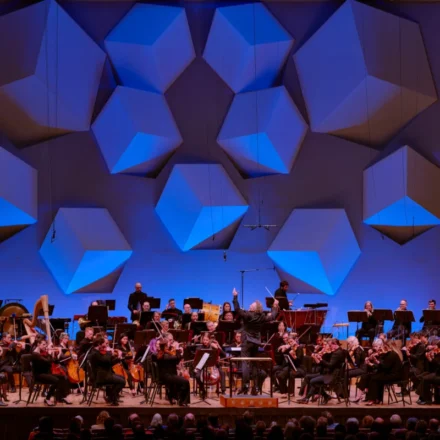
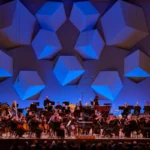
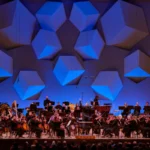
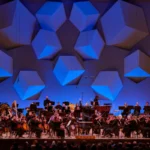
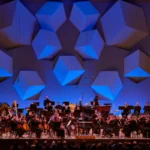
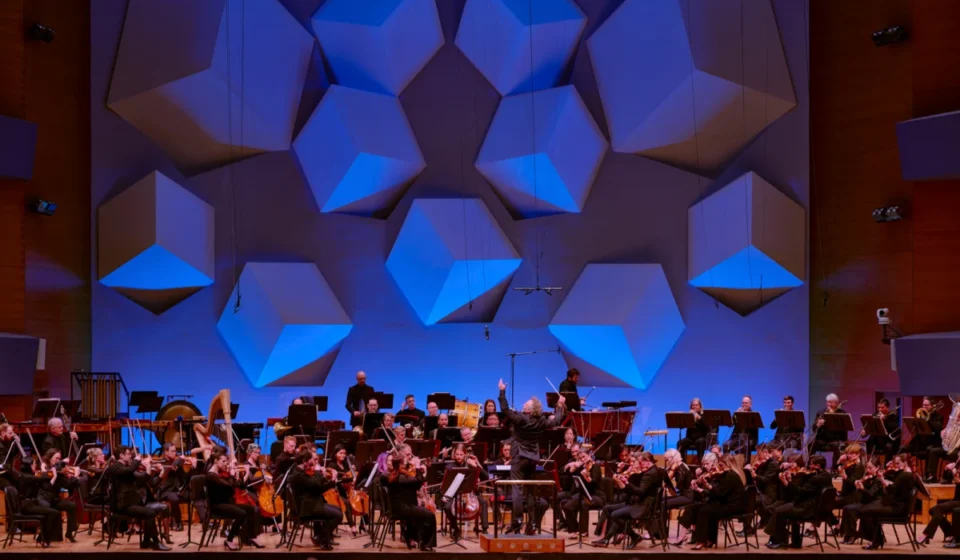
The iconic acoustic cubes adorning the back wall and ceiling of Orchestra Hall are being transformed into a high-tech canvas. For the Minnesota Orchestra’s season-opening production of Igor Stravinsky’s The Firebird, London-based BAFTA-winning designer Tal Rosner is deploying sophisticated video mapping to create a visual landscape that pushes the boundaries of the concert experience.
This performance serves as the centerpiece of the orchestra’s new multi-year series, "Sound Unbound," an initiative designed to bridge the gap between classical music and contemporary visual art.
The Technical Marvel of Video Mapping
Video mapping is an intricate technique that aligns projected imagery with the specific geometry of an architectural space. For Rosner, the hall’s signature cubes are not merely a backdrop but the fundamental constraint and inspiration for his work.
“Almost every design decision I made is rooted in the fact that the cubes are the projection surface,” Rosner noted. “All the design elements are in constant consideration of the layout of the cubes, so the mapping is very, very accurate. Having this constraint enabled me to approach it from all these mad and new ways, and I have to say that this is a piece that is going to be impossible to replicate anywhere else.”
The resulting visuals aim to translate the folklore of Prince Ivan’s encounter with the sorcerer Koschei and the magical Firebird into a metaphorical language. Rather than relying on literal depictions, Rosner utilizes color and abstract rhythm. For instance, the 12 princesses are not rendered as actors, but as flowing golden ribbons of light, creating a visual dialogue with Stravinsky’s complex score.
A Journey from MTV Dreams to Orchestral Collaboration
Rosner’s path to this project is as unconventional as his visual style. Raised in a musical family—his father ran a conservatory and his brother is a composer—Rosner initially pursued communication design with the goal of creating television graphics. “My dream was to work for MTV,” he admitted.
However, his career evolved into the realm of theater and orchestral design, a transition he attributes to the unique freedom provided by a concert hall. “If you work with an orchestral piece, the scope of what you can do and the canvas to do it on is much bigger,” he explained.
In preparing for this collaboration, Rosner has worked closely with the orchestra’s in-house lighting crew. He emphasizes that this is a departure from his earlier career, representing a maturation toward a more holistic, ego-free artistic process. “It’s not just like, ‘Look at me! Look at me!’ Now it’s a much more holistic approach,” he said.
Historical Context: Stravinsky and the Modernist Break
To understand the weight of this production, one must look back to 1910. The Firebird was commissioned by Sergei Diaghilev for the Ballets Russes, the legendary Parisian company that served as the heartbeat of European avant-garde dance.
The Firebird acted as the opening act for a revolution in sound. It bridged the gap between the Romantic traditions of the 19th century and the radical modernism that would fully explode just three years later with Stravinsky’s The Rite of Spring. The latter, with its jarring, primal rhythms, famously incited a near-riot at its premiere, signaling a total break from musical history. By pairing the visual spectacle of The Firebird with contemporary technology, the Minnesota Orchestra is tapping into that original spirit of innovation, asking the audience to listen to a familiar classic with fresh eyes and ears.
The Guthrie Theater: Beckett’s Existential Mirror
Across downtown, the Guthrie Theater is engaging with a different kind of 20th-century innovation: Samuel Beckett’s Waiting for Godot. Directed by the theater’s artistic director, Joseph Haj, this production is an exercise in restraint and profound introspection.
The Challenge of Beckett’s Minimalism
Beckett was famously protective of his text, dictating every silence, pause, and movement. For a director, this leaves little room for individual interpretation, yet Haj and his cast have succeeded in imbuing the 1953 play with a biting, modern urgency. The production grapples with "end times fascism," a term popularized by Naomi Klein, reflecting on how the play’s themes of isolation and the desperate search for meaning in a bleak world hit home in our current era of hyper-polarization.
Performance and Ensemble Chemistry
The production is anchored by the performances of David Strathairn as Vladimir and Jimmy Kieffer as Estragon. Despite the rigid demands of the script, the two actors establish a magnetic chemistry.
While an opening-night slip in dialogue highlighted the razor-thin margin for error in Beckett’s rhythmic writing, the cast quickly recovered, finding their footing in the second act. Strathairn, known for his film work, brings a gravitas that elevates the play’s existential ache, while Kieffer provides the necessary levity and humanity to ground the absurdist narrative. Supporting them are William Sturdivant, who masterfully balances the pompousness of Pozzo, and Jim Lichtscheidl, who delivers Lucky’s notoriously difficult, spiraling monologue with startling clarity.
The experience is rounded out by Darron L. West’s immersive sound design, which strips away the comfort of a traditional score to leave the audience sitting in the uncomfortable, terrifying quiet of the characters’ purgatory.
Comparative Implications: Why These Innovations Matter
Both the Minnesota Orchestra and the Guthrie Theater are engaged in a common project: proving that 20th-century works are not static museum pieces.
- Technological Integration: By using video mapping, the Orchestra is transforming a traditional performance into an immersive installation.
- Sociopolitical Relevance: By revisiting Waiting for Godot, the Guthrie is using the stage to ask, "How do we keep hope alive when the world seems so bleak?"
- Audience Engagement: Both institutions are moving away from passive consumption, forcing audiences to grapple with the "disquieting stir" that comes when classic art meets modern reality.
Event Details and Scheduling
For those wishing to witness these cultural touchstones, the following details are provided:
-
Minnesota Orchestra: Performs The Firebird alongside George Walker’s Icarus in Orbit and Sergei Prokofiev’s Concerto No. 2 in G minor. Featuring pianist Vadym Kholodenko and conducted by Thomas Søndergård.
- Dates: Friday, Sept. 25, at 8 p.m. and Saturday, Sept. 26, at 7 p.m.
- Location: Orchestra Hall, 1111 Nicollet Mall, Minneapolis.
- Tickets: $64–$159.
-
The Guthrie Theater: Stages Waiting for Godot, directed by Joseph Haj.
- Dates: Now through Oct. 11. Multiple performance times daily, including Wednesday through Sunday.
- Location: Guthrie Theater, Minneapolis.
- Tickets: $25–$91.
As the fall season begins, these two productions remind us that whether through the ethereal light of a digital Firebird or the stark, silent wait for a mysterious traveler, the arts remain the most effective mirror for our collective human experience. Whether seeking technical wonder or existential contemplation, Minneapolis audiences find themselves well-served this week.