





















































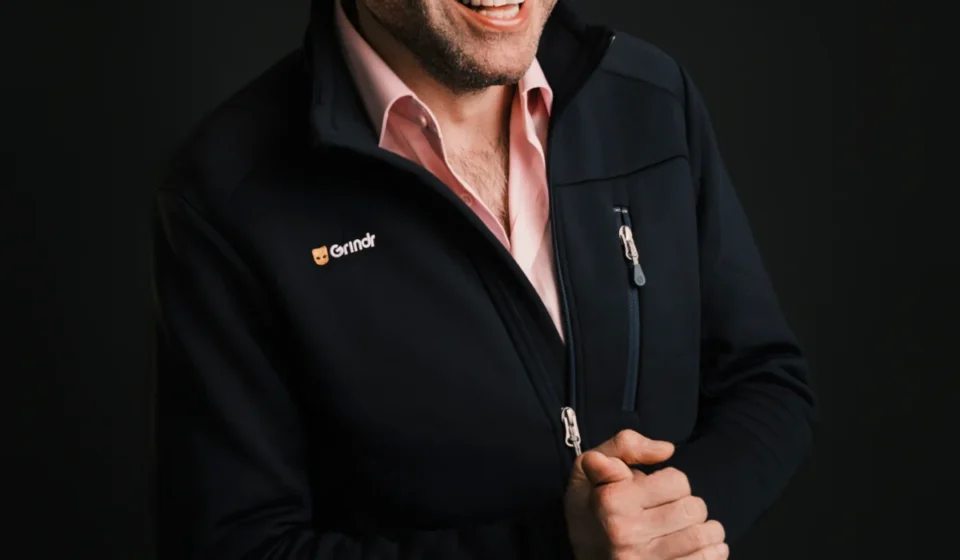
The Evolution of Grindr: George Arison’s Quest to Build a "Gayborhood in Your Pocket"

When George Arison assumed the helm of Grindr in 2022, he didn’t just inherit a dating app; he inherited a corporate puzzle. The company had spent years in a state of geopolitical and operational flux, moving from Chinese ownership to a forced divestiture following U.S. national security concerns, and eventually into the hands of private equity. By the time Arison arrived, the platform was a paradoxical entity: a digital powerhouse printing money, yet one entirely devoid of a cohesive product strategy or long-term roadmap.
Four years later, the narrative has shifted dramatically. Under Arison’s leadership, Grindr has transformed from a rudderless asset into a high-growth tech story. With revenue on pace to climb from $195 million in 2022 to a guided $540 million-plus this year—while maintaining adjusted EBITDA margins above 40%—the company is finally proving that it can monetize its influence beyond mere utility.
A Chronology of Transformation
The "Arison Era" at Grindr has been defined by rapid, often controversial, corrective measures. Upon taking the reins, Arison prioritized three pillars: corporate restructuring, aggressive revenue optimization, and long-term vision building.
1. Operational Overhaul (2022–2023)
Arison’s first order of business was "company building." Recognizing that the post-pandemic era had fostered a culture of low productivity, he implemented a return-to-office mandate in the summer of 2023. The move was met with significant internal resistance and a wave of negative press, leading to a leaner workforce. Today, the company operates with a significantly smaller footprint—roughly 175 U.S. employees plus a dedicated team in Colombia. Notably, only about 25 employees from the pre-Arison era remain, signaling a total cultural reset.
2. The Growth Surge (2023–2024)
Growth has been driven less by acquiring new users and more by extracting greater value from existing ones. By refining the product offering, Grindr increased its pay-conversion rate from under 6% to over 9%. Simultaneously, the Average Revenue Per User (ARPU) has seen a near-doubling since 2022. This shift demonstrates a successful pivot from a passive platform to a premium-focused ecosystem.
3. The Future Horizon: The "Everything App"
Arison’s long-term vision is to turn Grindr into a "gayborhood in your pocket." This strategy mirrors the "everything app" trend seen in global consumer tech. Rather than just facilitating hookups, the app aims to integrate comprehensive lifestyle services, including healthcare (telehealth, HIV prevention, and ED medication) and travel services, effectively centralizing the queer experience.
Supporting Data: Efficiency and AI
Central to Grindr’s current growth is a surprisingly lean engineering culture. The company currently employs only about 95 people across all technical roles. Arison attributes this efficiency to a radical adoption of artificial intelligence.
"A large-tech-company CEO once told me AI would let me do with far fewer people what I thought I’d need 300 to 350 for," Arison noted in a recent interview. "He was right."
The data supports this claim:
- Productivity: Grindr reports a 2.5x increase in engineering productivity over the last year.
- AI Integration: Approximately 80% of the company’s code is now AI-generated.
- Financials: With 175 employees, the company is generating over half a billion dollars in annual revenue, a testament to the leverage provided by its automated workflows.
The EDGE Subscription and Market Response
Grindr is currently testing a premium subscription tier dubbed "EDGE," which has sparked significant debate online. Critics on platforms like Reddit have mocked the price point—which, in some international testing markets like Canada, converts to roughly $350–$375 USD per month—as prohibitively expensive.
Arison defends the pricing as a tool for market elasticity testing rather than a finalized consumer cost. He likens the tier to a high-end flagship product, such as a Tesla Model S or X, intended to offer advanced AI-driven matching capabilities that will eventually filter down to lower-priced tiers.
"We’re not selling AI itself; we’re selling features derived from it," Arison explained. "Using what we know about a user’s behavior and intent, with consent, to make much better matches than a sparse profile ever could." Retention rates for these early AI features, he claims, are higher than anything the company has seen to date.
The "Grindr Discount": Institutional Stigma
One of the most persistent hurdles for Arison has been the "Grindr discount"—a phenomenon where institutional investors allegedly bake a 20–25% valuation penalty into their models simply because the company is a gay dating app.
Arison has been vocal about this prejudice, recounting instances where banks refused their business or consulting firms declined contracts due to "reputational concerns." This stands in sharp contrast to companies like Tinder, which face significantly less stigma despite operating in the same industry.
However, the tide may be turning. Major financial institutions, including Morgan Stanley, Goldman Sachs, and Raymond James, have raised their price targets for the stock this year. Morgan Stanley upgraded the company to "overweight" in July, citing the promise of the EDGE tier and the company’s expansion into healthcare. Despite this, the stock still trades at roughly 11 times 2027 EBITDA—a 35% discount compared to industry peers—suggesting that the market remains hesitant.
Official Perspectives on Strategic Expansion
Arison is betting heavily on the "gayborhood" concept, particularly in healthcare. He categorizes the company’s health strategy into three distinct phases:
- Cash-Pay Products: Through a line called "Woodwork," the app already facilitates the purchase of ED medications, peptides, and other wellness items, now streamlined through an in-app AI bot.
- HIV Prevention: The platform has committed to providing 10 million users with direct access to information on where to secure PrEP, both domestically and internationally.
- Clinical Care: A long-term ambition to connect users with gay-affirming doctors via telehealth.
"I do think there’s a world, a decade out, where healthcare is a bigger revenue stream for Grindr than what we do today," Arison said.
Implications for the Future
The implications of Arison’s strategy are twofold. First, by moving into healthcare and travel, Grindr is attempting to insulate itself from the volatility of the dating app market. Younger cohorts of queer men are increasingly seeking long-term relationships rather than transient encounters, and the app’s AI-driven matching—which ignores geographic constraints—is a direct response to the difficulty of finding partners within smaller, localized populations.
Second, the company is attempting to redefine its own identity. By proving that it can sustain double-digit revenue growth while operating with a minimal, AI-optimized team, Grindr is signaling that it is no longer just a "hookup app."
Whether the market will fully shed the "Grindr discount" remains to be seen. For now, Arison remains focused on execution, arguing that the company’s performance over the last 16 quarters speaks for itself. If his bet on the "everything app" model pays off, Grindr may well become the first platform to successfully monetize the intersection of digital intimacy and essential life services, fundamentally changing how the global LGBTQ+ community interacts with the digital economy.