

























































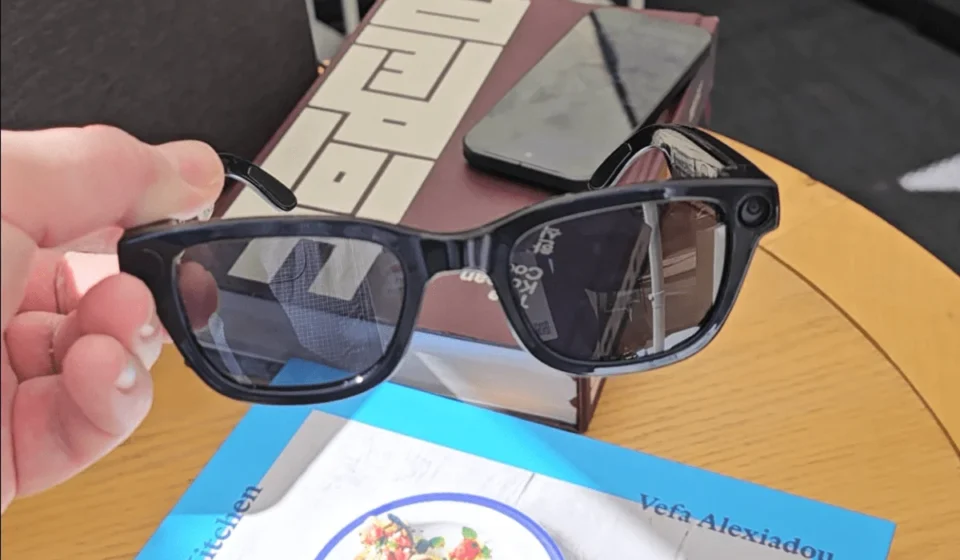

In an era where technology is increasingly becoming an extension of the human body, the boundary between personal convenience and public privacy has never been more porous. The world’s premier hacking and security conference, DefCon, has officially drawn a line in the sand. In a move that signals a growing industry-wide anxiety, organizers have updated their stringent photography and recording policies to include an outright ban on smart glasses.
As major tech giants like Google, Samsung, and Apple pivot their R&D resources toward AI-powered eyewear, the physical manifestation of "big brother" is no longer a static CCTV camera mounted on a wall—it is the person sitting across from you at a coffee shop.
The Core Policy Shift: Why DefCon is Taking a Stand
The decision by DefCon organizers to prohibit smart glasses—regardless of their primary function—stems from a fundamental inability to verify consent. In the hacker culture that defines DefCon, privacy is not just a preference; it is a prerequisite for the exchange of sensitive, often experimental, security research.
"With no consistent way to understand whether smart glasses are recording or not, we have taken the step to ban them in their entirety," the organizers stated in a recent policy update. The rationale is simple: the erosion of trust. When a participant cannot be certain whether their conversation, screen, or presentation is being captured by a discreet, frame-mounted camera, the environment of free-flowing information is compromised.
Crucially, the ban makes no exceptions for necessity. Even for attendees who require vision correction, the policy is unequivocal: if your glasses have recording capabilities, they must stay at home. Visitors are strictly advised to bring "analog" corrective eyewear to the event. This draconian measure highlights the severity of the threat perceived by security professionals, who prioritize the integrity of their physical space above the convenience of the individual.
A Chronology of the Surveillance Creep
To understand why this ban has occurred now, one must look at the rapid evolution of wearable technology over the last decade.
- 2013-2014: The Google Glass Era: The public introduction of Google Glass sparked the first wave of "Glasshole" discourse. While the product was a commercial failure, it introduced the public to the concept of head-mounted, always-on recording, leading to bans in movie theaters, casinos, and some bars.
- 2021-2023: The Meta-Ray-Ban Renaissance: The release of the Ray-Ban Meta smart glasses marked a turning point. Unlike their predecessors, these devices were stylish, subtle, and widely adopted. The "record" light, while present, was often missed by bystanders, reigniting the debate about surreptitious recording.
- 2024: The AI Integration Shift: With the integration of LLMs (Large Language Models) like Google’s Gemini into eyewear, smart glasses shifted from being "cameras on your face" to "AI-powered agents." This increased their utility—and their threat profile—exponentially.
- 2025: The DefCon Mandate: DefCon’s recent policy update represents the first major institutional response to this new generation of AI-enabled eyewear, effectively setting a precedent for other high-security conferences and professional environments.
Supporting Data: The Privacy Paradox
The apprehension surrounding smart glasses is supported by both sociological concerns and technical realities.
According to recent surveys by the Electronic Frontier Foundation (EFF) and similar digital rights advocacy groups, nearly 72% of respondents expressed "significant discomfort" regarding the prospect of being recorded in public spaces without explicit notification. The core issue is the "asymmetry of information." When a smartphone is raised to take a photo, the intent is broadcasted. When a pair of glasses is worn, the intent is hidden behind the guise of fashion.
Furthermore, the "Smart Eyewear Market" is projected to reach unprecedented heights. Industry analysts at Gartner estimate that the smart glasses sector will see a compound annual growth rate (CAGR) of over 20% through 2028. This rapid proliferation means that the number of "recording devices" in any given public space is poised to skyrocket, creating a constant, ambient surveillance state.
Official Responses and Corporate Stance
The response from the tech sector has been a mix of defensive positioning and cautious PR management.
The Apple Approach
Apple, notorious for its "Privacy is a Human Right" marketing, has notably delayed its own foray into the smart glasses market. Insiders suggest that the company is struggling to reconcile its brand identity with the intrusive nature of such hardware. "Apple is looking to launch its new generation of smart glasses, but is tempering its ambitions with a focus on privacy," sources close to the development team have noted. The delay is widely viewed as an attempt to implement hardware-level safeguards that might appease privacy-conscious consumers and regulators.
The Samsung/Google Axis
In contrast, Samsung and Google have leaned into the AI-first utility of their Gemini-powered eyewear. Their strategy focuses on the "productivity assistant" narrative—glasses that translate languages in real-time, identify objects, and summarize meetings. While this provides undeniable value, it also provides the capability to record, process, and store biometric and environmental data without the explicit knowledge of those being observed.
CISO Concerns
Corporate security leaders are equally troubled. Chief Information Security Officers (CISOs) are now actively updating "Bring Your Own Device" (BYOD) policies. The concern is not just about human privacy, but about corporate espionage. If an employee walks into a secure server room or a board meeting wearing glasses capable of high-definition video streaming, the risk of sensitive data exfiltration is massive. "We are seeing a trend where smart glasses are being treated with the same scrutiny as USB thumb drives or unauthorized cameras," notes a leading CISO in the financial sector.
Implications for the Future of Public Spaces
The DefCon ban is a harbinger of a wider societal friction. As we move toward a future of augmented reality (AR), we are faced with several critical implications:
1. The Death of Anonymity
If smart glasses become as ubiquitous as smartphones, the ability to move through public spaces without being logged, tracked, or recorded will effectively vanish. This creates a "chilling effect" on social interaction, where individuals change their behavior because they believe they are being watched—a phenomenon psychologists call "social surveillance."
2. The Rise of "Privacy Zones"
We are likely to see the rise of physical spaces that mandate "analog-only" policies. Just as cell phones were once banned in sensitive government facilities, we may soon see "Smart-Eyewear Free" signs in corporate offices, law firms, and private residences. This will require the development of new security protocols to detect and neutralize recording devices, potentially including radio-frequency (RF) scanners or visual light detectors at building entrances.
3. Regulatory Lag
The law is currently trailing behind the hardware. While wiretapping laws cover audio, the legal frameworks surrounding visual recording in public spaces are outdated. Legislators are now under pressure to define whether an AI-powered lens constitutes a "recording device" or an "augmented reality tool," a distinction that will have massive implications for intellectual property and civil rights.
4. The Cultural Backlash
DefCon’s stance is, in many ways, a cultural rejection of the tech industry’s "move fast and break things" philosophy. By prioritizing human trust over technical capability, the conference is forcing a conversation that companies are otherwise trying to sidestep. It is a reminder that technology should serve human autonomy, not diminish it.
Conclusion: A Delicate Balance
The tension between the utility of smart glasses and the necessity of privacy is one of the defining challenges of the 2020s. While the technology offers the promise of a hyper-connected world where information is always at our fingertips, the price of that connectivity may be the loss of our ability to exist in the world unobserved.
DefCon’s decision to ban smart glasses is more than a simple rule change; it is a declaration of independence from the constant, invisible gaze of the machine. Whether this sets a new standard for the rest of society remains to be seen. However, as long as these devices lack a universal, unambiguous signal that they are recording, the friction between the tech-adopters and the privacy-defenders will only intensify. For now, if you are planning on attending a high-security event, you would be well-advised to leave your AI-enhanced frames at home and rely on your own eyes—the only lenses that come with an inherent, built-in privacy guarantee.