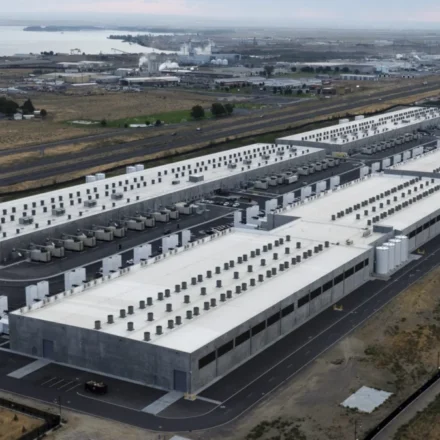






















































Across the United States, communities find themselves at the nexus of a profound digital transformation, grappling with multibillion-dollar proposals for hyperscale data centers. These colossal industrial facilities, the backbone of modern cloud computing and the burgeoning artificial intelligence economy, arrive with promises of economic prosperity but often present complex challenges that can profoundly impact local economies, natural resources, and the very fabric of community life for generations.
The rapid buildout of this digital infrastructure has caught many local governments and residents off guard. Lacking prior experience with such mega-sized developments, these communities are often forced into quick decisions with far-reaching consequences. Experts, however, assert that the narrative doesn’t have to be one of reluctant acceptance or outright rejection. Instead, it’s about strategic engagement, informed negotiation, and the implementation of robust, legally binding agreements. The consensus among a diverse group of stakeholders – from industry leaders to environmental advocates – is clear: communities must know precisely what to ask for to ensure these developments genuinely contribute to local well-being while mitigating inherent risks.
Lauren Withycombe Keeler, a prominent researcher at Arizona State University, encapsulates this sentiment: "It doesn’t have to just be, ‘yes’ to hosting a data center, or ‘no.’ ‘No’ is certainly an option, but negotiations with data center operators also present an opportunity to distribute some of the wealth of the AI economy, and well-developed community benefits agreements that have monitoring and have teeth can make housing a data center worthwhile."
Recognizing this critical need, a comprehensive toolkit has been compiled, drawing insights from over 50 experts spanning the data center industry, local and state elected officials, national policy experts, academic researchers, and affected residents. This resource offers a menu of options, acknowledging that each community possesses unique characteristics and priorities, and what proves effective in one locale may not translate perfectly to another. The ultimate directive is for communities to critically assess these recommendations and tailor them to their specific situations, thereby empowering themselves to shape their digital future rather than simply react to it.
The Unseen Titans: A Digital Gold Rush Reshapes American Communities
The digital economy, fueled by an insatiable demand for data storage, processing, and artificial intelligence, has ushered in an unprecedented era of data center proliferation. These aren’t merely large server farms; they are massive, energy-intensive, and often sprawling complexes that demand vast tracts of land, immense power grids, and significant water resources. The scale of investment in these facilities is staggering, frequently reaching into the billions of dollars for a single campus.
For communities, the arrival of a data center proposal can feel like an unexpected seismic event. While developers tout job creation, increased tax revenue, and technological advancement, the reality on the ground can be far more nuanced. Residents often worry about the strain on existing infrastructure, the environmental footprint, the potential for noise pollution, and the aesthetic impact on their rural or semi-rural landscapes. The urgency of these decisions is magnified by the rapid pace of technological change and the competitive nature of attracting these high-tech investments. Without a framework for evaluation and negotiation, local leaders risk either missing out on potential benefits or inadvertently committing their communities to long-term liabilities.
The image of Anna Farrar in Warren County, Missouri, reviewing maps for a 345-kilovolt transmission line project in May 2026, vividly illustrates the on-the-ground reality. Such projects, designed to feed the insatiable energy demands of data centers, represent significant infrastructure changes that reshape landscapes and impact local ecosystems. Similarly, Brenda Buechele’s efforts in Montgomery County, Missouri, in April 2026, collecting affidavits for a lawsuit against a proposed data center, underscore the growing civic resistance and the profound community-level implications of these developments. These snapshots are not isolated incidents but emblematic of a nationwide trend where local communities are increasingly at the forefront of the digital economy’s physical expansion.
A Race Against Time: The Emergence of Data Center Proposals
The process by which data center proposals materialize often follows a pattern that leaves communities feeling reactive rather than proactive. This conceptual chronology highlights the typical stages and challenges:
1. Site Identification and Initial Overtures: Data center developers meticulously scout locations based on critical criteria: abundant and affordable land, access to robust and redundant power grids, proximity to major fiber optic networks, and often, reliable water sources for cooling. Once a promising site is identified, initial contact with local officials might be made discreetly, sometimes through third-party land acquisition agents, before a formal proposal is unveiled.
2. The Sudden Unveiling: Often, communities are presented with a comprehensive data center proposal with little advance warning. The sheer scale and technical complexity of these projects can be overwhelming for local planning departments and elected officials who may lack the specialized expertise to thoroughly vet the implications. The proposals are frequently accompanied by attractive incentive packages, putting pressure on officials to make quick decisions to secure the investment.
3. The Swift Approval Imperative: Developers typically operate on tight timelines, driven by market demand for digital infrastructure. This often translates into pressure for rapid zoning changes, permit approvals, and incentive agreements. Communities are frequently told that delays could jeopardize the entire project, creating an environment where thorough due diligence and public discourse can be curtailed.
4. Public Awakening and Mobilization: As details emerge, residents often begin to grasp the full scope of a data center’s impact. Concerns about increased utility rates, environmental degradation (especially water and energy consumption), noise from cooling towers, and the industrialization of rural areas often lead to organized opposition. This is precisely where the narrative of Brenda Buechele and the Preserve Montgomery County group fits, showcasing how residents are compelled to act when they perceive a lack of transparency or adequate oversight.
5. The Need for Strategic Intervention: It is at this critical juncture that the "toolkit" and expert advice become invaluable. Communities need to pivot from a reactive stance to a strategic one, understanding that early and informed intervention can profoundly alter the outcome. This involves implementing moratoriums to gain time, establishing clear planning goals, and entering negotiations armed with specific demands and a clear vision for their future.
Unpacking the Promise: Jobs, Revenue, and Environmental Footprints
Data center developers often present a compelling economic case: significant capital investment, job creation, and increased tax revenue. However, a deeper dive into these claims, supported by expert analysis, reveals a more nuanced reality.
Economic Benefits and the Cost of Incentives
The promise of job creation is a primary lure. While data center construction phases can indeed generate a substantial number of temporary jobs for skilled trades, the long-term operational workforce is often surprisingly lean. A hyperscale data center, once built, might employ only a few dozen highly specialized technicians and IT professionals, many of whom may not be local hires. Communities must therefore scrutinize the types and numbers of jobs promised, differentiate between construction and permanent roles, and push for local hiring commitments.
Taxable revenue is another key incentive. Data centers, as significant property owners, can indeed contribute to the local tax base through property taxes. However, states and localities frequently offer generous tax incentives and exemptions – ranging from sales tax breaks on equipment to property tax abatements – to attract these investments. While these incentives are designed to make a region competitive, experts recommend extreme caution. If not carefully managed, these breaks can significantly diminish the net financial benefit to the community, sometimes for decades. The toolkit emphasizes the need for performance-based incentives with clawback provisions, ensuring that developers meet their commitments and that the community truly reaps the promised rewards. The opportunity cost of these tax breaks – what other public services or infrastructure could have been funded – must also be thoroughly evaluated.
The Voracious Appetite for Energy
Perhaps the most significant impact of data centers lies in their energy demands. The U.S. Department of Energy estimates that data centers will consume approximately 8% of the nation’s total electricity by 2030, a stark increase from 3% in 2022. This exponential growth is primarily driven by the increasing complexity of AI training models and the continuous expansion of cloud services.
The challenge is not just the sheer volume of electricity but also its source. Energy researchers from the Deep Tech Initiative at Duke University’s Sanford School of Public Policy highlight that these technology hubs largely rely on fossil fuels to generate electricity, contributing to carbon emissions. The development of new data centers often necessitates significant upgrades to the electrical grid, including the construction of new substations and high-voltage transmission lines, such as the Ameren Missouri Montgomery-Callaway Connector Project observed by Anna Farrar. These infrastructure projects can be costly, environmentally impactful, and raise questions about who bears the cost and benefit.
However, the Duke University researchers also posit that data centers can be a force toward a global shift to renewable energy. Their immense and consistent energy demand makes them ideal candidates for large-scale renewable energy purchasing agreements (Power Purchase Agreements or PPAs). By committing to procure vast amounts of wind or solar energy, data center operators can drive investment in new renewable generation capacity. Communities should, therefore, negotiate for commitments to 100% renewable energy sourcing, ideally from new, local renewable projects, to align these facilities with broader sustainability goals.
Water: A Scarce Resource Under Strain
Beyond energy, data centers are rampant consumers of water, primarily for cooling the vast arrays of servers that generate immense heat. According to the Environmental and Energy Study Institute (EESI), a single hyperscale data center can use up to 5 million gallons of water per day. To put this into perspective, this is equivalent to the daily water consumption of a town of 10,000 to 50,000 people.
The implications for water-stressed areas are particularly severe. Duke University’s Gary Hitchcock notes that locating data centers in regions already experiencing water scarcity has the potential to exacerbate existing shortages, impacting local agriculture, residential supply, and ecological systems. Communities must assess their local water availability and future projections before approving such developments.

Negotiations should focus on water conservation measures, including the use of advanced cooling technologies that minimize water consumption (e.g., closed-loop systems, air-side economizers), the use of recycled or non-potable water, and commitments to achieving specific water usage effectiveness (WUE) targets. Transparency regarding water sources, consumption rates, and discharge quality is paramount.
Empowering Local Governance: Expert Recommendations and Official Responses
The heart of effective community response lies in proactive governance and robust engagement strategies. The expert toolkit provides a framework for communities to move beyond reactive decision-making.
Proactive Planning and Moratoriums
The best defense, experts agree, is a good offense. Proactive planning before a data center proposal even arrives is crucial. This involves community members and leaders engaging in a comprehensive planning process to define their vision for development, identify preferred land uses, and establish clear environmental and economic priorities. Zoning ordinances should be updated to reflect these goals, ensuring that industrial-scale developments are directed to appropriate areas and meet specific performance standards.
The NAACP’s "Stop Dirty Data" report explicitly recommends calling for moratoriums when needed. A moratorium provides invaluable time for local governments to develop sufficient regulations, conduct thorough impact assessments, and establish robust oversight mechanisms. It allows for a cooling-off period where community concerns can be heard, and informed decisions can be made without the pressure of an impending deadline.
The Power of Community Benefits Agreements (CBAs)
Legally binding Community Benefits Agreements (CBAs) are identified as a critical tool. These contracts, negotiated directly between communities (or community coalitions) and data center developers, create clear, measurable, and accountable goals. CBAs ensure that communities reap tangible benefits from the new development while effectively mitigating risks.
A comprehensive CBA should include:
- Local Hiring and Workforce Development: Commitments to hire local residents, often with specific targets for disadvantaged groups, and investments in training programs.
- Infrastructure Upgrades: Developer contributions to improve local roads, utilities, and broadband connectivity beyond the immediate needs of the data center.
- Environmental Protections: Specific, measurable commitments to renewable energy, water conservation, waste reduction, and biodiversity preservation.
- Financial Contributions: Direct financial payments to community funds for education, parks, or other public services.
- Transparency and Reporting: Requirements for ongoing reporting on energy, water, and employment metrics, subject to independent verification.
- Enforcement Mechanisms: "Teeth" in the agreement, as Keeler notes, meaning clear penalties for non-compliance and processes for dispute resolution.
Addressing the Lack of Transparency
A recurring theme in resident opposition to data centers is the lack of transparency. Developers often present information in a piecemeal fashion, making it difficult for local officials and residents to grasp the full scope of a project’s impact. For sound planning and informed public discourse, local and state governments must demand and disseminate as much information as possible.
This includes:
- Detailed Site Plans: Comprehensive layouts, including building footprints, cooling systems, noise mitigation strategies, and landscaping plans.
- Resource Demand Projections: Accurate data on anticipated energy consumption (MW), water usage (gallons per day), and waste generation.
- Environmental Impact Assessments (EIAs): Thorough studies on air quality, water quality, ecological impacts, and noise pollution.
- Traffic Studies: Analysis of construction and operational traffic impacts.
- Operational Details: Information on cooling technologies, backup power systems (e.g., diesel generators), and maintenance schedules.
- Financial Projections: Clear breakdowns of anticipated tax revenues versus requested incentives.
Governments should establish public information portals, hold accessible community meetings, and ensure that all relevant documentation is readily available for public review.
Managing Tax Incentives Wisely
While tax incentives are a common tool to attract businesses, experts uniformly advise that states and localities must carefully manage or even rethink their approach to tax incentives for data center developers. Overly generous incentives can create "races to the bottom" among jurisdictions, diminishing potential community benefits.
Recommendations include:
- Net Benefit Analysis: Conducting thorough analyses to determine the true net economic benefit after accounting for incentives, infrastructure costs, and potential negative externalities.
- Performance-Based Incentives: Tying incentives directly to verifiable outcomes, such as job creation targets, renewable energy commitments, or specific community investments.
- Clawback Provisions: Including clauses that allow the community to recoup incentives if the developer fails to meet agreed-upon performance metrics.
- Limited Duration: Ensuring incentives have a clear end date rather than being perpetual.
- Transparency in Incentives: Making all incentive packages public and explaining their rationale to residents.
Forging a Path Forward: Implications for a Digital Future
The proliferation of data centers represents a profound moment for communities across the globe. The implications extend far beyond immediate economic gains or environmental concerns, touching upon long-term sustainability, economic equity, and local autonomy.
Environmental Sustainability
The sheer scale of resource consumption by data centers necessitates a renewed focus on environmental sustainability. Communities have the opportunity to push for green data center development, leveraging the industry’s demand for large-scale power to accelerate the transition to renewable energy. This involves not just purchasing green energy but demanding the co-location or direct investment in new renewable generation. Furthermore, stringent water conservation measures and the exploration of innovative cooling solutions are vital, especially in water-stressed regions. The long-term health of local ecosystems and the stability of regional utility grids depend on these choices.
Economic Equity and Inclusive Growth
The "wealth of the AI economy" should not bypass the communities that host its physical infrastructure. Ensuring economic equity means negotiating for jobs that benefit local residents, providing training opportunities, and securing financial contributions that enhance public services and quality of life. Without such proactive measures, communities risk becoming mere hosts for industrial facilities, bearing the environmental and infrastructural burdens with minimal local gain, exacerbating existing economic disparities.
Community Autonomy and Empowered Decision-Making
Ultimately, the challenge of data center development is about community autonomy. It’s about empowering residents and local leaders to shape their own future, rather than being dictated by external technological or corporate pressures. The robust civic engagement seen in places like Montgomery County, Missouri, where residents actively oppose developments they deem detrimental, is a testament to this fundamental right. Informed decision-making, backed by expert advice and strong legal frameworks, is essential for preserving local character and ensuring sustainable growth.
The Role of Policy and Regional Planning
While local action is critical, state-level guidance, regional planning, and even national frameworks are increasingly necessary. Coordinated policies can prevent "races to the bottom" with incentives, standardize environmental requirements, and provide resources for communities to navigate complex proposals. Regional utility planning must also integrate the anticipated growth of data center loads to ensure grid stability and efficient resource allocation.
The expansion of digital infrastructure is inevitable, but its integration into communities is a choice. By embracing proactive planning, demanding transparency, and negotiating with clear, measurable goals through robust community benefits agreements, local governments and residents can transform what often appears to be a daunting challenge into an opportunity for sustainable, equitable, and locally beneficial development. The future of the digital world is being built today, and communities hold the power to ensure it is built wisely and justly.
Resources:
- NAACP’s "Stop Dirty Data" report
- Arizona State University research on data centers and community benefits
- Deep Tech Initiative at Duke University’s Sanford School of Public Policy
- Environmental and Energy Study Institute (EESI) articles on data center water consumption
- U.S. Department of Energy (DOE) estimates on data center energy use
Jacob Tukker, Abby Cornell, and Finn Belleau contributed to this story.
This story is a product of the Mississippi River Basin Ag & Water Desk, an independent reporting network based at the University of Missouri in partnership with Report for America, with major funding from the Walton Family Foundation.