


















































You walk into a neighborhood café, hungry and anticipating a familiar comfort. You open the menu, but as your eyes scan the page, a subtle, creeping sense of wrongness settles in your gut. The bagel sandwiches aren’t just perfect; they are geometrically impossible. The sheen on the cheese is too uniform, the symmetry of the garnish is too precise, and the textures seem to defy the laws of physics. You aren’t losing your mind, and you certainly aren’t paranoid. You have simply encountered the latest trend in the restaurant industry: the generative AI menu.
As large language models (LLMs) and diffusion-based image generators become cheaper and more accessible, restaurants are increasingly turning to synthetic media to illustrate their offerings. The result is a bizarre, digital-first aesthetic that feels alienating even when the viewer cannot quite articulate why.
The Anatomy of the Artificial Meal
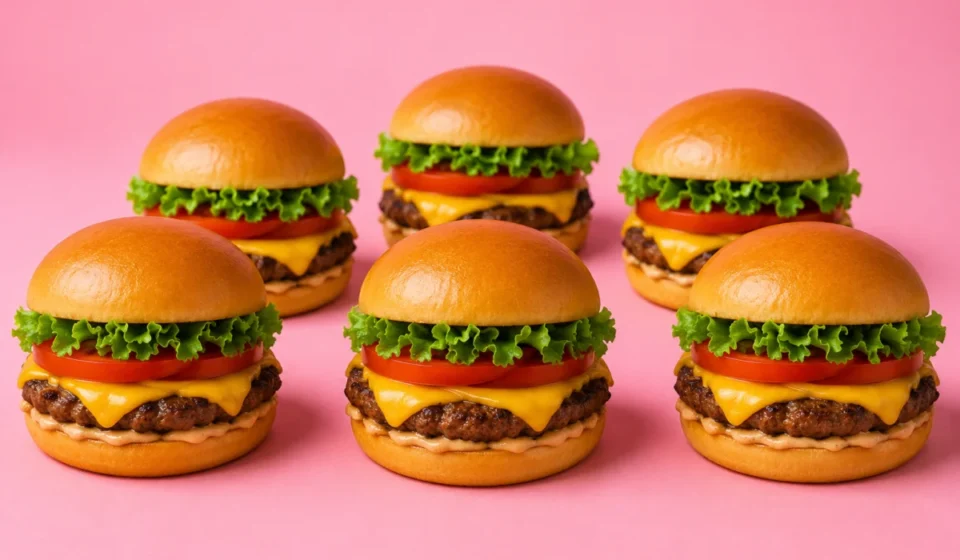
The phenomenon is characterized by a "narrow aesthetic" that prioritizes a polished, commercial look over culinary reality. Whether it is a burrito with bubbles of cheese so perfectly spaced they resemble a mathematical grid, or a shrimp dish where the crustaceans appear to be biologically merged with their own tails, these images are often described as "Lovecraftian food horrors."
"It’s almost like an alien trying to make a pizza without understanding its core principles," explains Alex Lisle, Chief Technology Officer at Reality Defender, a startup focused on content verification and AI detection. According to Lisle, the issue lies in the training data. These models are not taught to understand the chemistry of cooking; they are trained to predict pixels based on vast datasets—datasets that are heavily populated by generic, high-contrast, over-edited food photography from the early 2010s.
A Chronology of Synthetic Consumption
The integration of AI into the dining experience did not happen overnight, but rather through a gradual creep of convenience-driven technology.
- 2020–2022: The emergence of powerful diffusion models like Midjourney and DALL-E allowed for the mass generation of imagery. Early adopters in the food industry began using these tools to create "hero images" for digital menus and social media marketing to avoid the high costs of professional food styling and photography.
- 2023–2024: As the tools became more user-friendly, smaller businesses began utilizing ChatGPT-integrated image generation. This period marked the "homogenization" phase, where AI began to influence the standard look of fast-casual advertising.
- 2025–Present: We are now in the era of "recursive iteration." As restaurants update their AI-generated menus to reflect seasonal changes or price fluctuations, they continue to prompt the AI to modify the same existing images. This leads to the "degradation" of visual quality, where each subsequent edit renders the food more abstract and less appetizing.
Supporting Data: Why "Perfect" Feels So Wrong
The visceral discomfort reported by diners is not merely a matter of taste; it is a documented psychological reaction. Research from the University of Duisburg-Essen in Germany has highlighted that AI-generated food images often land squarely in the "uncanny valley."
The uncanny valley is a concept in aesthetics where an object that is nearly—but not perfectly—human (or, in this case, realistic) elicits feelings of revulsion or unease. When an image of a burger looks 95% real but 5% "off," the brain struggles to process the discrepancy. The study suggests that consumers perceive these images as less trustworthy and less appetizing than traditional photography.
Furthermore, the process of "convergence" is exacerbating the problem. Unlike "model collapse"—the theoretical point where an AI becomes useless after being trained on its own output—convergence describes a slow degradation of style. As AI models continue to train on their own generated content, they reinforce specific aesthetic biases, effectively "shaving off the edges" of reality.
Lee Rainie, Director of the Imagining the Digital Future Center at Elon University, notes that AI is fundamentally a tool for smoothing. "The optimization of the data sets is for ‘pleasingness’ or, you know, not being offensive, and so there’s a way that turns into homogenization," Rainie explains. "What AI is known to do, both in images and language, is to shave off the edges."

The Feedback Loop: When AI Eats Its Own Tail
The restaurant industry’s reliance on AI imagery creates a dangerous feedback loop. When a restaurant uses an AI-generated photo on a menu, that image may eventually be scraped by a web crawler and incorporated into the training data for the next generation of models.
This leads to a "mad cow disease" effect for artificial intelligence, as Lisle describes it. When models feed on the "inbreeding" of previous AI outputs, the nuance of real-world food—the natural fraying of a piece of lettuce, the inconsistent char on a grill mark—is slowly deleted from the machine’s understanding of what food looks like.
Experiments conducted by social media users, such as the widely circulated test by X user @labtec901, demonstrated this clearly. By taking a single AI-generated menu image and subjecting it to 100 consecutive "edits" via a chatbot, the resulting images became progressively more grotesque and inhuman. The "slop" that emerged at the end of the experiment serves as a stark warning to businesses: the more you rely on synthetic generation for updates, the further you drift from the reality you are trying to sell.
Implications for the Future of Truth
The broader implications of this trend extend far beyond the dinner table. If the public becomes accustomed to "perfectly" fake images in their daily lives, the threshold for skepticism regarding other forms of media may shift.
1. The Erosion of Evidence
Lisle points out that the world has undergone a fundamental shift regarding the nature of truth. "Seeing and hearing has always been believing, to the point where even our court systems are entirely tuned to the idea that the gold standard in evidence is taped confessions and videotaped evidence," he says. "That’s no longer the case." As we normalize AI-generated food that is "close enough," we inadvertently lower our defenses against more sophisticated forms of deepfakes and misinformation.
2. The Economic Impact on Professional Creatives
The shift toward AI-generated menu art represents a direct threat to professional photographers, food stylists, and graphic designers. While the cost-saving argument for small businesses is compelling, the long-term impact is an industry-wide decline in visual quality and authenticity. Restaurants that rely on "pleasing" AI aesthetics risk alienating a customer base that is becoming increasingly savvy at spotting synthetic content.
3. The "Backlash" Economy
We are already seeing the early stages of a backlash. Consumers are beginning to associate AI-generated imagery with low-quality, "slop-tier" dining experiences. In a market where experience and branding are everything, the use of AI imagery might actually be a net negative for a restaurant’s reputation. As Rainie suggests, the "unexplainable sense" people have when they see AI-generated work is becoming a cultural touchstone. Restaurants that lean into this are essentially telling their customers that they prioritize the convenience of an algorithm over the craft of their kitchen.
Conclusion: Returning to Reality
The rise of the AI menu serves as a microcosmic example of the broader challenges posed by generative technology. While these models offer a seductive shortcut to aesthetic perfection, they ultimately fail to capture the messy, organic reality that makes food—and human experience—appealing.
As the technology continues to evolve, the industry faces a choice: continue to chase the "homogenized" aesthetic that creates a sense of unease, or pivot back to the genuine, un-shaved edges of real-world photography. For now, the next time you look at a menu and feel a sudden, inexplicable shiver, trust your gut. You’re likely looking at a product of an algorithm, and the difference between it and a real meal is the difference between a picture and a promise.