


























































For months, the halls of Wall Street have been echoing with a singular, anxious question: Is Alphabet’s aggressive, multi-billion-dollar pivot toward artificial intelligence a visionary masterstroke or a reckless gamble? Investors, wary of the "AI bubble," have scrutinized every capital expenditure, questioning whether the massive cash outflow required to build out data centers and procure high-end GPUs would ever yield tangible returns.
With the release of Alphabet’s latest quarterly earnings report, those fears have been met with a resounding, data-driven rebuttal. The search giant is not merely surviving its AI transition; it is thriving, bolstered by a cloud division that has transformed from a secondary business unit into a primary engine of growth.
The Financial Breakdown: A Quarter of Records
The headline numbers from Alphabet’s latest disclosure are nothing short of transformative. The company reported a profit of $112.1 billion—a staggering increase compared to the $28.1 billion reported during the same period last year. Total revenue reached $119.8 billion, a 24% year-over-year surge, cementing Alphabet’s status as a dominant force in the digital economy.
The most critical narrative, however, lies in the performance of Google Cloud. Once viewed as the "third wheel" behind Amazon Web Services and Microsoft Azure, Google Cloud has officially hit its stride. Revenue for the division hit $24.8 billion, an 82% increase from the previous year. This figure significantly outpaced Wall Street’s consensus estimate of $22.46 billion, proving that the enterprise market is hungry for Google’s proprietary AI solutions and infrastructure.
Chronology of the AI Surge
To understand how Alphabet arrived at this moment, one must look at the rapid acceleration of its AI roadmap over the last 18 months.
- Late 2025: Alphabet began reporting consistent growth in its AI chatbot, Gemini, which hit 750 million monthly active users by February 2026. This period was defined by the integration of AI agents into Workspace and the broader Android ecosystem.
- Q1-Q2 2026: Alphabet signaled its intent to raise $80 billion specifically for AI infrastructure build-outs. During this period, investor anxiety reached its peak, with public critiques regarding the sustainability of such capital expenditure (CapEx).
- The Current Quarter: The strategy has shifted from speculative development to operational reality. With 950 million monthly active users on Gemini and a massive backlog of cloud contracts—now totaling $514 billion—the company has moved from "building" to "monetizing."
This marks the 12th consecutive quarter of double-digit revenue growth for Alphabet. While consistent growth is a hallmark of the company, this particular cycle represents a distinct inflection point where the sheer scale of the investment has finally begun to outpace the associated costs.
Supporting Data: Why the Enterprise Loves Google
The growth in Google Cloud is not accidental; it is the result of a deliberate focus on "enterprise-grade" AI. The cloud business is no longer just selling storage and compute power; it is selling the infrastructure upon which the next generation of global business is built.
The Backlog Factor
The most telling metric in the report is the $514 billion backlog. In financial terms, a backlog of this magnitude represents guaranteed future revenue. It signifies that major enterprise clients have moved beyond trial-and-error AI testing and have committed to long-term, multi-year contracts with Google. These aren’t just one-off software purchases; they are deep-seated structural dependencies on Google’s AI architecture.
User Adoption and Gemini’s Rise
The surge in Gemini users—from 750 million in Q4 2025 to 950 million today—indicates that Google’s consumer-facing AI is achieving critical mass. This user base provides the company with the massive data sets required to refine its models, creating a virtuous cycle: more users lead to better data, which leads to better models, which in turn attract more enterprise clients to the cloud platform.
Official Responses: CEO Sundar Pichai’s Defense
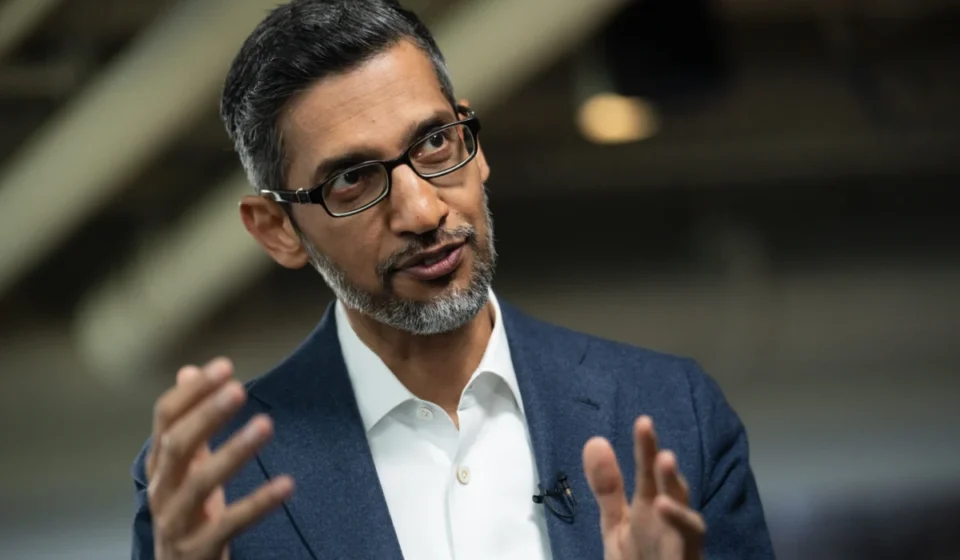
During the subsequent earnings call, CEO Sundar Pichai faced rigorous questioning from analysts regarding the company’s capital allocation. With annual CapEx projected to hit between $180 billion and $190 billion, the pressure to demonstrate ROI remains high.
Pichai, however, remained steadfast, framing the investment as a defensive and offensive necessity. "Our AI investments are redefining what’s possible across every part of our business," Pichai stated. "We have exciting momentum across the board."
When pressed on whether these astronomical expenditures could be sustained, Pichai pointed to the "strong demand indicators" and the shift in the global digital landscape. "I think, if anything, the dynamics look healthier than where we were about a year ago," he argued. "That’s what gives us the confidence to undertake those investments."
Pichai’s message to investors is clear: Google is not overspending; it is securing a "compute moat" that competitors will find difficult to bridge. By locking in infrastructure capacity now, Alphabet is ensuring it remains the primary platform for the AI-driven global economy in 2027 and beyond.
Implications: The Long-Term Outlook
The implications of this earnings report are significant, both for Alphabet and the broader tech sector.
1. The Validation of "Big AI"
For years, the industry debated whether AI would eventually become a commodity. Alphabet’s success suggests the opposite: AI is becoming an infrastructure requirement. By spending heavily on data centers and custom silicon, Alphabet has ensured that the barrier to entry for its competitors is now prohibitively high. The "AI bubble" skeptics have been quieted, at least for the time being, by the sheer scale of the enterprise adoption.
2. A Shift in Market Dominance
Google Services, which includes Search, YouTube, and the Play Store, grew 15% to $94.5 billion. While this growth is robust, it is being outpaced by the cloud business. This suggests a shift in the internal center of gravity at Alphabet. While Search remains the company’s primary cash cow, the Cloud division is increasingly where the future growth narrative is written.
3. The "Compute Capacity" Race
Pichai’s focus on the 2027 compute capacity is telling. The tech industry is currently in an arms race for hardware. By projecting such massive spending for the next year, Alphabet is effectively telling the market that it expects the demand for AI to grow exponentially rather than linearly. Investors who were once worried about the "cost" of this build-out may now start to worry about the cost of not having that infrastructure when the next wave of AI applications hits the market.
Conclusion: A New Era for Alphabet
Alphabet has successfully transitioned from a search-first company to an AI-first conglomerate. The volatility that characterized the past few quarters was a natural symptom of a company undergoing a fundamental technological transformation.
While the $180 billion to $190 billion price tag for infrastructure is staggering, it is currently being validated by an 82% growth rate in the cloud sector and a massive, locked-in contract backlog. As the enterprise world continues to integrate AI into its core operations, Google’s strategy of massive, front-loaded investment appears to be the most viable path to maintaining its dominance in the digital age.
For investors, the message is clear: the AI bubble, if it exists, is not appearing in Alphabet’s balance sheet. Instead, the company is proving that in the new economy, the winners are those who are willing to spend the most—and build the fastest—to own the underlying infrastructure of the future.