





















































MINNEAPOLIS — The federal courtroom of U.S. District Judge David Doty was, for nearly four decades, the unofficial “supreme court” of professional football. A man of quiet temperament, profound humility, and unwavering commitment to the rule of law, Doty passed away on Saturday at the age of 96, just days before his birthday. His death marks the end of an era for the American legal system and a monumental chapter in the history of the National Football League.
While Doty presided over thousands of criminal and civil cases during his distinguished tenure, he is perhaps best known to the public as the architect of the modern NFL. Through a series of landmark rulings in the late 1980s and early 1990s, he dismantled the league’s restrictive labor practices, effectively birthing the era of modern free agency and setting the stage for the multibillion-dollar industry the NFL is today.
A Life Defined by Service
Before he was a titan of the federal bench, David Doty was a product of the mid-20th-century American experience. A veteran of the U.S. Marine Corps, he carried the discipline and stoicism of his military service into his legal career. After earning his law degree from the University of Minnesota in 1961, he spent 26 years in private practice, honing the analytical skills that would later define his judicial career.
In 1987, President Ronald Reagan appointed Doty to the U.S. District Court for the District of Minnesota. It was an appointment that would eventually place him at the center of a seismic shift in professional sports labor relations. He transitioned to senior status in 1998 but refused to slow down, continuing to manage a heavy docket until just months before his passing.
Colleagues remember him not as a distant, imperious jurist, but as a man of genuine warmth. Chief U.S. District Judge Patrick Schiltz offered a poignant tribute to his late colleague, noting, “Judge Doty devoted his entire professional life to serving others. He treated everyone—from the guy who shined his shoes to Justices of the U.S. Supreme Court—the same way: with kindness and compassion and a sincere interest in their lives.”
Chronology of a Legal Revolution
Doty’s influence on the NFL began in earnest following the 1987 player strike. The league was at a crossroads, with the NFL Players Association (NFLPA) challenging the rigid control owners exercised over player movement.
The Breakdown of "Plan B"
In the late 1980s, the NFL operated under a system known as "Plan B," which allowed teams to protect a select number of players—usually 37—from entering free agency. The remaining players were technically free to move, but the market was stifled by league-imposed restrictions. The NFLPA filed suit, and the case landed on Doty’s desk.
- 1987–1989: Doty initially urged both sides toward a negotiated settlement, famously reluctant to have the court intervene in labor-management relations. However, as negotiations stalled, he became increasingly involved.
- 1990: In a pivotal ruling, Doty granted players the right to pursue individual antitrust lawsuits against the league, signaling that the court would no longer tolerate the status quo.
- 1992: The turning point occurred when a jury of eight women, under Doty’s oversight, struck down the "Plan B" system. Doty followed this by ruling in favor of players seeking unrestricted free agency.
- 1993: The legal pressure prompted the landmark class-action lawsuit led by Hall of Fame defensive end Reggie White. This case resulted in a settlement that paved the way for the modern Collective Bargaining Agreement (CBA), which introduced true free agency and a salary cap system.
Supporting Data and Judicial Philosophy
Doty’s judicial philosophy was rooted in the concept of "competitive parity." He believed that for a league to be successful, there had to be a balance between the profitability of the owners and the earning power of the athletes.
His rulings often walked a tightrope. When he denied a motion to reopen the White agreement in 2012, he demonstrated that his loyalty was to the stability of the law rather than a specific outcome for either side. He was not a judge who reflexively sided with the union or the owners; he was a judge who sided with the integrity of the contract.
The success of his approach is evident in the numbers. In the three decades following his 1992 ruling, the NFL’s revenue skyrocketed from under $2 billion annually to over $19 billion. The "competitive parity" he fostered meant that small-market teams could compete with legacy franchises, a core component of the league’s massive popularity.
Key Jurisdictional Rulings: From Vick to Peterson
Even long after the 1993 agreement was established, Doty maintained jurisdiction over labor disputes that were not resolved through the league’s internal arbitration process. His courtroom became the final stop for some of the league’s most controversial player-discipline cases.
- The Michael Vick Case (2008): Following the quarterback’s incarceration for his involvement in a dogfighting ring, the Atlanta Falcons attempted to recoup $16 million in bonus money. Doty ruled in favor of Vick, preventing the team from clawing back the funds, a decision that sent ripples through contract law regarding player discipline.
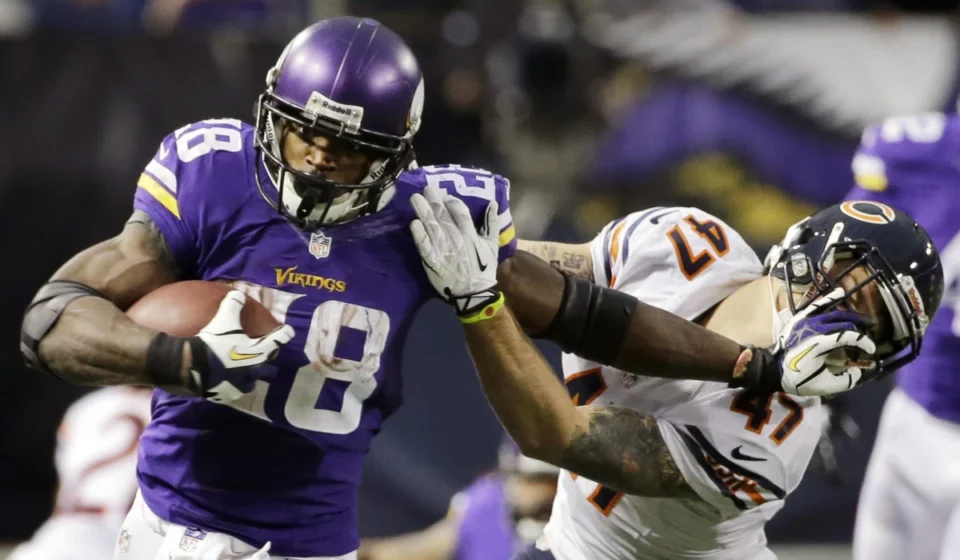
- The Adrian Peterson Appeal (2015): Doty sided with the NFLPA in their challenge against the league’s suspension of Vikings star Adrian Peterson. His intervention in this high-profile case underscored his role as a check on the commissioner’s disciplinary power.
Official Responses and Industry Impact
The NFL, an organization that often found itself on the receiving end of Doty’s gavel, issued a statement acknowledging the gravity of his loss: "Judge Doty devoted his life to public service and the law, presiding over NFL-related litigation for many years during his distinguished career. We express our sincere condolences to his family, friends and colleagues."
Legal analysts have noted that Doty’s impact extends far beyond the gridiron. His ability to manage complex, multi-party litigation while keeping the "human element" in focus remains a gold standard for federal judges. He was known for a down-to-earth demeanor that could pivot instantly to stern authority if he felt counsel was failing to maintain the decorum of his court.
The Implications of a Legacy
The current landscape of professional sports owes a debt of gratitude to David Doty. By forcing the NFL to abandon the restrictive, near-feudal system of player management that defined the 1970s and 80s, he transformed the league into a modern, transparent entity.
His legacy is not merely found in case law or the history of collective bargaining agreements; it is found in the players who were able to realize their market value and the franchises that found sustainable ways to compete in a leveled playing field.
As we look at the NFL today—a juggernaut of media rights, fan engagement, and athletic excellence—it is easy to forget the legal battles that forged its foundation. David Doty was the man in the robe who ensured those battles were fought in a courtroom rather than on the streets, and that the outcomes were dictated by the rule of law.
In the quiet chambers of the District of Minnesota, a giant has fallen. But the structure he built for the most popular sport in America remains, a permanent monument to a judge who believed that even the most powerful organizations must answer to the law. His final case has been closed, but his influence on the American legal and sports landscape will be felt for generations to come.