


















































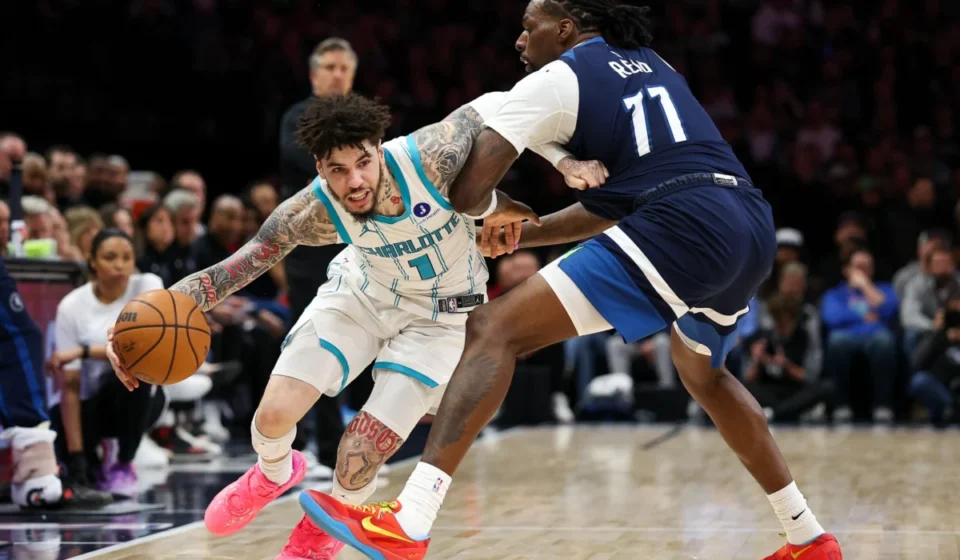

The Minnesota Timberwolves have officially entered a new, volatile era. In a move that has sent shockwaves through the NBA, the franchise has acquired dynamic playmaker LaMelo Ball from the Charlotte Hornets. The cost, however, was steep and deeply personal: the departure of beloved fan favorite Naz Reid and the total depletion of the team’s remaining draft capital through 2033.
For Tim Connelly, the Timberwolves’ President of Basketball Operations, this maneuver is the latest installment of an annual summer tradition—a high-stakes "jubilee" of roster restructuring that prioritizes immediate ceiling-raising over long-term stability. As the dust settles on this blockbuster, the message from the Minnesota front office is clear: they are no longer interested in safe incremental growth. They are playing for a championship, and they are willing to burn every bridge to get there.
A Chronology of Chaos: From Randle to Ball
The seismic shift began on Tuesday, when Connelly orchestrated the salary-dumping of Julius Randle. At the time, the move was framed as a strategic play for cap flexibility, creating a vacuum in the power forward rotation that many assumed would finally be filled by Naz Reid. After seven years of unwavering service, patience, and professional development, the narrative felt poetic: the "Naz Reid Era" as a starter was finally set to begin.
That narrative lasted less than 48 hours. By Thursday, the front office had pulled the rug out from under the fanbase, shipping Reid—a man whose cult status in Minnesota is cemented by fan tattoos and eBay-priced beach towels—to Charlotte.
The trade structure reveals just how desperate the Wolves were to secure a high-usage floor general. In addition to losing Reid and the salary flexibility gained by moving Randle, Minnesota mortgaged their future. The Hornets acquired the right to swap first-round picks with Minnesota in 2028, 2029, and 2030, and secured the Timberwolves’ second-round picks in 2029, 2032, and 2033. In exchange, Minnesota received LaMelo Ball and backup wing Josh Green.
The Analytical Case for LaMelo Ball
Why would a team sacrifice its most beloved role player and the next decade of draft picks? The answer lies in the team’s top offseason priority: offloading point-guard responsibilities from Anthony Edwards to maximize his efficiency as an off-ball scorer.
The statistical evidence supporting this move is compelling. According to data from NBA.com, Anthony Edwards was one of the league’s most lethal catch-and-shoot threats last season, hitting 49.6% of his attempts. However, because he was forced to act as the primary engine of the offense, only 28% of his three-point attempts were of the catch-and-shoot variety. He spent the majority of his time battling through double-teams and aggressive gap-help defenses while trying to generate his own looks.
By introducing Ball—a career assist-percentage titan who ranks among the elite playmakers in the league—the Wolves hope to unlock "Off-Ball Ant." Ball’s presence in Charlotte, even on a struggling roster, provided a dramatic lift to offensive efficiency. When Ball was on the floor for the Hornets in 2025-26, the team averaged 123.2 points per 100 possessions; that number plummeted to 110.6 when he sat. He is a rare conduit who can pierce the seams of a defense, theoretically giving Edwards the space he needs to operate as a pure finisher rather than a sole creator.
Official Stance: The "No-Survival" Philosophy
Tim Connelly has never been one to shy away from the scrutiny that comes with aggressive personnel decisions. Speaking five weeks ago, following a bitter second-round exit at the hands of the San Antonio Spurs, Connelly was characteristically candid about his management style.
"The thing about risk, it is all self-induced pressure," Connelly said. "Like, if you don’t win, what’s the risk? I’d rather get fired than sit here being in job-survival mode. If we mess up, we will mess up loudly. We are going to try and be as aggressive as possible."
This trade is the definition of "messing up loudly." By trading Karl-Anthony Towns in 2024 and now Naz Reid, Connelly has systematically stripped the team of its longest-tenured identities to prioritize the specific timeline of Anthony Edwards. The front office is betting that Ball’s age (25)—remarkably close to Edwards’ own—creates a tandem that can anchor the team for the next half-decade.
Implications: The High-Wire Act
The acquisition of Ball is not without its red flags, which are as neon-bright as his playmaking ability.
1. Durability and Health
Ball’s injury history is a legitimate cause for alarm. In his six-year career, he has played more than 70 games in a season only twice. His recent seasons have been punctuated by significant absences, with game totals dipping as low as 22 and 36. Relying on a player with such a checkered medical history to anchor a championship contender is a massive gamble.
2. Defensive Synergy
Ball has historically been a liability on the defensive end. However, the Timberwolves provide a unique environment: the presence of Rudy Gobert. A primary reason for optimism is that Ball has never played with a rim protector of Gobert’s caliber. If Ball can stay committed to the defensive scheme, Gobert’s ability to anchor the paint could mitigate Ball’s perimeter lapses. Furthermore, Ball’s elite lob-passing could turn Gobert into a more consistent offensive threat, potentially revitalizing the veteran center’s game.
3. The Depth Vacuum
With Randle and Reid gone, the Timberwolves are thin in the frontcourt. Questions now loom regarding who will take the starting power forward slot—likely Jaden McDaniels—and whether young prospects like Joan Beringer are prepared to handle the rigors of a backup center role in the Western Conference.
4. The "Character" Equation
Connelly has assembled an exceptionally young roster, with 11 players aged 26 or younger, including Ball, Edwards, McDaniels, Bones Hyland, and rookie Isaiah Evans. This mirrors the "youth-first" templates seen in Oklahoma City and San Antonio. However, the 2025-26 season proved that raw talent is meaningless without the collective, grit-based culture required to succeed in the playoffs. If the team fails to develop that defensive intensity and shared commitment, the loss of Reid’s veteran presence and the exhaustion of draft capital will be viewed as a catastrophic error in judgment.
Conclusion: All Chips on the Table
Tim Connelly has officially placed all his chips on the Anthony Edwards timeline. He has traded the franchise’s soul—in the form of long-tenured, fan-favorite players—for a high-variance, high-reward point guard who promises to revolutionize the team’s offensive ceiling.
There are no more draft picks left to trade, no more "future" assets to leverage, and very little room for error. The Timberwolves are now a team defined by its youth, its athleticism, and its desperate, singular need to win a title before the window of this current iteration slams shut. Whether this is the move that elevates Anthony Edwards to the status of a champion or the final, loud mistake that forces a complete organizational rebuild, the results will be felt immediately. In the high-stakes world of the NBA, Connelly has made his bed—and he is clearly not interested in losing sleep over the risk.