























































The Great Resurgence: Target’s Return-to-Office Mandate and the Reanimation of Downtown Minneapolis

MINNEAPOLIS — For years, the Monday morning ritual at Corner Coffee in downtown Minneapolis was a quiet, almost somber affair. The rhythmic hiss of the espresso machine and the occasional footfall of a solitary commuter provided a sparse soundtrack to a central business district still reeling from the tectonic shifts of the COVID-19 pandemic. However, the atmosphere shifted abruptly this September.
Mia Pariseau, the store’s manager, recently found herself in the middle of a caffeine-fueled whirlwind. For more than an hour straight, a line of at least five customers deep snaked through the shop—a sight unseen with such consistency since 2019.
"We got just slammed," Pariseau remarked, reflecting on the sudden influx of patrons. "And it was just me and one other person here."
The catalyst for this sudden surge in foot traffic is no mystery. Corner Coffee is situated just down the street from the sprawling headquarters of Target Corporation. On September 2, 2025, the retail giant officially implemented a new policy requiring employees within its massive commercial unit to work in person at least three days a week. As one of the city’s largest economic engines, Target’s decision is doing more than just filling cubicles; it is reanimating the very soul of the Twin Cities’ urban core.
Main Facts: The Catalyst of the Three-Day Mandate
The return of Target’s commercial unit marks a pivotal moment in the post-pandemic recovery of Minneapolis. Target stands as the second-largest employer in the downtown area, trailing only Hennepin Healthcare. With thousands of professionals now required to be physically present from Tuesday through Thursday, the "multiplier effect" on local commerce is becoming immediately apparent.
According to Kittie Fahey, senior director of advancement for the Minneapolis Downtown Council, in-person work has climbed to nearly 75% of pre-pandemic levels. This figure is expected to rise significantly as the data from Target’s latest mandate is fully integrated into the city’s economic metrics.
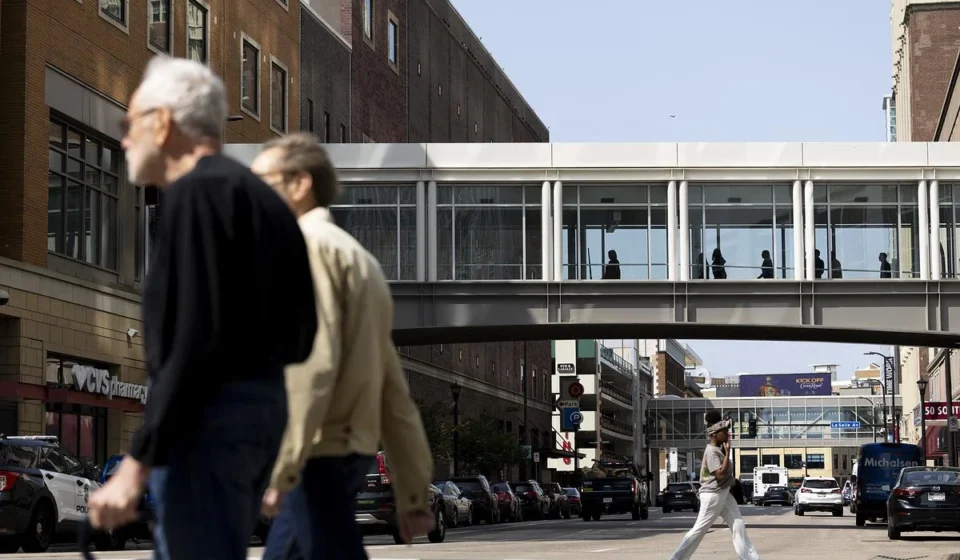
The shift is not merely about occupancy rates; it is about the "vibrancy" of the streets. For years, the Minneapolis skyway system—the largest contiguous system of enclosed, second-level bridges in the world—served as a hollowed-out monument to a bygone era of bustling commerce. Today, those glass-enclosed corridors are seeing a resurgence of the "back-to-school" energy that traditionally characterized the city’s business district.
However, the recovery remains uneven. While the "Big Three" days (Tuesday, Wednesday, and Thursday) show robust activity, Mondays and Fridays remain significantly quieter, reflecting a permanent shift in how corporate America views the traditional five-day work week.

Chronology: The Long Road from "Ghost Town" to Urban Hub
The journey to this September’s resurgence has been a four-year trek through economic uncertainty.
- 2020–2021: The Great Exodus. Following the onset of COVID-19, Minneapolis saw one of the most dramatic shifts toward remote work in the nation. The downtown area, once home to over 200,000 workers daily, became what many residents described as a "ghost town."
- 2022: The Hybrid Experiment. As health restrictions eased, companies began experimenting with "voluntary" returns. However, Minnesota’s share of remote workers remained high at 16.9%, according to the Federal Reserve Bank of Minneapolis, as workers grew accustomed to the flexibility of home offices.
- June 2024: The Public Sector Lead. In a precursor to the current corporate mandates, the State of Minnesota required its government employees to spend at least 50% of their workdays in the office. This move was met with significant resistance and threats of labor action, yet it established a baseline for the "50/50" or "60/40" hybrid models now becoming standard.
- September 2025: The Target Mandate. Target’s decision to formalize a three-day-a-week requirement for its commercial unit acted as the "tipping point." Of the top 15 downtown employers, 12 have now instituted formal back-to-office policies, signaling an end to the era of total remote flexibility for the city’s major players.
Supporting Data: The Economics of Physical Presence
The necessity of this return is underscored by data from the Federal Reserve Bank of Minneapolis. In 2021, Minnesota’s share of primarily remote workers stood at 21%, significantly higher than the national average of 17.9%. This "remote-heavy" culture led to a slower economic recovery for urban service providers compared to cities in the South or East Coast.
The impact of remote work on the city’s infrastructure is most visible in the transit sector. Jenny Lissarrague, an attorney who has worked downtown since 2012, notes that the commute itself has changed. "It’s a lot less busy post-pandemic," Lissarrague said. She pointed out that because of the remote work surge, transit authorities reduced bus frequencies, making the physical act of getting to the office more challenging for those who rely on public transportation.
Furthermore, the "peak hour" has flattened. Kittie Fahey notes that traffic is now more spread out. Instead of a massive 8:00 AM rush, workers are trickling in throughout the morning, with many opting to commute around noon on their designated in-office days. This shift suggests that while the "where" of work is being mandated, the "when" still retains a degree of hybrid-era flexibility.
Official Responses and Stakeholder Perspectives
The reaction to the mandatory return is a complex tapestry of corporate optimism and individual adjustment.
The Corporate Perspective:
For Madelyn Dunn-Lammert, an associate designer for Target, the return is about more than just presence; it is about the "creative friction" that occurs in person. Having worked primarily remotely since starting three years ago, she views the mandate as a tool for professional growth.
"Being able to grab lunch with co-workers or work through a project in-person helps build team connections and facilitate collaboration, especially in a creative field," Dunn-Lammert said.
The Civic Perspective:
The Minneapolis Downtown Council is viewing this as a call to action for the city’s hospitality industry. Kittie Fahey is championing a "stay and play" philosophy.
"Go out for lunch, stay after and go meet friends, go do some things," Fahey urged. "Use all the resources we have."
However, she acknowledges a major hurdle: the "early-close" syndrome. Many restaurants in the central business district still close by 8:00 PM, a vestige of the pandemic when there was no evening crowd to serve. Fahey notes that for the city to truly recover, businesses must extend their hours to accommodate the 60,000 residents who live downtown, not just the commuters.
The Veteran Commuter Perspective:
For long-term workers like Lissarrague, the current state of downtown is a marked improvement over 2020, but it still feels "down quite a bit" from the pre-pandemic heyday. "It felt a little bit less isolated before the pandemic," she said. "It’s getting a little bit of that feel back… but it’s still not quite there."

Implications: The Future of the "Central Business District"
The return of Target’s workforce to downtown Minneapolis is a microcosm of a larger national debate regarding the future of urban centers. The implications of this shift are three-fold:
1. The Evolution of the "Work-Life" Ecosystem:
The traditional 9-to-5 model is likely dead, replaced by a "3-2" hybrid model that prioritizes collaboration on mid-week days. This creates a "peak and valley" economy for downtown businesses, which must now learn to maximize revenue over three days to sustain themselves through four quieter ones.
2. Urban Safety and Perception:
Increased foot traffic is the most effective "natural" deterrent to crime and urban decay. As the skyways and sidewalks fill with Target and Wells Fargo employees, the perception of downtown Minneapolis as a safe, vibrant destination is bolstered. This "eyes on the street" effect is crucial for attracting further investment and residential growth.
3. The Transit Paradox:
As employers mandate returns, the pressure on Metro Transit to restore pre-pandemic service levels will intensify. If the infrastructure—buses, trains, and parking—cannot accommodate the return, the friction of the commute may lead to talent attrition, forcing companies to reconsider their mandates.
Conclusion: A Trending Optimism
Despite the challenges of reduced transit and early-closing restaurants, the mood in downtown Minneapolis is shifting from survival to revival. The sight of lines at Corner Coffee and the hum of activity in the IDS Center suggest that the city is reclaiming its identity as a hub of commerce and connection.
While the "ghost town" years of 2020 and 2021 are a haunting memory, they have provided the city with a blank canvas to redefine what an urban center should be. As Mia Pariseau looks out at the growing line of customers waiting for their morning lattes, her assessment is simple yet profound.
"The future is bright," she said.
The "Big Return" of 2025 may not look exactly like the world of 2019, but for the businesses and residents of Minneapolis, it is a welcome and necessary next chapter.