





















































By [Your Name/Journalistic Staff]
In the quiet, fluorescent-lit corners of college newsrooms across Minnesota, the familiar rhythm of the printing press remains a heartbeat for campus democracy. While the global media landscape continues to fracture under the weight of digital-first algorithms and the decline of traditional print, student journalists are holding their ground. They are not merely learning a trade; they are documenting history in real-time, one deadline at a time.
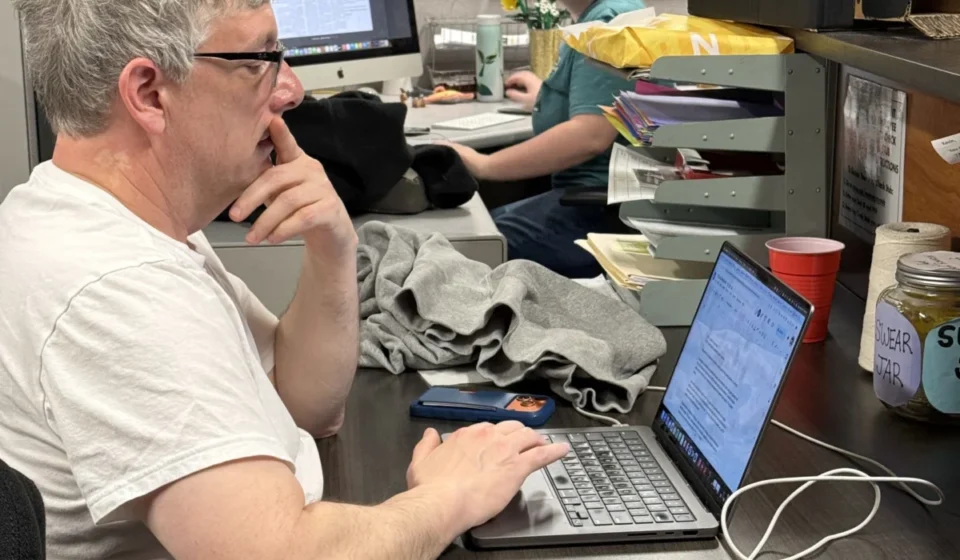
At Minnesota State University (MSU) in Mankato, Anahi Zuniga, editor-in-chief of The Reporter, sits at the helm of an operation that has survived for a century. As the clock ticks toward the 9 p.m. Monday deadline, the tension in the room is palpable yet controlled. For Zuniga, the pressure is a familiar companion, but it is one she welcomes.
“Everyone should be done in the next half hour,” Zuniga says, her voice steady despite the impending cutoff. “It’s sometimes a close call, but that’s the nature of the beast.”
As the final articles and photographs are uploaded and the layout pages are locked into place, the Reporter prepares for its next distribution. By Tuesday morning, students across campus will grab copies to find headlines detailing significant shifts in their academic lives—including a proposed 7% tuition increase. For Zuniga, the physical paper is more than just ink and newsprint. “It’s a satisfying feeling,” she says. “It keeps history alive.”
A Chronology of the Newsroom Grind
The life of a student journalist is defined by a relentless, cyclical calendar. For the staff at The Reporter, the process begins long before the final file is sent to the press. It is a rigorous exercise in project management, investigative reporting, and ethical decision-making.
The cycle often starts with a pitch meeting, where editors and reporters debate the relevance of local stories. Following the research phase—which includes interviewing sources, verifying facts, and scouring documents—the drafting process begins. Copy editors then step in to refine the narrative, while designers manage the visual hierarchy of the page.
On a typical Monday, the energy intensifies as the clock approaches the evening deadline. Editors like Addie Larson, Alexis Darkow, Isaac Rozwadowski, and Logan Schlosser move with the efficiency of seasoned professionals. By the time Zuniga receives the final pages in her digital file folder, the transition from computer screen to printing press is nearly instantaneous. Once the wheels of the press turn downtown, the physical product is ready for the newsstands, bridging the gap between digital noise and tangible record.
However, the job doesn’t end with the distribution of the paper. Immediately after meeting a deadline, the staff gathers in the editor’s office to begin planning the next edition. It is a continuous loop, a testament to the persistence required to maintain a publication in the modern era.
The State of the Student Press: A Landscape Analysis
The survival of The Reporter is particularly notable given the current state of higher education. Many institutions across Minnesota have seen their student publications dwindle, adapt, or disappear entirely.
The decline of the traditional student newspaper is often tied to shifting student interests and the erosion of mass communication departments. At Bemidji State University, The Northern Student has moved from a frequent newspaper to a quarterly magazine. At Minnesota State Moorhead, The Advocate has transitioned to a digital-first model, printing only once per semester. Meanwhile, some campuses, such as Minneapolis College, are currently without a paper, leaving a void in campus discourse that student government bodies are only now attempting to fill.
Despite these headwinds, many Minnesota institutions remain committed to the medium. The Winonan at Winona State University continues to publish every other week, navigating the "natural attrition" that comes with student turnover. Doug Westerman, an advisor to the student staff at Winona State, notes that while the medium changes, the mission remains fixed.
“Every college paper has natural attrition,” Westerman explains. “Through graduations and new students stepping in, the paper has been fortunate to have good student leaders. You still have to check sources; you still need to do research, whether it’s going on a printed page or going on a post.”

The landscape is diverse:
- The University of Minnesota system: The Minnesota Daily (Twin Cities) has fully embraced a daily digital model, while The Bark (Duluth) uses a hybrid approach of daily online updates and a monthly magazine.
- Private Colleges: The Minnesota Private College Council reports that most of its 18 member schools maintain active publications, including The Crest News (St. Thomas), The Gustavian Weekly (Gustavus Adolphus), and The Mac Weekly (Macalester).
The Pedagogical Imperative: Why Student News Matters
Beyond the ink and the headlines, the primary value of the student press lies in its role as a training ground. For many students, these newsrooms serve as the only place on campus where they can gain hands-on, high-stakes journalistic experience, especially at institutions where journalism programs have been shuttered.
Myron Medcalf, a prominent ESPN writer and Star Tribune columnist who served as The Reporter’s first African-American editor-in-chief in 2003, emphasizes the formative nature of this experience. Speaking at the paper’s 100th-anniversary celebration, Medcalf highlighted the lessons that cannot be taught in a lecture hall.
“I learned the ins and outs of actually being on deadline, the accuracy that’s necessary in your reporting, the fact that you are communicating to an audience that’s much bigger than you are,” Medcalf said. “It’s not about you. It’s about the people who are going to pick up your story and read it.”
For Zuniga, this training has been transformative on a personal level. Reflecting on her growth, she admits, “I wasn’t very confident with who I was when I first enrolled here. I feel so sure of myself now and who I want to be after graduation. I can use my words as a way to express what I feel and think is necessary.”
Institutional Support and Editorial Independence
Maintaining a publication requires a delicate balance between university support and editorial independence. At The Reporter, the operation is bolstered by two full-time staff members: Jane Tastad, the business manager, and Dana Clark, the advertising design manager and production coordinator. They provide the infrastructure necessary for the students to focus on the journalism.
Robb Murray, an editor at the Mankato Free Press who acts as a professional mentor and proofreader for the students, represents the vital link between the campus and the professional community. His presence ensures that students are not just mimicking journalism, but practicing it at a high standard.
This independence is crucial. Student newspapers must often report on the very institutions that fund them, covering tuition hikes, administrative decisions, and campus controversies. The ability to do so without censorship is a hallmark of a healthy collegiate environment.
The Long-Term Implications for Democracy
As the media industry faces "news deserts" across the country, the role of the campus paper as a watchdog is increasingly significant. When a university lacks a newspaper, the accountability of the administration, the transparency of student government, and the documentation of student life all suffer.
Medcalf’s words at the centennial celebration resonate with the broader implications of this work: “One-hundred years from now, all of us are gone and what we will have left is what we contributed to this world. A big part of that, no matter what anyone tells you, will be the written word. It’ll be the archives from the MSU Reporter and all of these publications.”
The survival of these papers is not just about nostalgia for the printed page. It is about the preservation of a public square. When students like Zuniga head out to interview classmates, they are engaging in a process of civic participation. They are learning how to listen, how to verify, and how to tell the truth.
“We get to have all these very meaningful conversations with classmates and see their thoughts,” Zuniga says. “I think, overall, working at a college newspaper just opens up a completely different lens on how you view the world.”
As long as there are students willing to trade sleep for a deadline, and as long as there is an appetite for the truth on campus, the student press will remain an essential institution—not just for the colleges they serve, but for the democratic fabric of the communities that surround them. The ink may dry, but the stories they capture are destined to last for the next hundred years.